
This post contains affiliate links. If you buy through them, I may earn a small commission at no extra cost to you. I only recommend product types I would use in my own home.
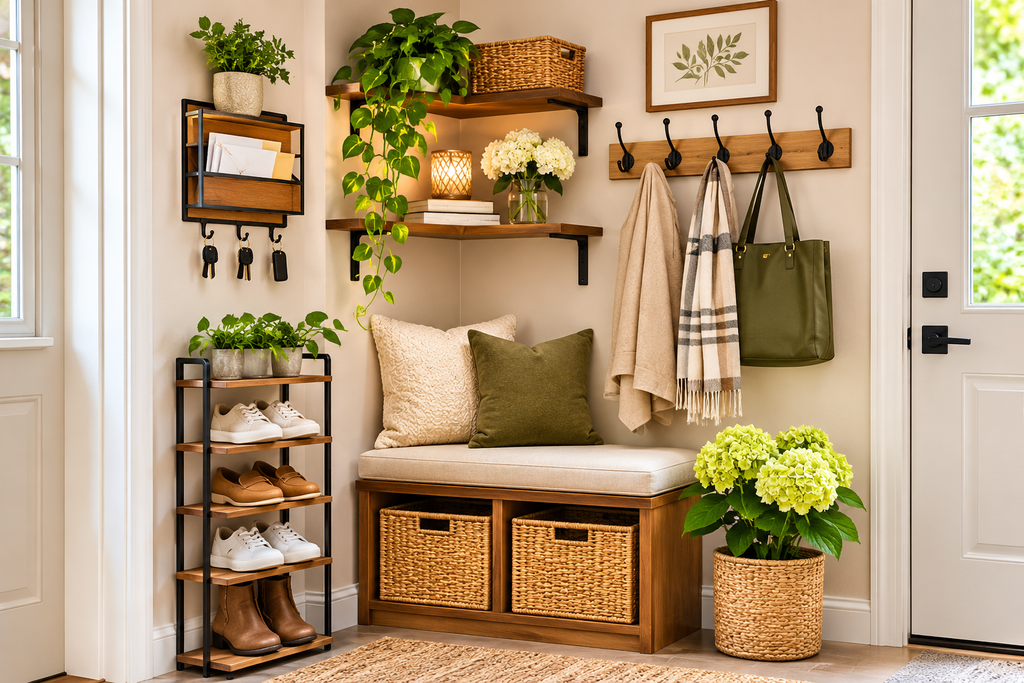
The entryway is the first thing you see when you walk in and the last thing you pass on the way out. In a small home, it is often just a narrow strip of floor and a corner. Shoes pile up, coats land on the nearest chair, and keys vanish at the worst moment.
Here is the good news: that awkward corner is a hidden gem. Corners are often wasted, yet they can hold a surprising amount when you use the walls, the height and the space behind the door. You do not need a big budget, tools or a remodel. A few smart pieces can turn a messy corner into a calm drop zone.
In this guide, you will find 15 corner entryway organization ideas, a simple buying checklist, a step-by-step setup plan and the mistakes to avoid. No special brand is needed. Every idea works with generic products you can find almost anywhere.
Why a Corner Entryway Setup Is Worth It
Before the ideas, here is why this small project pays off.
1. It makes mornings easier. When keys, bags and shoes have a home, you stop hunting and start leaving on time.
2. It keeps clutter from spreading. Entryway mess tends to move into the living room. A good corner stops it at the door.
3. It uses wasted space. Corners are rarely used well. Going vertical gives you storage without taking up floor.
4. It makes your home feel bigger. A tidy entry gives a better first impression and a calmer feeling.
5. It is cheap and fast. Most of these ideas take under an hour and cost very little.
What to Look for Before You Buy
Small corners need smart choices. Keep these points in mind.
Measure First
Measure the width, depth and height of your corner. Write the numbers on your phone. This is the best way to avoid returns.
Go Vertical
Floor space is limited, but wall space is not. Choose tall, slim pieces and wall-mounted items.
Check for Door Swing
Make sure nothing blocks the door from opening fully. Leave room to walk past.
Choose a Slim Depth
In a tight entry, pieces under 12 inches deep work best.
Match Your Wall Type
If you rent or cannot drill, look for adhesive hooks, over-the-door pieces and freestanding items.
Pick Easy-to-Clean Materials
Shoes bring in dirt and water. Wipeable surfaces save you time.
15 Corner Entryway Organization Ideas
1. Corner Shoe Rack
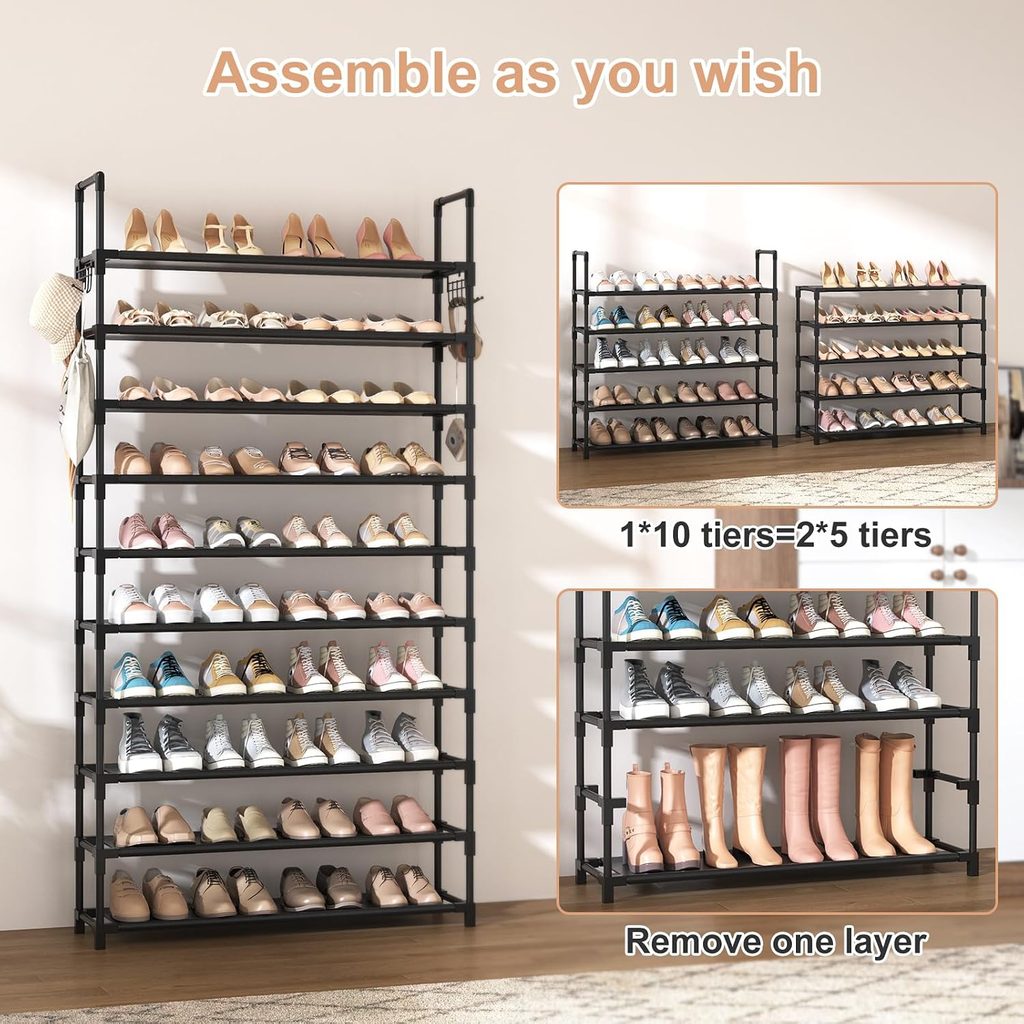
A tiered rack made for corners holds many pairs without eating up floor space. Some are triangle-shaped, while others stack in a slim column.
Why it works: It lifts shoes off the floor and uses a spot that is usually empty.
Best for: Families and anyone with more shoes than space.
Tip: Keep only the shoes you wear daily here. Store out-of-season pairs elsewhere.
I found this high selling rack with good reviews, you can adjust its tiers according to your need.
2. Tall Wall Hooks
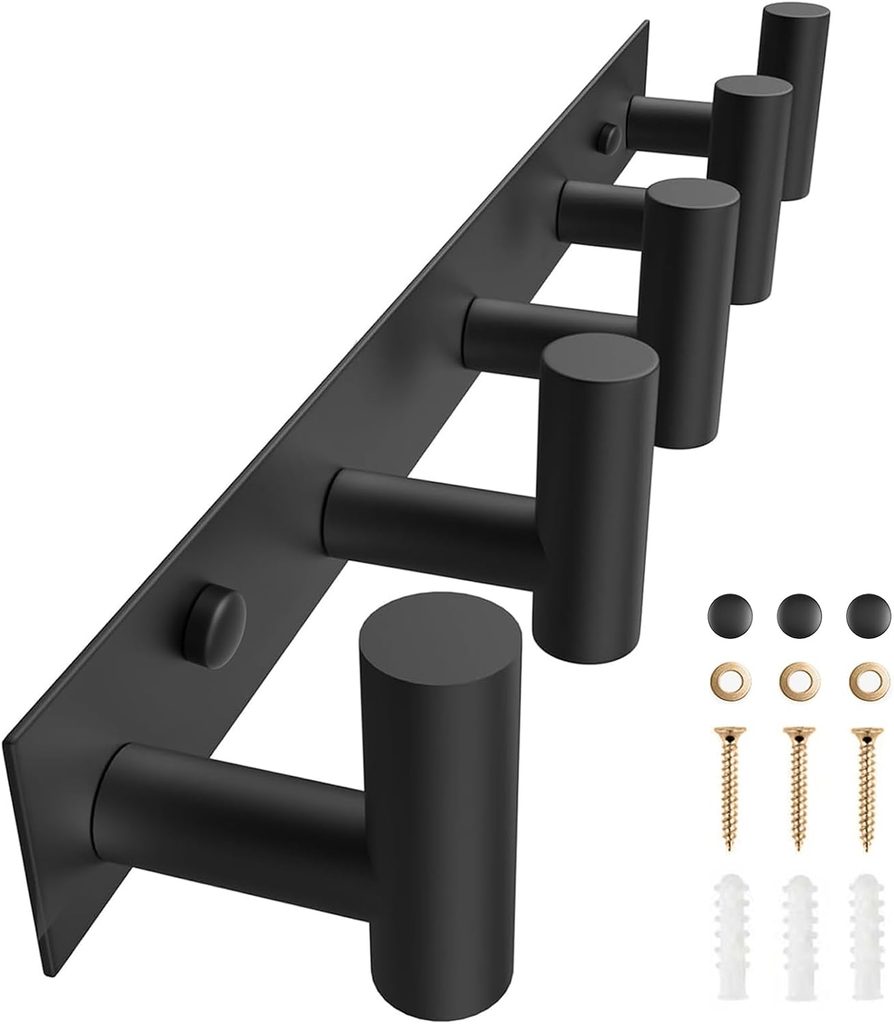
A row of sturdy hooks at different heights gives everyone a spot for coats, bags and scarves. Place them in the corner and on the adjoining wall for double capacity.
Why it works: Hooks are faster than hangers, so people actually use them.
Best for: Busy households and kids.
Tip: Hang kids’ hooks lower so they can reach them.
3. Corner Shelf Unit
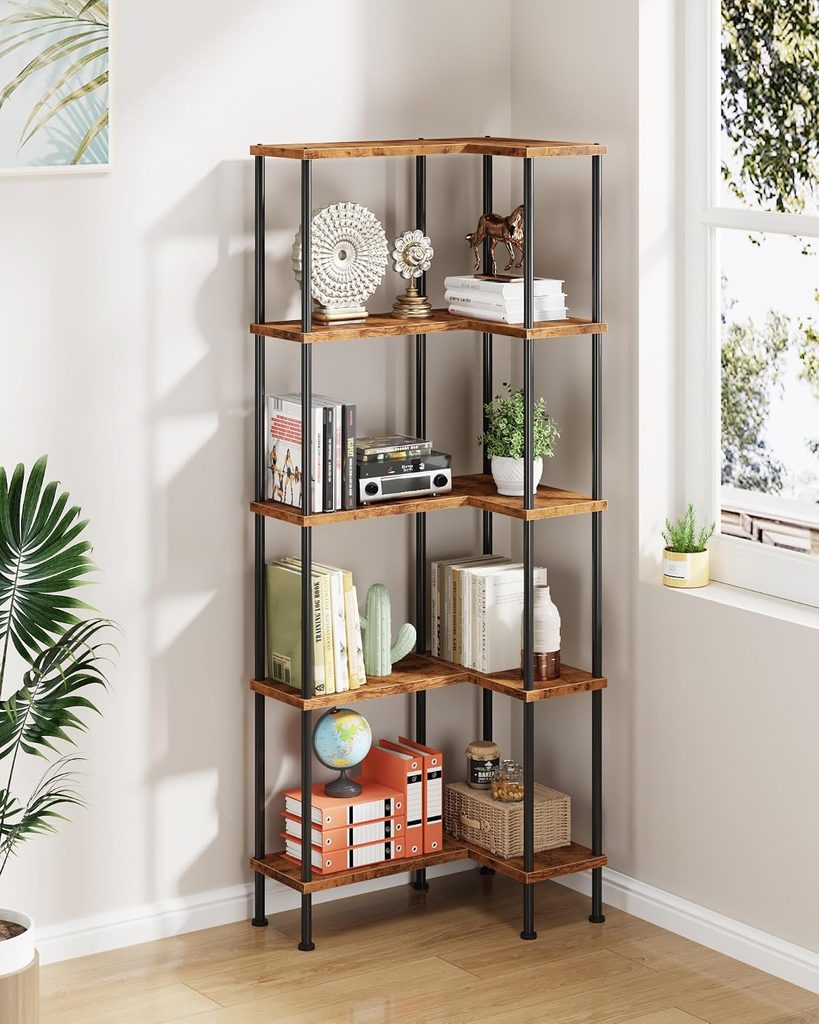
A shelf made for corners gives you layers of storage in a small footprint. Use the top for decor, the middle for baskets and the bottom for shoes.
Why it works: It turns a dead corner into a full storage zone.
Best for: Entryways with no closet.
Tip: Leave the top shelf mostly clear for a neat look.
4. Slim Shoe Cabinet With a Flip-Down Door
These narrow cabinets hide shoes behind a door and look like a simple piece of furniture. The flip-down style takes very little depth.
Why it works: Closed storage hides the mess.
Best for: People who want a clean, calm look.
Tip: Choose one with an adjustable shelf for boots.
5. Over-the-Door Organizer
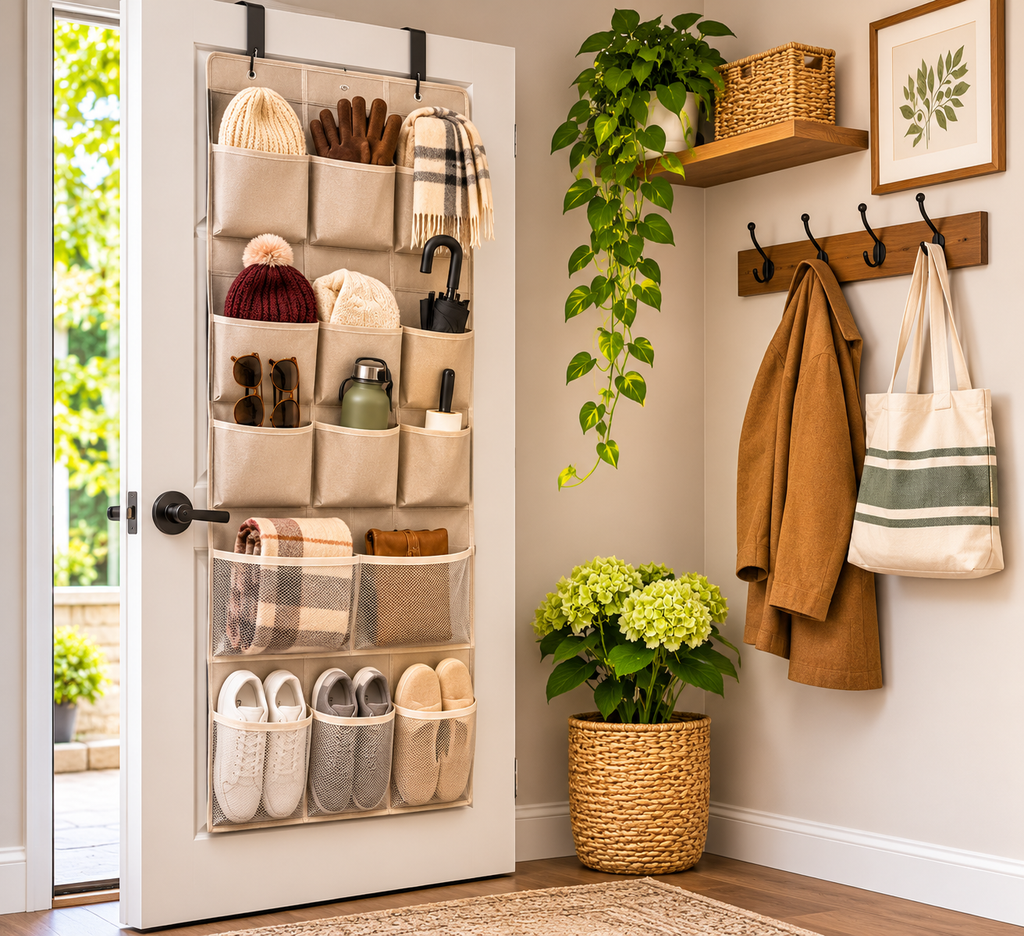
If the door sits next to your corner, its back is free storage. Over-the-door racks and pockets hold shoes, hats, gloves and small items.
Why it works: No drilling, no floor space.
Best for: Renters and very tight entries.
Tip: Check that the hooks fit your door thickness.
6. Wall-Mounted Key and Mail Holder
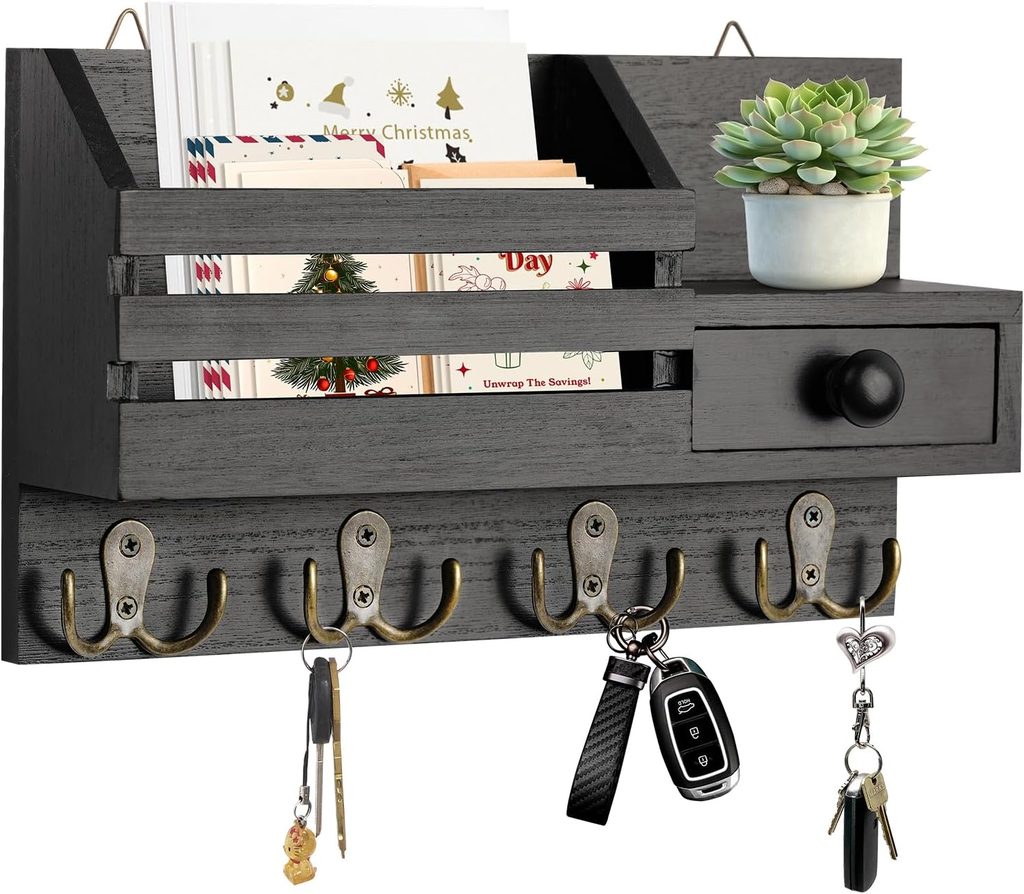
A small wall unit with hooks for keys and a slot for mail keeps small essentials in one place. Hang it near the door at eye level.
Why it works: Keys and mail never get lost or buried.
Best for: Anyone who loses their keys daily.
Tip: Add one hook for each family member.
I really love this wooden wall mounted key and mail holder. It gives clean and aesthetic look to your area. Shop this on amazon
7. Entryway Bench With Storage
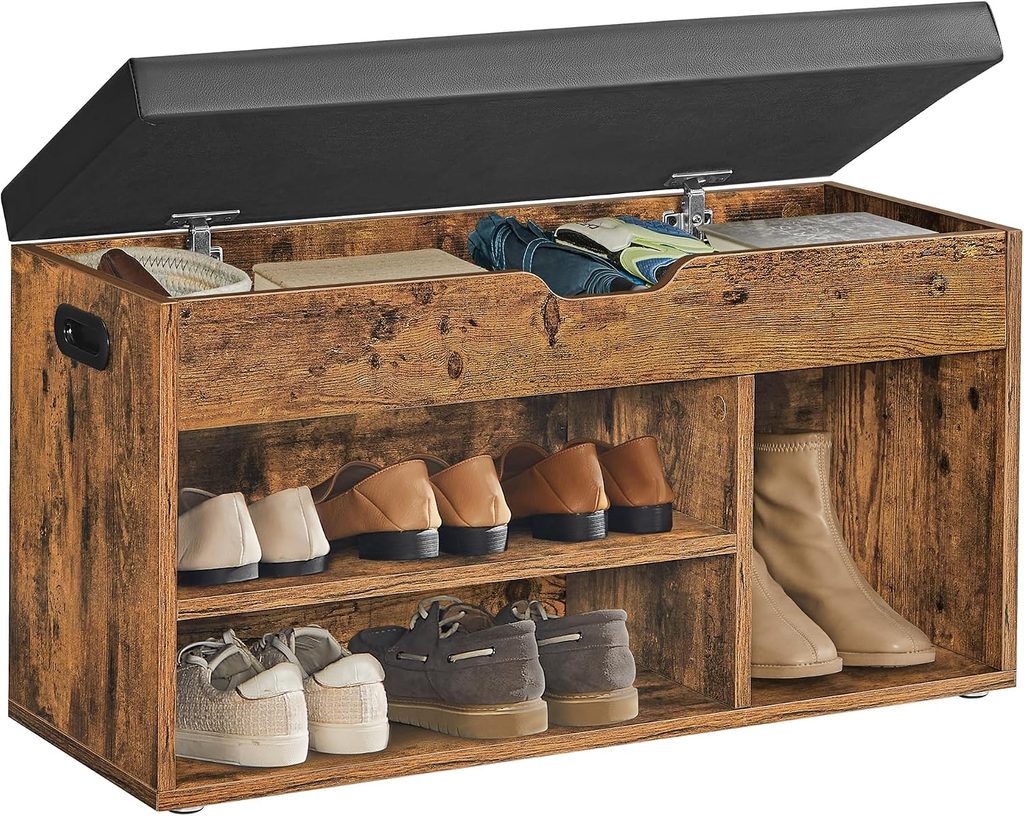
A slim bench gives you a seat to put on shoes, plus hidden storage inside or underneath. In a corner, a small bench fits neatly.
Why it works: One piece gives seating and storage.
Best for: Families and anyone with difficult laces or buckles.
Tip: Pick a bench with baskets so each person gets their own.
8. Floating Corner Shelves
A set of floating shelves in the corner holds baskets, plants and decor. They add storage without touching the floor.
Why it works: Floor stays clear, so the room feels larger.
Best for: Very small spaces and rentals with approval to drill.
Tip: Use the lowest shelf for a basket of shoes or hats.
9. Coat Rack Stand
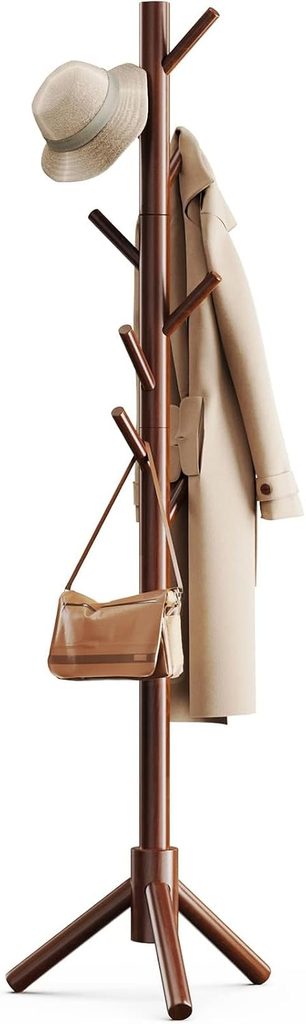
A freestanding coat rack tucks into a corner and holds a lot of weight. Choose a tall, slim design with a sturdy base.
Why it works: No drilling is needed, and you can move it anytime.
Best for: Renters and small spaces without wall room.
Tip: Choose one with a wide, heavy base so it will not tip.
10. Hanging Basket Storage
Wall baskets or hanging fabric baskets hold hats, gloves, scarves and dog leashes. They keep small things off the floor.
Why it works: Open baskets are quick to grab from.
Best for: Seasonal items and pet gear.
Tip: Label each basket so everyone knows where things go.
11. Shoe Tray or Boot Mat
A shoe tray in the corner catches mud, snow and water. Use it under shoes to protect floors.
Why it works: Dirt stays in one place and is easy to wipe.
Best for: Rainy days, snowy regions and homes with pets.
Tip: Pick a tray with a raised edge.
12. Wall Mirror With Hooks
A mirror with built-in hooks or a small shelf is useful and pretty. It also makes the entry feel bigger and brighter.
Why it works: One piece gives you a mirror, storage and light.
Best for: Dark, narrow entries.
Tip: Hang it at eye level so it is useful for a quick check.
13. Umbrella Stand
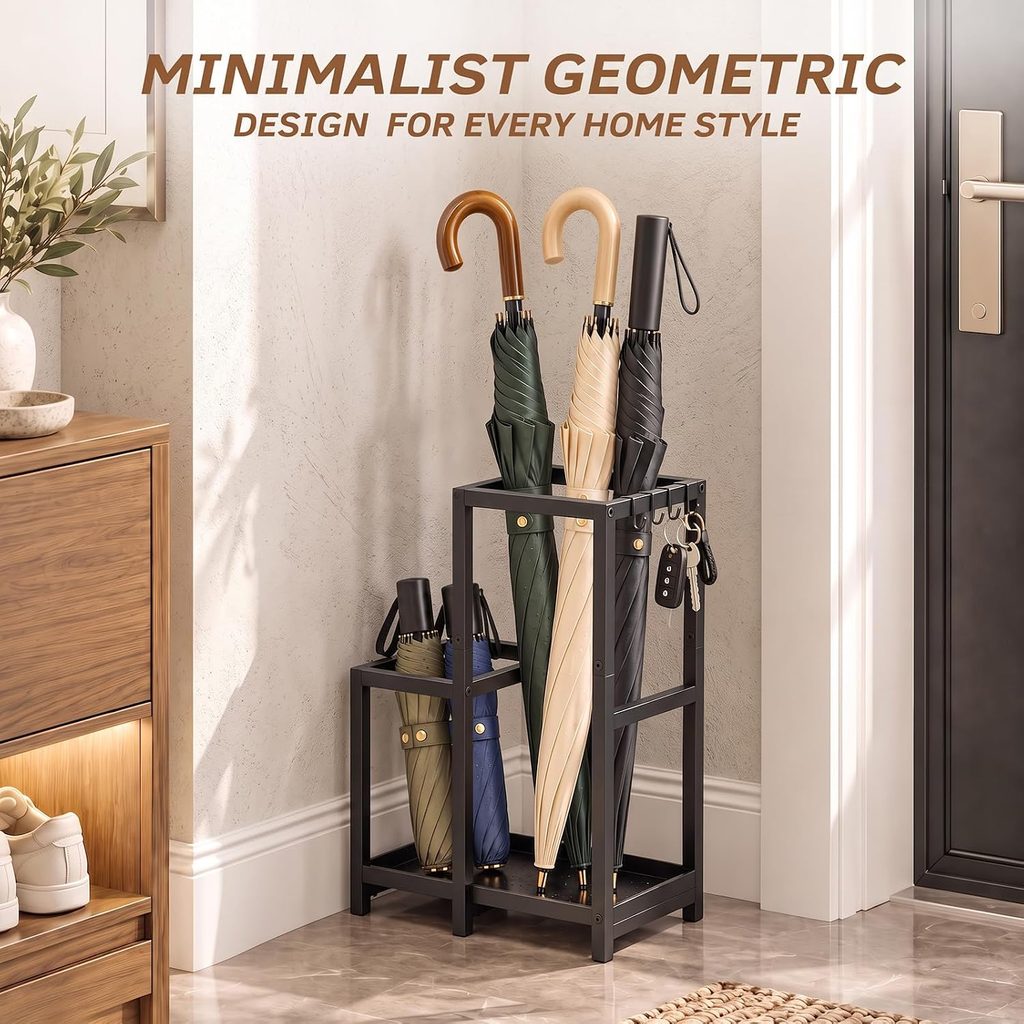
Wet umbrellas look messy and drip on the floor. A slim umbrella stand holds them upright in the corner and catches the water.
Why it works: One simple item prevents puddles and clutter.
Best for: Rainy climates or sudden weather.
Tip: Choose a narrow, tall stand so it fits the corner.
14. Stackable Bins for Bags and Gear
Bags, sports gear, reusable shopping bags and school items need a place. Stackable bins hold them in a clean tower.
Why it works: It turns loose clutter into labeled groups.
Best for: Families with kids, sports and school routines.
Tip: Use one bin per person, with a name label.
15. Wall Charging Station
A small shelf or caddy for chargers and phones keeps cords tidy. Put it near an outlet in the corner.
Why it works: Phones are charged and ready when you leave.
Best for: Families who always run low on battery.
Tip: Add a small tray for earbuds and wallets too.
Quick Pick Guide
| If your problem is… | Try idea # |
|---|---|
| Too many shoes | 1, 4, 11 |
| No closet | 2, 3, 9 |
| Renting, can’t drill | 5, 9, 11 |
| Lost keys and mail | 6, 15 |
| Very tiny space | 5, 8, 12 |
| Kids and school gear | 2, 7, 14 |
| Wet weather | 11, 13 |
How to Set Up Your Corner Step by Step
Step 1: Clear the corner. Take everything out and wipe down the floor and walls.
Step 2: Measure. Note the width, depth and height. Mark where the door swings.
Step 3: Sort what you own. Keep only what you use daily by the door. Move off-season items to a closet or bin.
Step 4: Pick a zone for each item. Shoes on the floor or low shelf, coats on hooks, small items at eye level.
Step 5: Choose two or three pieces. Do not buy ten things at once. Start with the biggest problem.
Step 6: Install and label. Hang hooks, place the rack and add labels so everyone knows the system.
Step 7: Do a weekly reset. Spend five minutes every Sunday putting things back and tossing what does not belong.
Common Mistakes to Avoid
Buying before measuring. This is the number one cause of returns. Measure twice.
Blocking the door. Always check the swing and leave walking space.
Overfilling the corner. A packed corner looks messy. Leave a little breathing room.
Using only floor space. The walls hold more than the floor. Go up.
Keeping too many shoes out. Limit the corner to the shoes you wear every week.
Skipping hooks at the right height. Hooks that are too high go unused by kids and shorter adults.
Choosing heavy furniture. In tiny spaces, slim and light pieces are better.
Small Space Tips
- Think tall, not wide. Use vertical storage first.
- Use the door. Both sides can hold hooks and pockets.
- Pick multitasking pieces. A bench with storage or a mirror with hooks does two jobs.
- Use light colors. White, beige and light wood make the corner feel more open.
- Keep the floor clear. The more floor you see, the bigger it feels.
- Rotate seasonal items. Keep only this season’s coats and shoes in the entry.
Frequently Asked Questions
How do I organize a very small entryway corner?
Start with wall hooks and a slim shoe rack. These two items handle coats and shoes, the biggest sources of clutter. Then add a key holder and a small basket.
What can I use if I cannot drill into the wall?
Try over-the-door organizers, freestanding coat racks, adhesive hooks rated for the weight and corner shelf units that stand on the floor.
How many shoes should I keep in the entryway?
About one pair per person, plus one or two extra pairs for guests. Rotate the rest into a closet or under a bed.
What is the best way to store shoes in a tiny entryway?
Use a vertical corner rack or a slim cabinet. Tilted shelves and flip-down cabinets use the least depth.
How do I keep the entryway from getting messy again?
Give every item a home, label the bins and do a five-minute reset each week. A simple system is easier to keep up than a fancy one.
Where should I put keys so I never lose them?
Hang a hook or small tray right next to the door, at eye level. Put keys there the moment you walk in, every time.
Can I make a small entryway look nice and stay organized?
Yes. Use matching baskets, a mirror and one or two decor items. Keep surfaces mostly clear, and the corner will look intentional.
Final Thoughts
A small corner does not have to stay messy. With a few well-chosen pieces, such as hooks, a slim shoe rack and a small shelf, your entryway can become the most useful spot in your home.
Start small. Pick one problem, whether it is shoes on the floor, coats on the chair or lost keys, and fix that first. Once you see how much calmer your mornings feel, you can add more pieces over time.
Which idea will you try first? Tell me in the comments, and save this post on Pinterest so you can find it when you are ready to start.
Read More: Mudroom Storage Solutions Under $40: 10 Budget-Friendly Drop-Zone Upgrades