
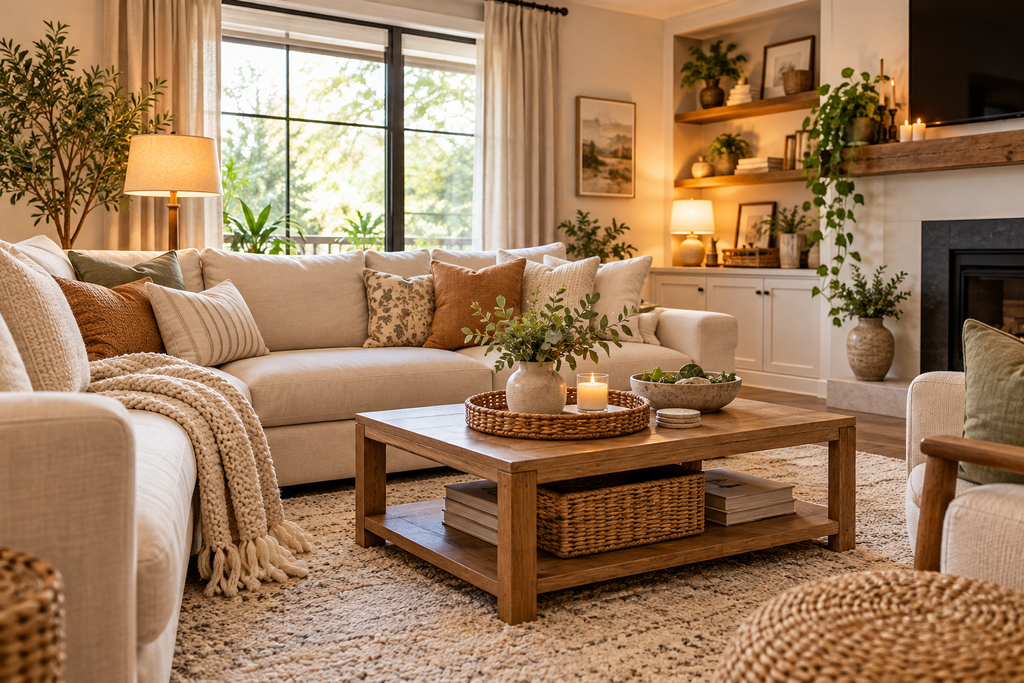
A living room should be more than just a place to sit and watch television. It should be a space where you can relax after a long day, enjoy a quiet morning with a cup of coffee, spend time with family, and feel completely at home. The best living rooms manage to feel beautiful without sacrificing comfort or everyday functionality.
If your living room feels a little plain, cluttered, or simply ready for a refresh, you don’t necessarily need new furniture or an expensive makeover. Sometimes, changing the lighting, adding a few soft textures, rearranging your seating, or finding better storage solutions can make a surprising difference.
These 17 living room inspo ideas will help you create a space that feels cozy, stylish, and welcoming. Whether you have a small apartment, a spacious family room, or a living room that needs a little more personality, you’ll find practical inspiration you can adapt to your own home and budget.
1. Create a Cozy Neutral Living Room
Neutral living rooms have a timeless appeal because they feel calm, comfortable, and easy to update. Shades of cream, beige, warm white, taupe, and soft brown create a beautiful foundation without making the space feel overly decorated.
The secret to making a neutral living room interesting is to combine different textures instead of relying on color alone. Imagine a cream sofa paired with chunky knit cushions, a soft beige rug, a natural wood coffee table, and linen curtains. Each element adds a little depth while keeping the overall look peaceful.
You can also introduce a few darker accents, such as a walnut side table, black picture frames, or a warm brown throw, to give the room more definition.
How to recreate the look: Start with the largest items you already own, such as your sofa and rug. Choose two or three complementary neutral shades, then add texture through cushion covers, blankets, baskets, and curtains.
This is an especially useful approach if you enjoy changing your living room throughout the year because neutral basics work well with seasonal accessories.
Shop the cozy neutral living room look
You don’t need to replace your furniture to create a cozy neutral living room. Start with a few simple additions, such as textured cream pillow covers, a soft throw blanket, and a woven basket for storing extra blankets. A decorative coffee table tray can help keep small accessories together while giving your space a polished finish.
- Shop neutral pillow covers
- Shop cozy throw blankets
- Shop woven storage baskets
- Shop coffee table trays
This post contains affiliate links. I may earn a commission from qualifying purchases at no additional cost to you.
2. Arrange Furniture to Encourage Conversation
Sometimes, a living room feels uncomfortable not because of its decor but because the furniture isn’t arranged well. A thoughtful layout can make the room feel more inviting while improving the way you use the space.
Instead of automatically pushing every piece of furniture against a wall, consider arranging the sofa and chairs so they face one another or create a comfortable conversation area around the coffee table.
In a larger room, you can float the sofa away from the wall to define the seating area. In a smaller room, placing furniture against the walls may preserve valuable floor space, provided there is enough room to move around comfortably.
Pay attention to the distance between the sofa, coffee table, and surrounding chairs. You want everything within easy reach without making it difficult to walk through the room.
How to recreate the look: Sketch your living room layout before moving heavy furniture. Identify the main walkway, the focal point, and the areas where people naturally sit. Arrange the furniture around those needs rather than filling every available corner.
A better layout can make your existing furniture feel fresh without costing anything.
3. Layer Soft Textures for Instant Warmth
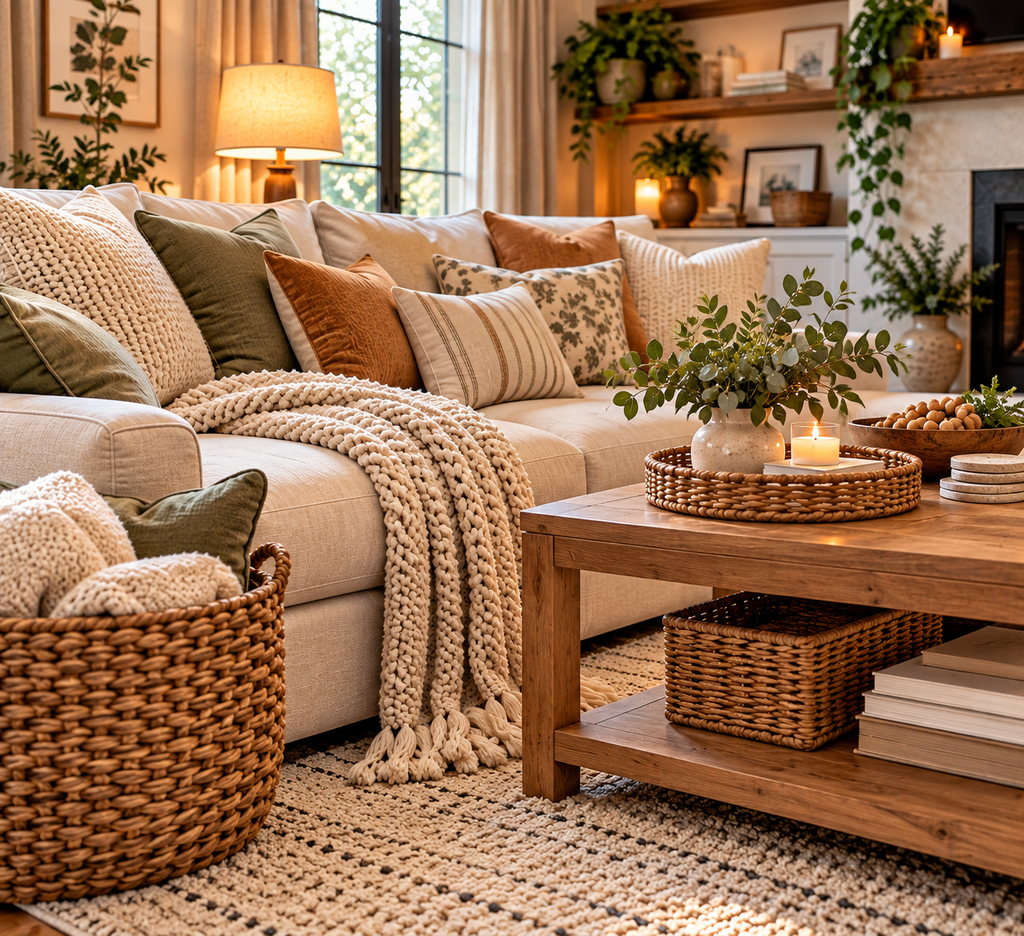
If you want your living room to feel cozy, start with texture. Even a simple room with neutral walls and basic furniture can feel inviting when you combine soft, natural, and tactile materials.
Think of a woven blanket draped over the sofa, velvet or linen cushions, a plush area rug, and a woven basket beside an armchair. These details create visual interest and make the room feel comfortable rather than overly polished.
You don’t need to use many different materials. Two or three complementary textures are often enough to create a layered look.
For example, a smooth cotton sofa can look beautiful with a chunky knitted throw and a pair of textured cushions. A wooden coffee table adds another natural element without competing for attention.
How to recreate the look: Choose one soft element, one woven or textured element, and one natural material. Repeat these textures in small ways throughout the room to create a cohesive appearance.
If you have children or pets, prioritize washable cushion covers, durable fabrics, and easy-to-clean rugs so your cozy living room remains practical.
4. Use Warm Lighting to Change the Atmosphere
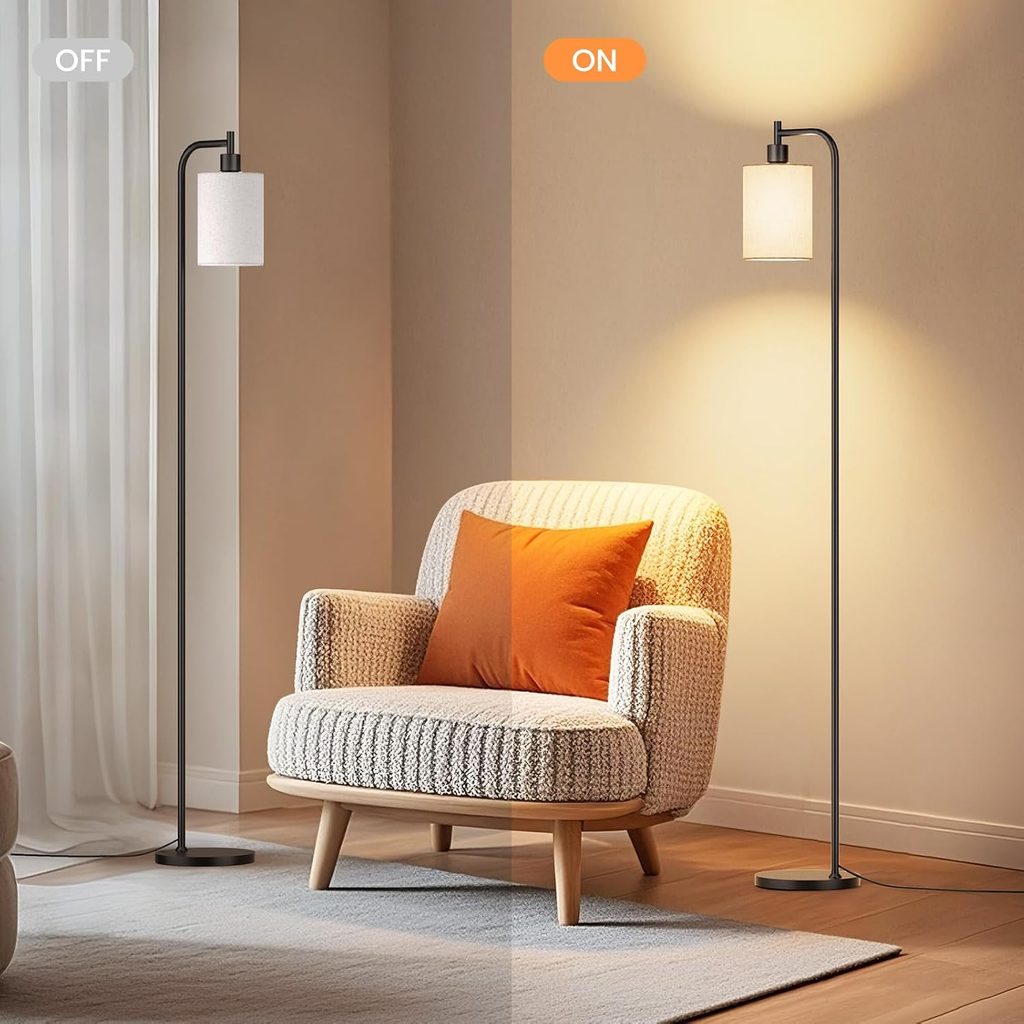
Lighting has a major influence on how a living room feels. Bright overhead lighting can be useful for cleaning or everyday tasks, but it may not create the relaxing atmosphere you want in the evening.
Layered lighting offers a simple solution. Combine your main ceiling light with a floor lamp near the sofa, a table lamp on a side table, or a small reading light beside your favorite chair.
Warm-toned bulbs can create a softer, more welcoming atmosphere, especially when paired with lampshades that diffuse the light. If your living room receives plenty of daylight, use lightweight curtains to allow natural light in during the day.
Try to spread light throughout the room instead of relying on a single bright source. This can make dark corners feel more inviting and help the room look more balanced.
How to recreate the look: Place a floor lamp beside your main seating area and add a table lamp to another part of the room. Use dimmable lighting where possible so you can adjust the brightness for reading, entertaining, or relaxing.
5. Style Your Coffee Table Without Creating Clutter
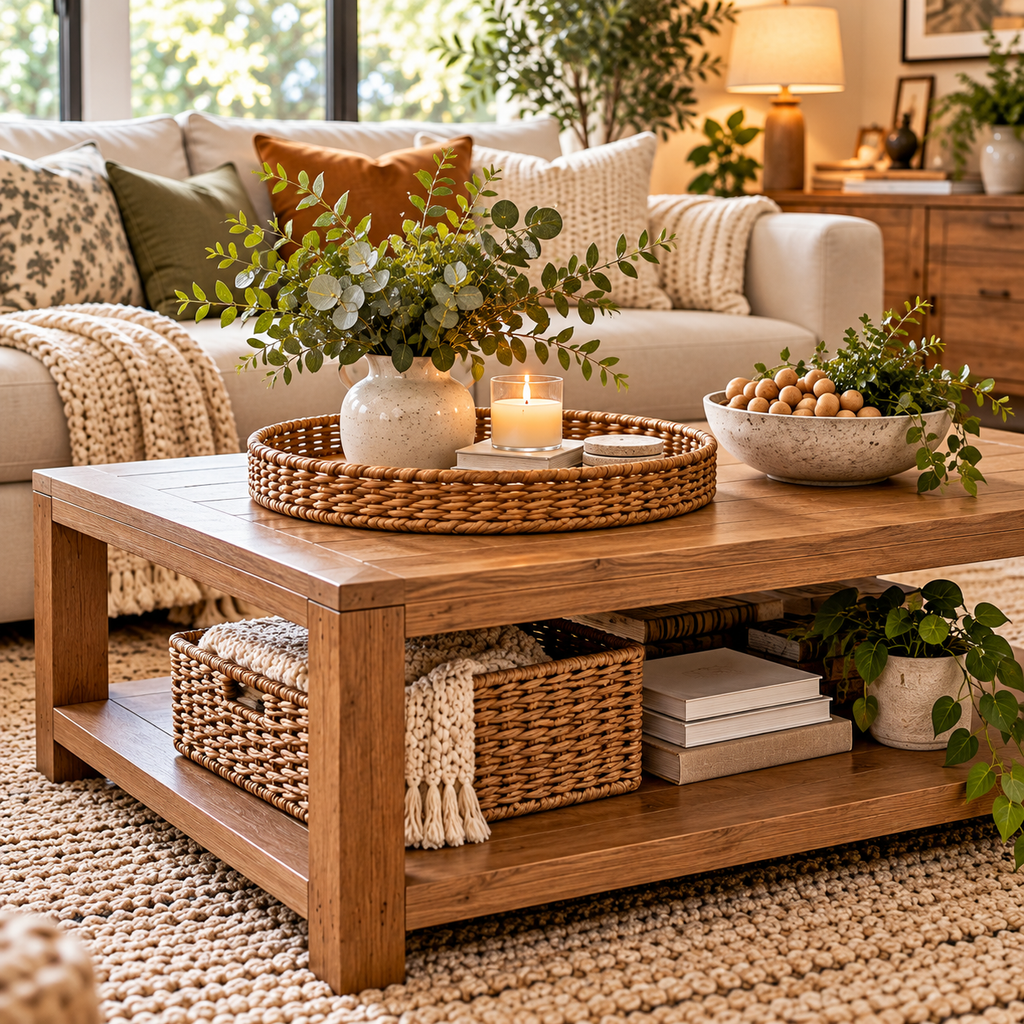
A coffee table is often the center of the living room, but it can quickly become a dumping ground for remote controls, cups, mail, and other everyday items.
A simple styling arrangement can make the table look intentional while leaving enough room for daily use.
Start with a decorative tray to group small objects together. Add a short stack of books, a small vase with fresh or dried flowers, or a simple decorative bowl. Vary the height of the objects slightly to create interest, but avoid filling the entire surface.
If you use your coffee table frequently, keep the arrangement compact and easy to move. There is no need to sacrifice functionality for appearance.
How to recreate the look: Choose no more than three or four main decorative elements. Place them together on one side or within a tray, leaving the rest of the table open.
For busy households, a coffee table with a lower shelf or hidden storage can be especially helpful for keeping remotes, magazines, and small accessories organized.
6. Bring Nature Indoors With Greenery
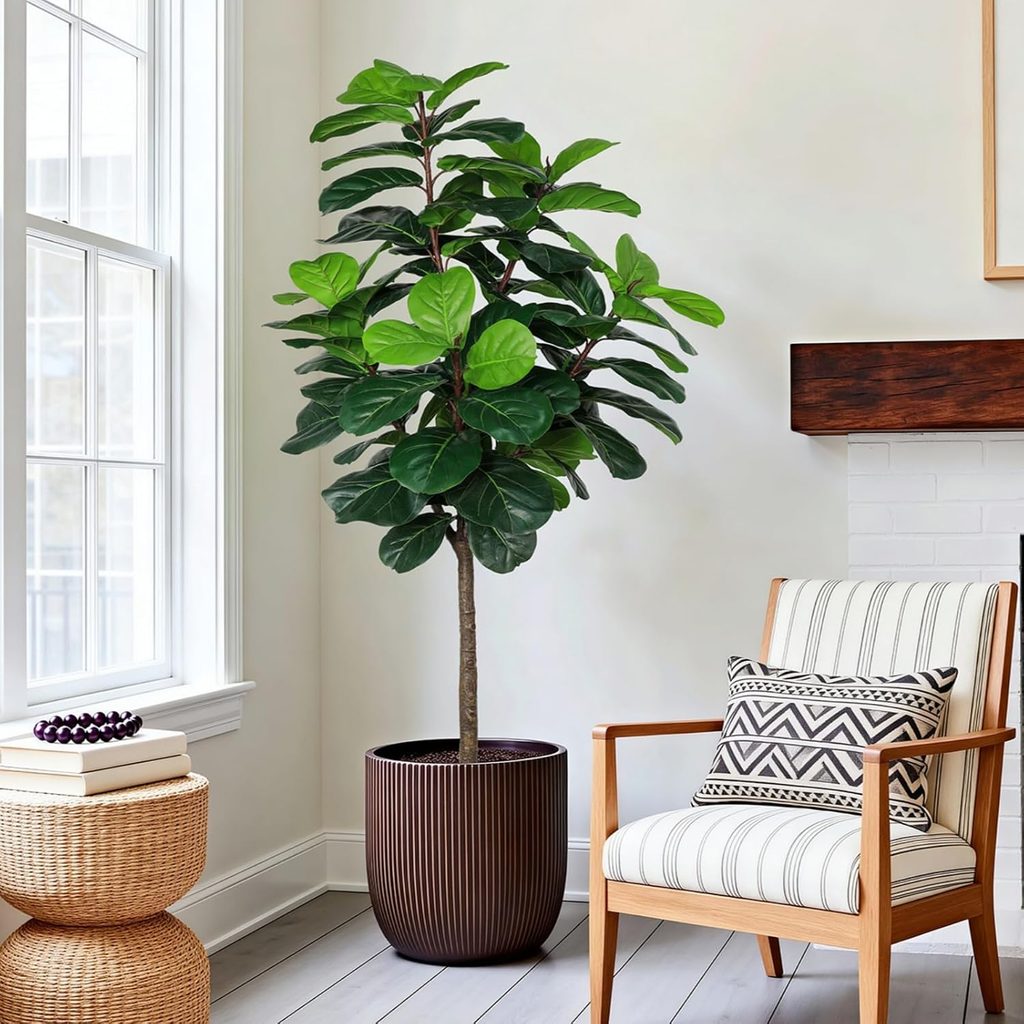
Plants can make a living room feel fresher, more relaxed, and connected to nature. Their natural shapes also soften the straight lines of sofas, shelving, cabinets, and other furniture.
If you have an empty corner, a taller indoor plant can help balance the room. Smaller plants work well on shelves, side tables, and window ledges, while a simple vase of fresh branches can add a natural touch without taking up much space.
You don’t need to turn your living room into an indoor garden. A few thoughtfully placed plants can make a meaningful difference.
Choose plants based on the light conditions in your home and the care you’re comfortable providing. If natural light is limited, research suitable low-light varieties. If you prefer a maintenance-free option, realistic artificial greenery can also work.
How to recreate the look: Place one taller plant near a window or in an unused corner, then add one or two smaller plants elsewhere. Use planters in complementary colors or materials to keep the arrangement cohesive.
Remember to check plant safety if you have pets, as some common houseplants can be harmful to cats and dogs.
7. Make a Small Living Room Feel Bigger
Small living rooms can be challenging because every furniture choice affects how much space remains for movement. The goal isn’t to make the room completely empty. It’s to use the available space thoughtfully.
Start by measuring your room and choosing furniture that fits its proportions. A compact sofa, a slim side table, or a coffee table with an open base may work better than bulky pieces that dominate the floor.
Mirrors can reflect light and create a greater sense of depth when positioned thoughtfully. Light-colored curtains, clear walkways, and a consistent color palette can also help the room feel more open.
Storage matters just as much as appearance. Instead of allowing blankets, books, and small accessories to collect on every surface, give each category a designated home.
How to recreate the look: Remove unnecessary furniture first. Keep the main walkway clear, use vertical shelving when appropriate, and choose multifunctional pieces such as a storage ottoman or nesting tables.
A small living room can still feel stylish and cozy when every item has a purpose and there is enough room to move comfortably.
8. Ground the Seating Area With a Beautiful Rug
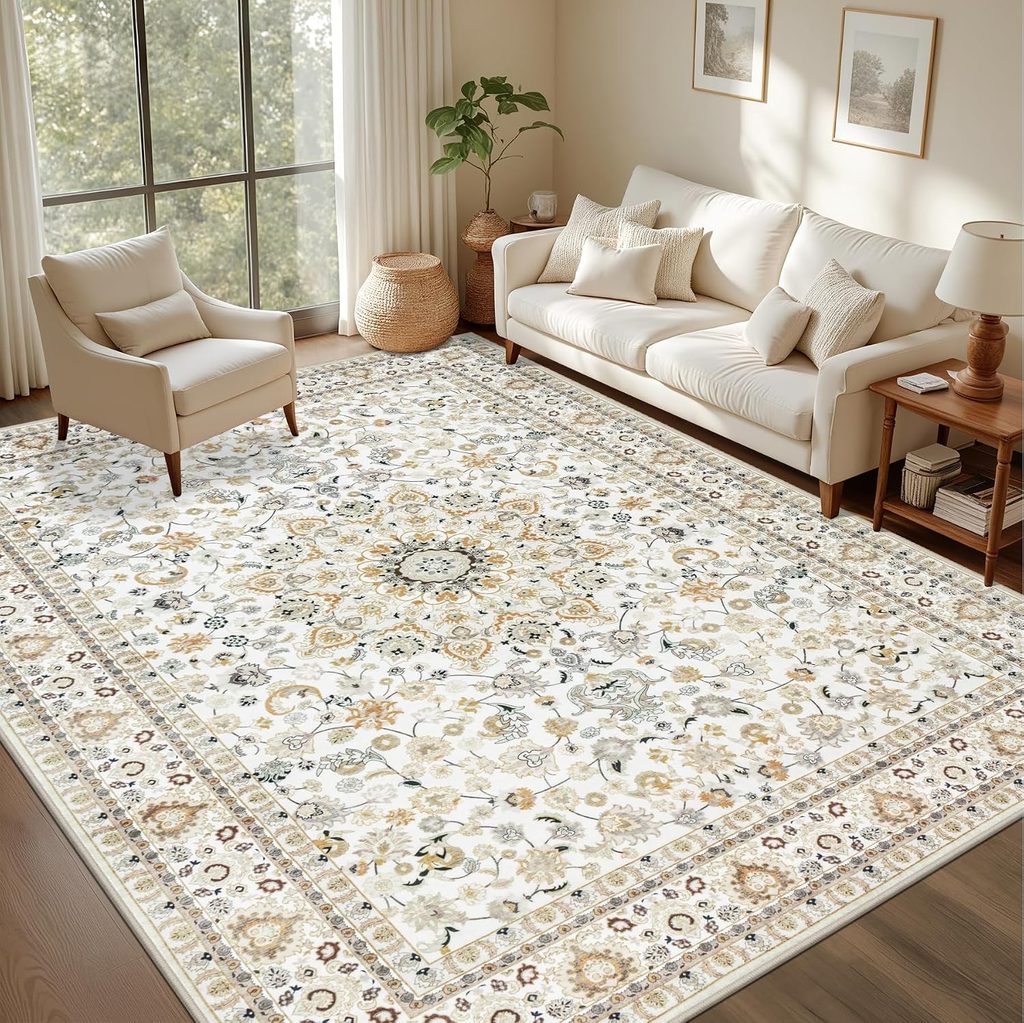
An area rug can bring the entire living room together. It adds softness underfoot, introduces color and texture, and helps define the seating area, particularly in open-plan homes.
One common mistake is choosing a rug that is too small. A tiny rug floating in front of a large sofa can make the furniture arrangement feel disconnected.
Whenever possible, choose a rug large enough for at least the front legs of the main seating pieces to rest on it. This helps create a unified arrangement. In a smaller room, a well-proportioned rug can still make the seating area feel more intentional without covering the entire floor.
Consider how you use your space before choosing a material. A plush rug may be lovely in a quiet sitting room, while a durable, easy-to-clean option may be more suitable for a busy family home.
How to recreate the look: Measure the seating area before shopping. Choose a rug that complements the sofa and curtains, then use its colors to guide your choice of cushions and accessories.
If you already own a rug that feels too plain, layering a textured throw over the sofa and adding coordinated cushions can help create a more complete look.
9. Create a Personal Gallery Wall
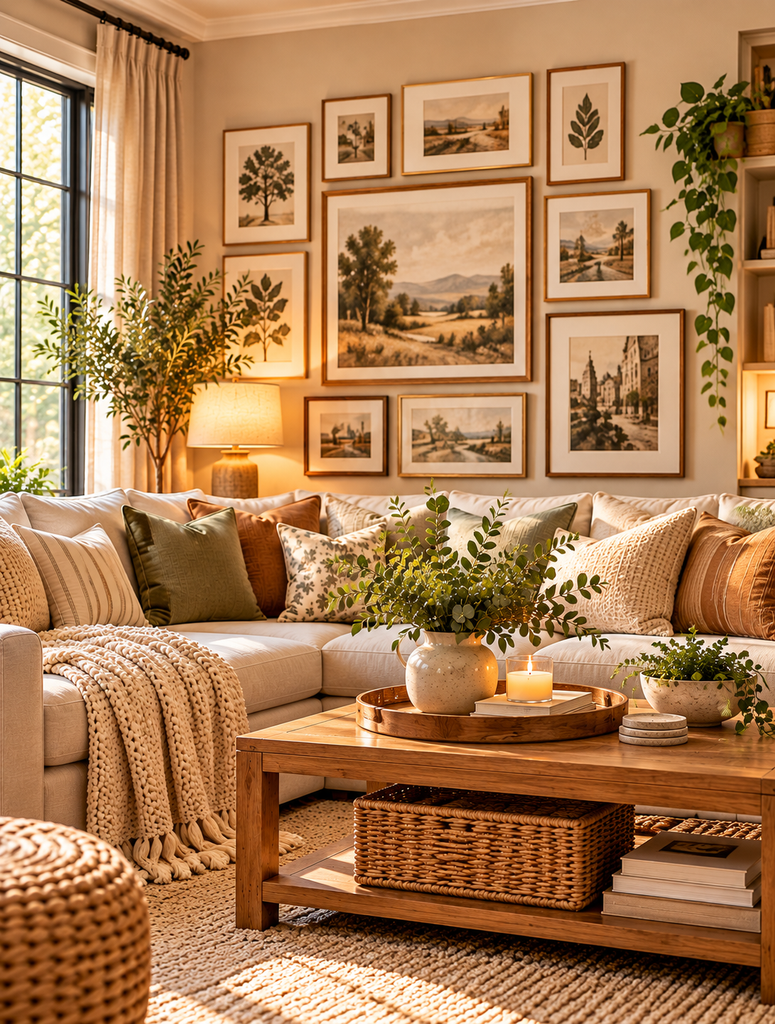
A gallery wall is a wonderful way to add personality to a living room without filling it with furniture or decorative objects.
You can use framed photographs, artwork, simple illustrations, typography prints, or a combination of different pieces. The result can be formal and symmetrical or relaxed and collected, depending on your personal style.
For a cohesive look, choose a common element that connects the artwork. This might be a shared color palette, similar frame finishes, a consistent subject, or a balanced mix of light and dark tones.
Before hanging anything, arrange the frames on the floor or create paper templates to test the layout. This makes it easier to adjust spacing and proportions before putting holes in the wall.
How to recreate the look: Start with one larger frame as the anchor and arrange smaller frames around it. Keep the spacing relatively consistent and position the overall arrangement in proportion to the sofa or wall.
If you rent your home, removable hanging strips or other renter-friendly hanging solutions may be suitable, depending on the wall surface and the product’s weight limits.
10. Refresh the Sofa With Accent Pillows
Accent pillows are one of the easiest ways to update a living room without replacing the sofa. They can introduce color, soften the seating area, and make the room feel more inviting.
Rather than buying several identical cushions, experiment with a small combination of solid colors, subtle patterns, and different textures. For example, cream cushions can be paired with muted green, warm brown, or terracotta accents.
The key is to create variety without making the sofa look too busy. If your rug already has a strong pattern, choose simpler cushions. If the room is mostly neutral, a few patterned pillows can add personality.
Think about comfort, too. Oversized decorative cushions may look beautiful, but too many can leave little room to sit.
How to recreate the look: Begin with two complementary colors and one or two textures. Mix cushion sizes if they suit your sofa, and keep the overall palette connected to the rug, curtains, or artwork.
For an affordable seasonal refresh, buy removable pillow covers rather than entirely new cushions. They are easier to store and can transform the room with very little effort.
11. Keep Your TV Wall Stylish and Organized
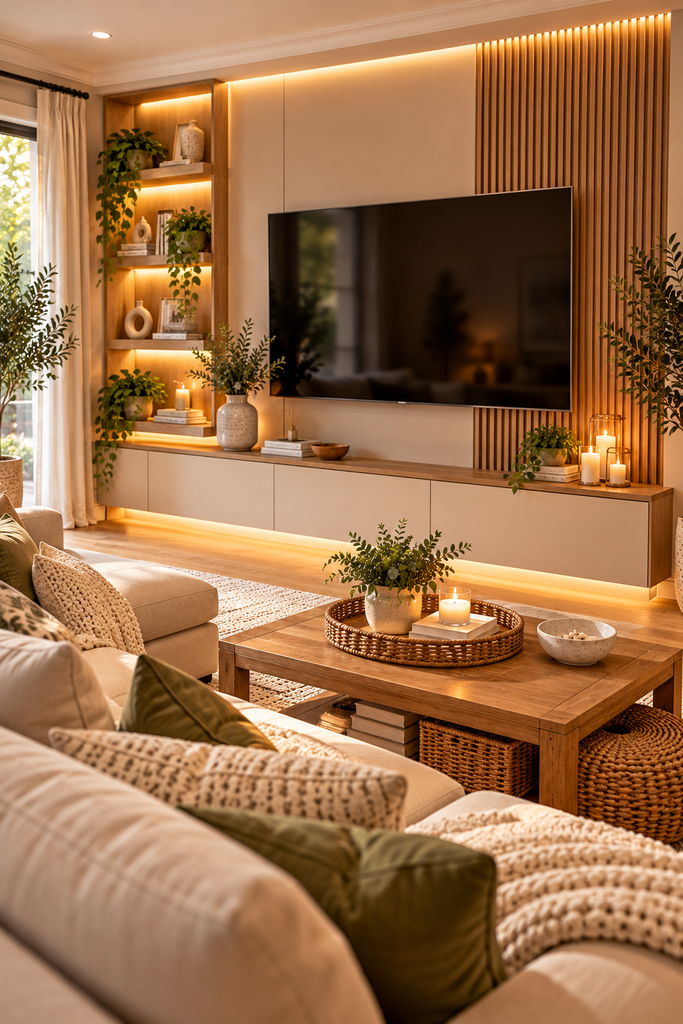
The television often becomes the focal point of a living room, especially when the room is used for family movie nights. However, visible cables, crowded shelves, and piles of electronics can make the area feel messy.
A simple media console can provide storage for remotes, gaming accessories, chargers, and other small items. Closed cabinets are particularly useful when you want a clean appearance without displaying everything you own.
If you prefer open shelving, leave space between decorative objects instead of filling every shelf. A few books, a small plant, and one or two meaningful accessories are often enough.
Cable management also makes a difference. Use appropriate cable clips, sleeves, or organizers to keep wires neat and out of the main sightline. Make sure any equipment has adequate ventilation and that cables remain safely arranged.
How to recreate the look: Begin by removing everything from the TV console. Sort items into categories, discard unnecessary packaging, and return only the things you regularly use. Store smaller accessories in labeled boxes or dedicated compartments.
A tidy TV wall can make the whole living room feel calmer without requiring expensive built-in cabinetry.
12. Make Storage Part of Your Living Room Decor
A cozy living room doesn’t have to be perfectly styled all day. In a real home, blankets, books, toys, and everyday accessories naturally find their way into the space.
The trick is to make storage easy enough that tidying up doesn’t feel like a major chore.
Woven baskets are useful for blankets and cushions, while lidded boxes can hold smaller items. A storage ottoman offers a place to put your feet up while hiding things you don’t want on display. Shelving can provide space for books and decorative objects, and a media cabinet can keep electronics organized.
Choose storage that fits the style of your room. Natural baskets work well in relaxed, neutral interiors, while simple fabric bins or streamlined cabinets may suit a more modern space.
How to recreate the look: Assign a specific place for each category of belongings. Keep frequently used items within easy reach and move occasional-use items to less accessible storage.
You can also create a simple five-minute evening reset. Return blankets to their baskets, collect cups, clear the coffee table, and put small accessories back where they belong.
This small routine helps your living room remain welcoming without requiring constant cleaning.
13. Create a Reading Nook for Quiet Moments
A reading nook can make your living room feel more personal and useful, even if you don’t have a separate room for reading.
All you need is a comfortable chair, a good light source, and a small place to keep your current book or cup of tea. A corner near a window can be ideal, but an unused area beside a bookshelf or sofa can work just as well.
A soft throw and a small cushion make the chair more inviting. If space is limited, choose a compact accent chair and a narrow side table rather than a large armchair and bulky furniture.
Keep the area simple so it feels like a peaceful retreat instead of another place where clutter collects.
How to recreate the look: Position a chair where you can read comfortably, add a floor lamp or reading light, and place a small basket nearby for books and blankets. Use a cushion in a color that connects the nook to the rest of the living room.
Even a small reading corner can become a favorite spot for quiet mornings and relaxing evenings.
14. Add Natural Wood for a Warm, Timeless Look
Natural wood brings warmth and character to a living room. It works beautifully with neutral fabrics, greenery, woven materials, and soft lighting, making it a versatile choice for many interior styles.
You can introduce wood through a coffee table, side table, floating shelf, media console, or even a small decorative bowl. You don’t need matching wooden furniture throughout the room to make the look work.
In fact, mixing wood tones can add depth when the finishes complement one another. Try pairing a medium-toned coffee table with lighter wood accents and neutral upholstery. Repeat each tone thoughtfully rather than introducing too many competing finishes.
If your existing furniture is dark or painted, smaller wooden accessories can still bring in a natural element without requiring a replacement.
How to recreate the look: Choose one or two wood finishes that work well with your existing furniture. Balance them with soft textiles, simple artwork, and a few natural accents.
This approach is especially useful if you want a living room that feels warm and timeless rather than tied to a short-lived trend.
15. Use Curtains to Soften the Room
Curtains do more than provide privacy. They soften hard edges, frame windows, filter daylight, and help connect the colors and textures throughout the living room.
Lightweight linen-look curtains can create an airy atmosphere, while heavier fabrics may offer more privacy and light control. The right choice depends on your room, climate, window direction, and personal needs.
One helpful styling technique is to hang the curtain rod higher than the top of the window and extend it beyond the window frame where practical. This can make the window appear larger and allow more light into the room when the curtains are open.
Choose a curtain length that suits your space. Floor-length panels often create a polished look, but they should not obstruct doors, heating equipment, or walkways.
How to recreate the look: Select a curtain color that complements the walls, sofa, or rug. Warm white, beige, and soft neutral shades are versatile options, while muted green or terracotta can add a little more character.
If you want a calm, coordinated living room, repeat a color from your curtains in a cushion, throw, or small decorative accessory.
16. Choose One Statement Piece That Reflects Your Style
A room doesn’t need lots of decorative items to feel interesting. Sometimes, one memorable piece can give the entire living room a stronger identity.
This could be an oversized piece of artwork, a sculptural floor lamp, a distinctive accent chair, a colorful ceramic vase, or a coffee table with an unusual shape.
The best statement piece is one that feels connected to your home rather than something chosen simply because it is fashionable. Think about the colors, materials, and overall mood you want before making a purchase.
Once you have chosen the focal point, let it stand out. Surround it with simpler pieces so the room feels balanced instead of crowded.
How to recreate the look: Look around your living room and identify what feels missing. If the room is full of neutral furniture, a single accent chair or colorful artwork may provide the contrast you need. If the room already has bold patterns, a sculptural lamp or natural wood table may be a better choice.
You can also shop your own home first. Moving artwork from another room or displaying a favorite object in a new way may give your living room the refresh it needs.
17. Keep Your Living Room Cozy With Seasonal Layers
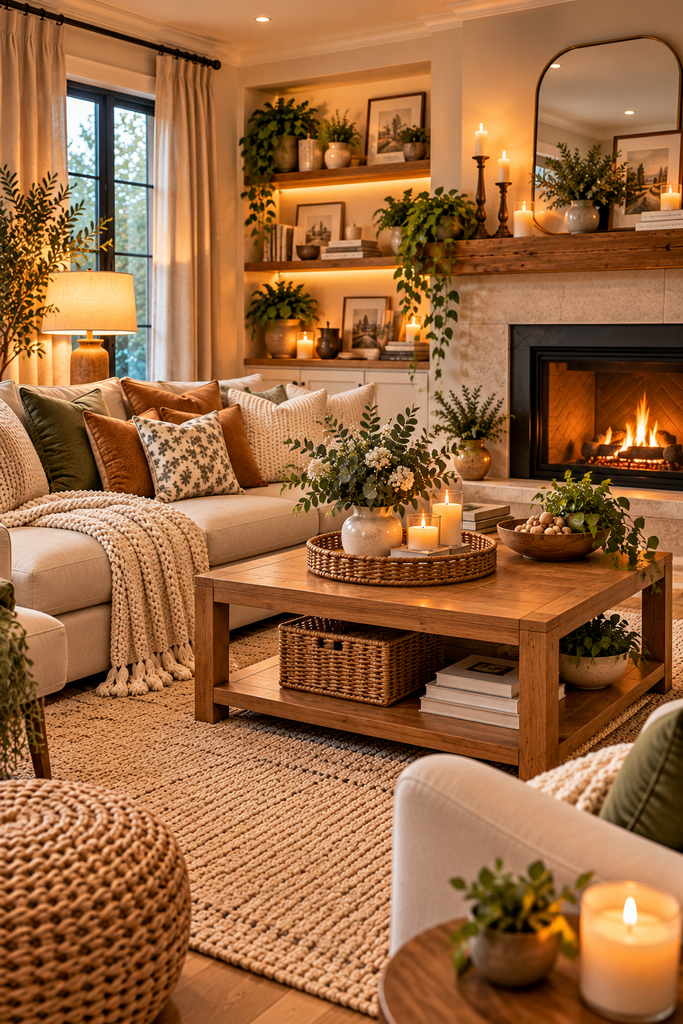
One of the easiest ways to keep a living room feeling fresh is to change a few small details throughout the year. You don’t need to replace your main furniture or completely redecorate for every season.
In spring and summer, lightweight fabrics, fresh greenery, and lighter cushion covers can create an airy atmosphere. During cooler months, knitted throws, textured cushions, and warmer accent colors can make the room feel more inviting.
You can also update a small coffee table arrangement or switch a few decorative accessories to reflect the season. The goal is to make subtle changes while keeping the main room functional.
Storage is important here, too. If seasonal cushions and throws have no designated home, they can quickly create clutter.
How to recreate the look: Keep your larger furniture and foundational colors relatively consistent. Rotate a small collection of pillow covers, throws, and accessories as needed. Store the pieces you’re not using in labeled bins, under-bed storage, or a suitable closet shelf.
This approach gives you the pleasure of a refreshed living room without the cost and effort of a complete makeover.
Extra Tips for Creating a Cozy and Stylish Living Room
Once you’ve found inspiration from these living room ideas, a few simple habits can help you bring everything together.
Start with what you already own. Before buying new decor, try rearranging your furniture, changing cushion covers, or moving accessories from another room. You may be surprised by how much you can improve without spending money.
Choose comfort alongside style. A beautiful living room should work for your everyday life. Choose seating that feels comfortable, rugs that suit your household, and storage that makes tidying easier.
Keep your color palette consistent. You don’t have to use only neutral colors, but choosing a few complementary shades helps the room feel connected. Repeat colors through cushions, artwork, curtains, and small accessories.
Leave some breathing room. Empty space isn’t wasted space. Clear surfaces and unobstructed walkways make a living room feel more peaceful and easier to use.
Make organization part of the design. Attractive baskets, closed cabinets, storage ottomans, and well-planned shelving can keep everyday belongings accessible without making the room look cluttered.
Make changes gradually. You don’t have to complete every idea at once. Start with the change that would make the biggest difference to your daily comfort, then add other details as your budget allows.
Frequently Asked Questions
How can I make my living room cozy without spending much money?
Start by decluttering surfaces and rearranging the furniture to improve the layout. Add a throw blanket, rearrange existing cushions, introduce softer lighting, and display a few meaningful accessories. Shopping your own home before buying anything new can help you refresh the space on a very small budget.
What colors make a living room feel warm and inviting?
Cream, beige, warm white, soft brown, muted green, and terracotta can all create a welcoming atmosphere. You can combine neutral foundations with a few deeper accents to add contrast. The best palette depends on your natural light, existing furniture, and personal taste.
How do I make a small living room look stylish?
Choose furniture that fits the room, keep walkways clear, and avoid overcrowding the space with decorative items. Mirrors, layered lighting, appropriately sized rugs, and multifunctional furniture can help a small living room feel more open and practical.
What should I put in a living room to make it feel cozy?
Comfortable seating, soft textiles, warm lighting, a well-proportioned rug, and a few personal accessories are a good starting point. Plants, artwork, books, and natural materials can add character, but you don’t need all of them. Focus on the elements that make your space comfortable and functional.
How can I keep my living room organized every day?
Give frequently used items a designated place. Use baskets for blankets, cabinets for electronics, and trays for small accessories. A quick evening reset can help you return items to their proper places and keep clutter from building up.
How can I make my living room look expensive on a budget?
Focus on a cohesive color palette, good lighting, appropriately sized furniture, and a few well-chosen accessories. Keeping surfaces tidy, hanging curtains thoughtfully, and using layered textures can create a polished appearance without requiring expensive furniture or luxury decor.
Final Thoughts
Creating a cozy and stylish living room doesn’t mean following every trend or buying everything you see in an inspiration photo. The most inviting spaces are the ones that balance beauty with the way people actually live.
Start with the basics: a comfortable layout, soft lighting, a few thoughtful textures, and storage that makes everyday life easier. Then add personal touches, such as artwork, greenery, favorite books, or seasonal accessories, that make the room feel like yours.
Whether you try a neutral color palette, create a reading nook, refresh your coffee table, or find a better place for everyday clutter, even one small change can make your living room feel more welcoming.
Choose two or three ideas that suit your home and start there. With a little creativity and thoughtful organization, you can create a living room that feels comfortable, looks beautiful, and works for your everyday life.
Save these living room inspo ideas for your next home refresh, and come back whenever you need a little inspiration to make your space feel cozier.
Read more: 27 Minimalist Luxury Living Room Ideas That Feel Calm, Elegant, and Expensive