
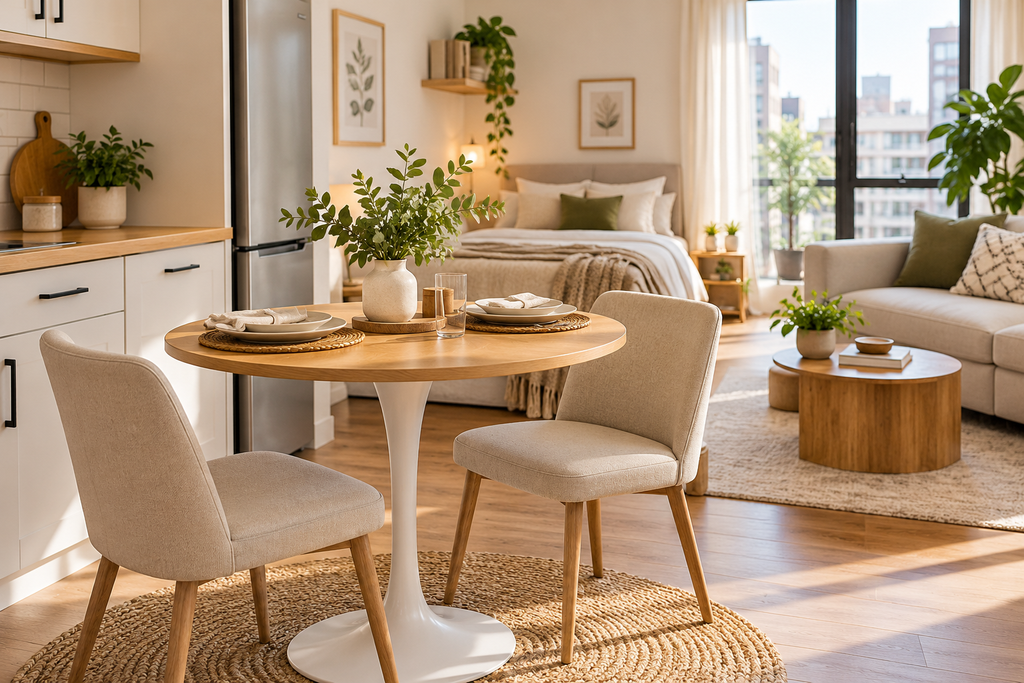
Living in a studio apartment has its advantages. Everything is within reach, cleaning takes less time, and a small space can feel wonderfully cozy when it is arranged well. But there is one challenge many studio apartment dwellers face: finding room for a dining table without making the entire apartment feel cramped.
When your kitchen, living room, bedroom, and dining area share the same space, every piece of furniture needs to earn its place. A large dining table might look beautiful in a spacious home, but in a studio apartment, it can block walkways, take up valuable floor space, and make the room feel smaller than it actually is.
The good news is that you do not need a separate dining room to enjoy a comfortable place to eat. The right table, a clever furniture arrangement, and a few space-saving ideas can help you create a functional dining area that fits naturally into your home.
Whether you live alone, share a small apartment with a partner, or occasionally host friends, these small space dining table ideas for studio apartments will help you make the most of every square inch without sacrificing comfort or style.
1. Choose a Small Round Dining Table
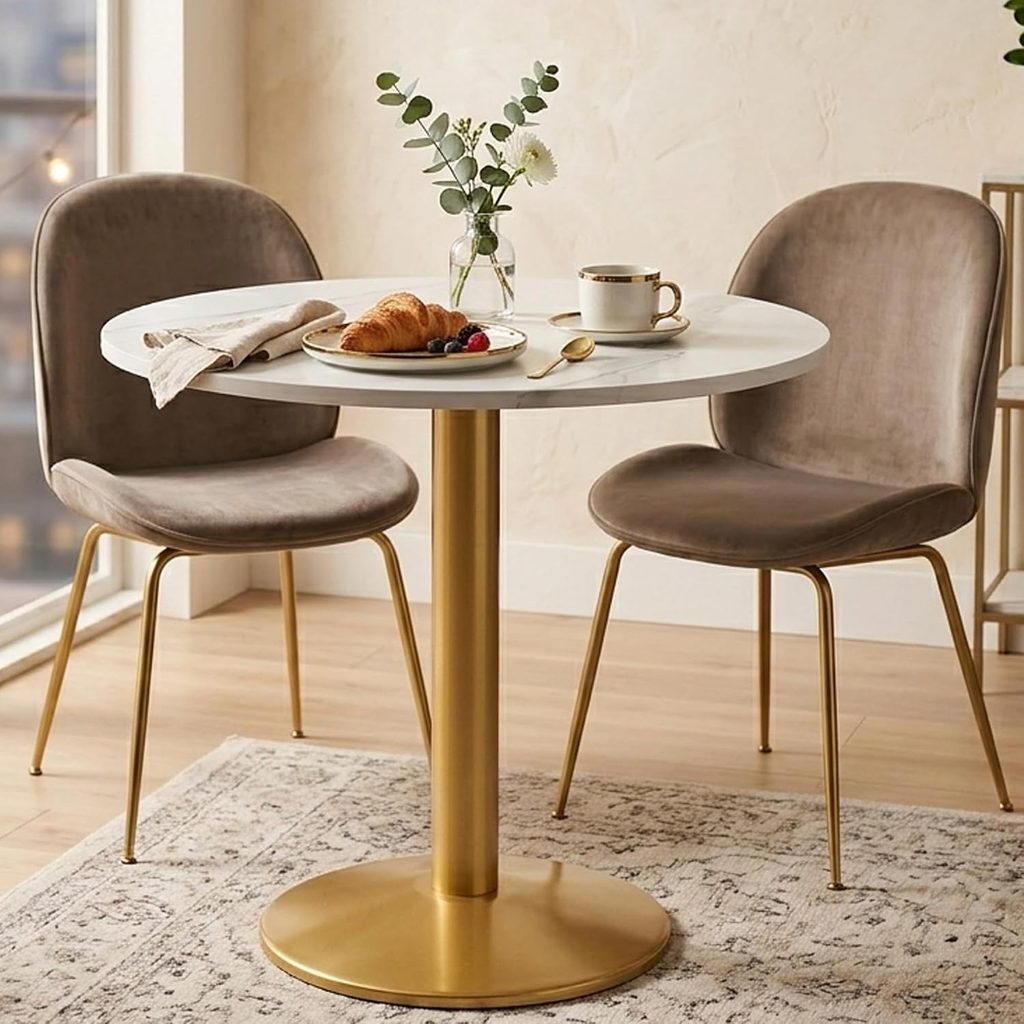
A small round dining table is one of the easiest ways to create a dining area in a studio apartment. Its curved edges make it easier to move around, especially when the table sits near a kitchen counter, sofa, or narrow walkway.
Round tables are particularly useful for couples or people who usually eat alone but want enough room for an occasional guest. A compact pedestal table is worth considering because its central base leaves more legroom than a design with four bulky legs.
Choose a simple tabletop with a diameter that fits your available space. Pair it with two lightweight chairs that can slide underneath when you finish eating.
To make the area feel inviting, add a small vase, a simple placemat, or a compact pendant light above the table. Keep decorations minimal so the dining surface remains practical for everyday meals.
Best for: Couples, solo apartment dwellers, and studio layouts with limited walking space.
2. Install a Wall-Mounted Folding Dining Table
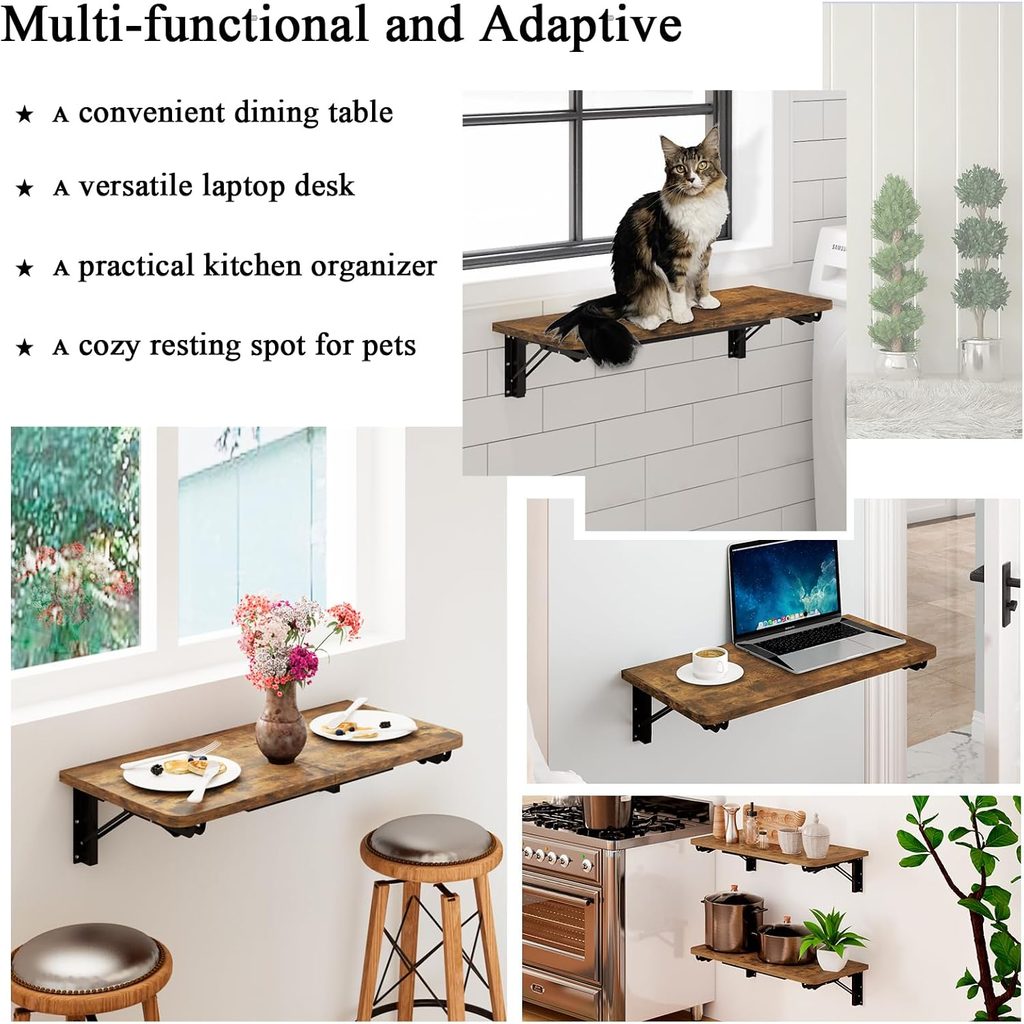
When floor space is especially limited, a wall-mounted folding table can be a game changer. It attaches to the wall and folds down when you need a place to eat, work, or enjoy your morning coffee.
After the meal, simply fold the tabletop away to open up the room again. This makes the design particularly useful for apartments where the dining area doubles as a home office or living space.
Install the table near the kitchen if possible, so carrying food and dishes is convenient. A location near a window can also provide natural light during breakfast or lunch.
Before choosing one, check the table’s weight capacity, the wall structure, and the installation requirements. If you rent your apartment, consider a freestanding folding table instead if drilling is not permitted.
Pair the table with folding chairs that can be stored in a closet or behind a door when they are not in use.
Best for: Very small studios, renters who can use freestanding alternatives, and homes where floor space needs to remain flexible.
3. Make the Most of a Drop-Leaf Dining Table
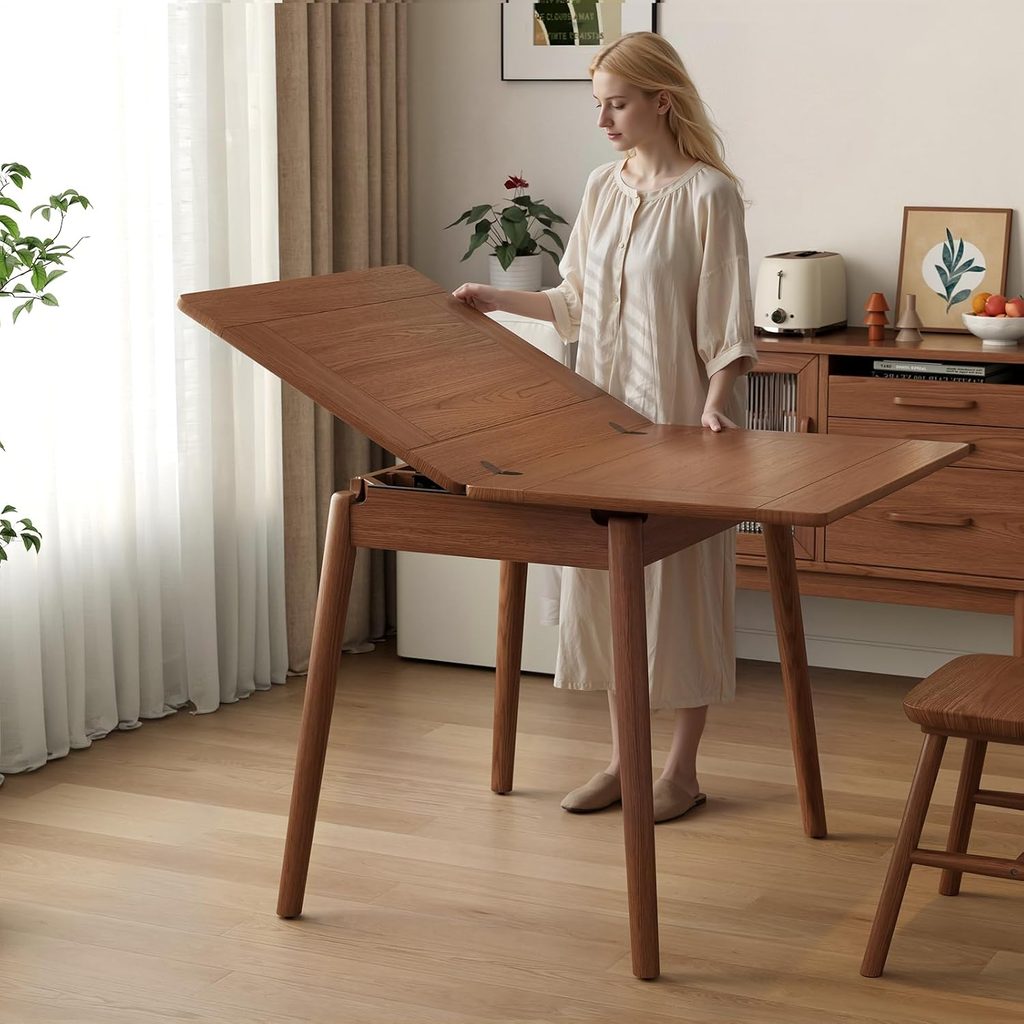
A drop-leaf table gives you the flexibility of a larger dining surface without requiring you to keep it fully extended all day.
The hinged sides can be lowered when you need a compact table and raised when you want additional room for meals or guests. Some designs are narrow enough to sit against a wall, making them useful in studio apartments with long, slim layouts.
For everyday use, keep one leaf raised and position the table beside a wall. When friends visit, raise the second leaf to create more seating space, provided your room has enough clearance.
Look for a design with sturdy hinges, a stable base, and a finish that complements your existing furniture. Light wood, white finishes, and simple silhouettes can work particularly well in small interiors.
A drop-leaf table can also serve as a temporary workspace when you need somewhere to use your laptop or sort household paperwork.
Best for: People who need a small everyday table but occasionally entertain guests.
4. Turn an Unused Corner Into a Dining Nook
Sometimes the best dining area is hiding in a corner you barely use. An empty spot beside a window, near the kitchen, or between two walls can become a cozy dining nook with just a compact table and a couple of chairs.
Start by measuring the corner and checking how much room you need to sit down and move comfortably. A small round or square table can work well, depending on the shape of the space.
If one side of the corner is against a wall, consider placing a narrow bench there. This arrangement can reduce the amount of space needed compared with pulling out chairs on every side.
Keep the styling simple. A small wall picture, a cushion, or a warm wall light can make the nook feel intentional without adding unnecessary clutter.
The goal is to create a comfortable place to eat while leaving the rest of the studio open and easy to navigate.
Best for: Studio apartments with an unused corner or an awkward area beside the kitchen.
5. Use a Dining Table That Doubles as a Desk
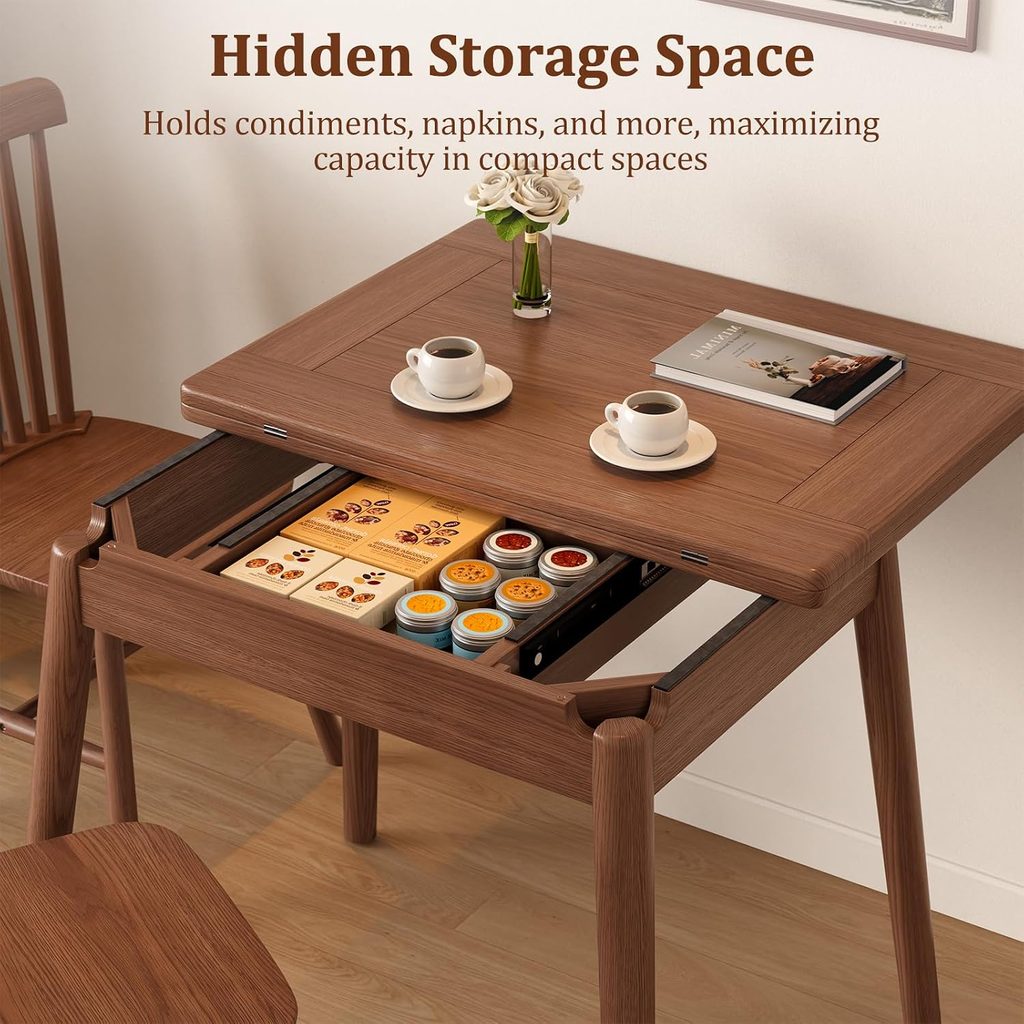
In a studio apartment, buying separate furniture for every activity can quickly use up all your available space. A dining table that also works as a desk is a practical alternative.
A compact rectangular table can provide enough room for everyday meals, laptop work, studying, and small household tasks. When you finish working, clear away your laptop and paperwork to turn the same surface into a dining area.
Choose a tabletop that is easy to clean and large enough for the activities you actually do. If you work from home regularly, check that the table height and seating are comfortable for longer periods.
Storage is important, too. Use a small drawer unit, a nearby shelf, or a storage basket to keep office supplies out of sight when it is time to eat.
Instead of filling the tabletop with decorative objects, choose one small centerpiece that can be moved easily.
Best for: Students, remote workers, and anyone who wants fewer furniture pieces in a small apartment.
6. Place a Narrow Rectangular Table Against the Wall
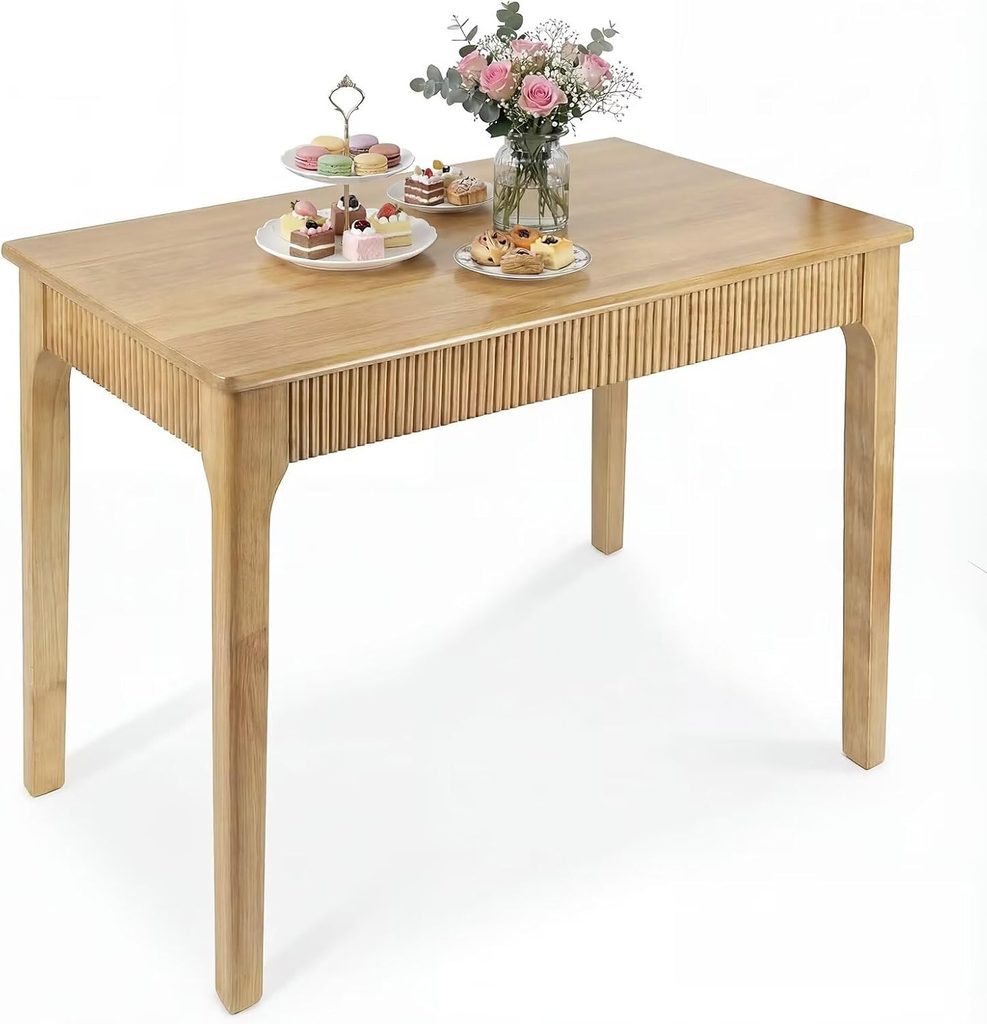
A narrow rectangular dining table can fit beautifully into a studio apartment where a round table would interrupt the main walkway.
Position it against an empty wall or alongside the kitchen area. Depending on the design, you may be able to use chairs on one side and keep the other side close to the wall.
Look for a slim tabletop with enough depth for plates, glasses, and serving dishes. Avoid choosing a table that is so narrow that everyday meals become uncomfortable.
A simple rectangular design can also help create a visual boundary between the kitchen and living room without the need for a room divider.
For a coordinated look, choose chairs that tuck underneath the table and keep the wall above it relatively uncluttered.
Best for: Long, narrow studio apartments and spaces where keeping the central walkway clear is a priority.
7. Try a Counter-Height Dining Table
A counter-height table can provide a casual dining spot while taking up relatively little visual space. It can work particularly well beside a kitchen counter or along the edge of an open-plan kitchen.
Pair it with appropriately sized stools that slide underneath when they are not being used. Backless stools can be especially compact, although stools with supportive backs may be more comfortable for longer meals.
Before purchasing a counter-height set, consider how you normally eat. If you prefer relaxed meals or have children who need lower seating, a standard-height dining table may be more comfortable.
Make sure there is enough space to pull out the stools and sit down without blocking kitchen cabinets or the main entrance.
Choose a design that complements your kitchen finishes so the dining area feels like a natural extension of the existing layout.
Best for: Open-plan studios with a suitable kitchen counter or a dedicated spot for taller furniture.
8. Create a Dining Area With a Storage Bench
A storage bench is a smart choice when you need seating and additional storage in the same small area.
Place a compact bench against a wall and pair it with a small dining table. Depending on the layout, the bench can fit along one side of the table, allowing you to avoid placing chairs around the entire perimeter.
Choose a bench with a lift-up seat, drawers, or another storage feature. It can hold placemats, table linens, reusable shopping bags, and other small household essentials.
For comfort, add a washable cushion or a few simple pillows. If the dining area is close to the living room, coordinate the cushion fabric with your existing soft furnishings.
Remember to check that the bench can open fully and that you can reach its contents easily. Storage furniture only helps when you can use it without moving half the room.
Best for: Small apartments that need extra storage as well as a compact dining setup.
9. Choose an Extendable Dining Table
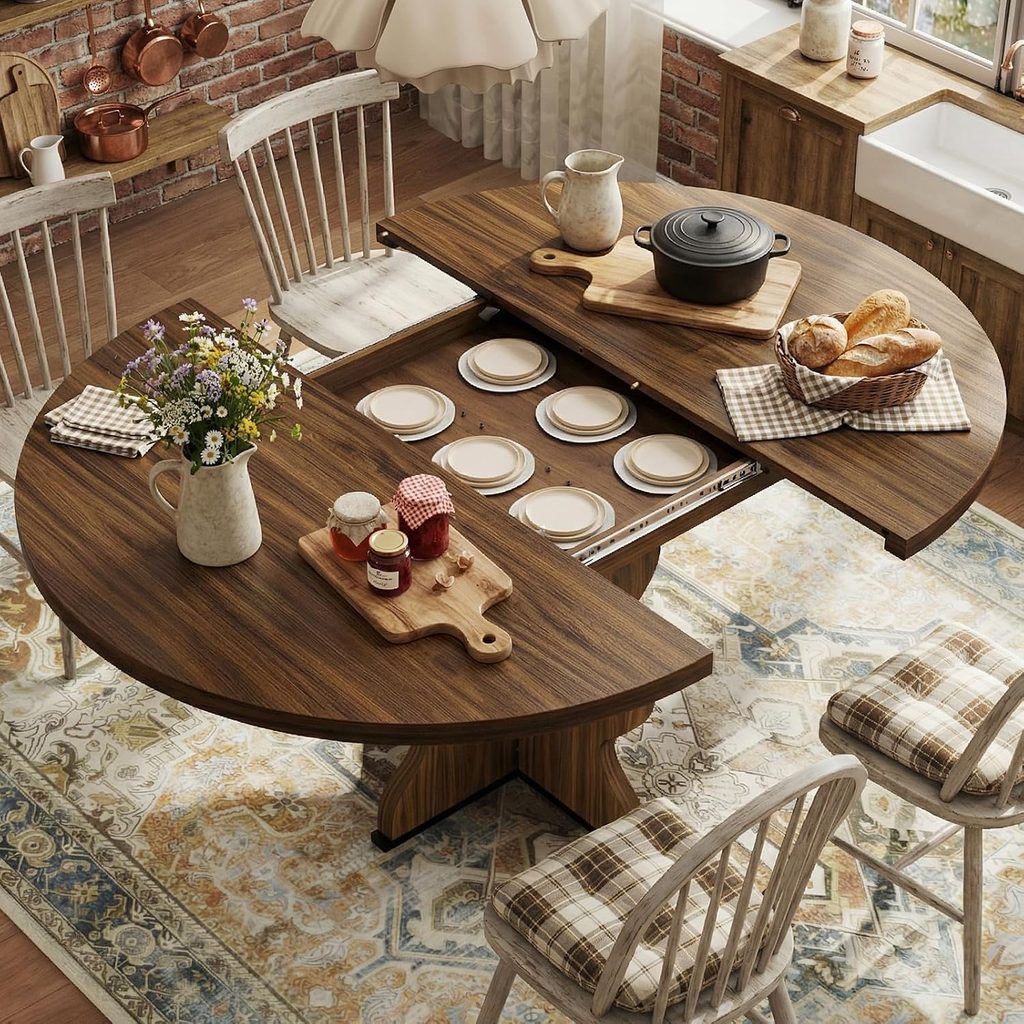
An extendable dining table is ideal when you want a comfortable everyday dining area but occasionally need room for more people.
Many designs have a compact tabletop that expands with an additional leaf or an extension mechanism. You can keep it small for daily meals and enlarge it when guests arrive.
When shopping, check both the closed and fully extended dimensions. The table may fit perfectly against a wall when compact but require significantly more room when opened.
Choose chairs that can be moved easily, and think about where you will store any removable extension pieces.
An extendable table is often more practical than buying a large dining set that occupies valuable floor space every day.
Best for: People who regularly host friends or family but do not need a large dining surface all the time.
10. Add a Compact Bistro Table for Café-Style Charm
If you love the feeling of a little neighborhood café, a small bistro table can bring that atmosphere into your studio apartment.
These tables usually have a compact design and work well with two chairs. A round metal table can create a modern look, while a simple wood tabletop can make the room feel warmer and more relaxed.
Position the set near a window, beside the kitchen, or in a corner that receives plenty of daylight.
You do not need much decoration to make the space feel special. A small vase, two attractive mugs, or a simple table runner can create a lovely setting without cluttering the surface.
Choose chairs that are comfortable enough for everyday use, not just attractive in photographs.
Best for: Couples, coffee lovers, and anyone who wants a stylish two-person dining area.
11. Use a Kitchen Peninsula as Your Dining Space
If your studio apartment already has a kitchen peninsula, you may not need a separate dining table at all.
A peninsula with a suitable countertop overhang can provide room for stools and create an informal breakfast or dining area. This arrangement keeps the eating space close to the kitchen and avoids introducing another large piece of furniture.
Measure the available overhang and check that there is enough knee room for comfortable seating. Make sure the stools can slide underneath without interfering with cupboards, drawers, or appliances.
To keep the peninsula useful, avoid turning it into a permanent storage surface for mail, shopping bags, and miscellaneous items. A clear countertop is much easier to use for meals.
If you are planning a kitchen renovation, discuss suitable seating dimensions and clearances with your installer.
Best for: Studio apartments with an existing peninsula or a kitchen layout that can accommodate one.
12. Choose a Glass-Top Dining Table
A glass-top dining table can help a small room feel visually lighter because you can see through the tabletop rather than looking at a solid, bulky surface.
This does not physically increase your floor space, but it can make the dining area feel less crowded, especially when paired with slim legs and simple chairs.
Glass tables work well in contemporary interiors, neutral color schemes, and apartments where the dining area sits close to the living room.
Consider tempered glass and a stable base, and remember that glass surfaces show fingerprints and smudges more readily than many other materials. If you have young children or prefer low-maintenance furniture, another tabletop material may be more practical.
Keep the surrounding decor simple so the table remains visually unobtrusive.
Best for: People who want a lighter-looking dining area and do not mind the additional cleaning.
13. Keep a Foldable Dining Set Ready for Everyday Use
A foldable dining set is especially helpful when your studio apartment serves several purposes throughout the day.
Unlike a permanently installed table, a freestanding folding table can be moved to different locations as needed. Some sets also include folding chairs that can be stored in a closet or behind a door.
Choose a sturdy design that opens and closes easily. Check the locking mechanism, tabletop stability, and weight capacity before buying.
If you plan to use the table every day, keep it in a convenient location rather than folding it away after every meal. You can still preserve floor space by choosing a design with a small footprint.
For occasional dining, a lightweight set can be brought out only when needed and stored away afterward.
Best for: Renters, flexible studio layouts, and households that need an adaptable dining area.
14. Place Your Dining Table Beside a Window
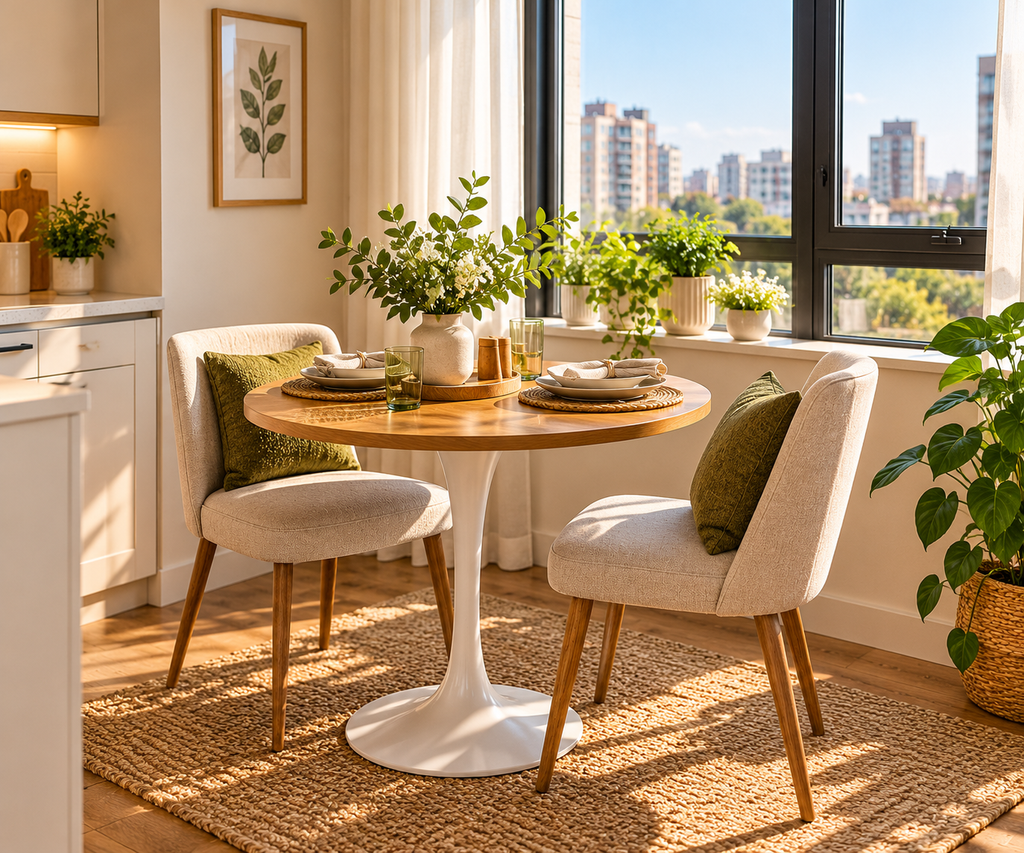
A dining table beside a window can make even a small studio feel bright and welcoming.
Natural light creates a pleasant setting for breakfast, lunch, or a quiet cup of coffee. It can also make the dining area feel more connected to the outdoors.
Choose a compact table that does not block the window or interfere with curtains and blinds. A round pedestal table or a narrow rectangular design can work well, depending on the available width.
Keep the window area relatively uncluttered. A small plant on the windowsill or a simple vase on the table may be all the decoration you need.
If the window receives strong direct sunlight, consider suitable window coverings to reduce glare and protect the tabletop from excessive sun exposure.
Best for: Studio apartments with a bright window area that can accommodate a small table.
15. Turn Your Kitchen Island Into a Dining Spot
A kitchen island can serve as a dining surface, food preparation area, and social gathering spot in one.
If your studio has enough room for an island, choose stools that fit comfortably beneath the overhang. This keeps the seating compact and makes it easier to move around the kitchen.
The island should not interfere with refrigerator doors, oven access, or kitchen work zones. Measure the surrounding space carefully before adding stools.
If your apartment is too small for a permanent island, a compact movable island or kitchen cart with a suitable dining overhang may offer a more flexible alternative.
Use baskets or drawers to store kitchen essentials, and keep the top clear enough for food preparation and meals.
Best for: Open-plan studios with a spacious kitchen layout or room for a compact movable island.
16. Choose a Dining Table With Built-In Storage
A dining table with built-in storage can help reduce clutter in a small apartment.
Depending on the design, you may find tables with shelves beneath the tabletop, drawers, or compartments for storing everyday essentials. These features can be useful when your studio has limited cupboard space.
Use the storage for items you regularly need, such as placemats, napkins, coasters, or reusable shopping bags. Avoid filling every available compartment with things you rarely use.
Check whether the storage design leaves enough room for your legs and chairs. A table with a large shelf may look practical but become uncomfortable if it interferes with seating.
Choose a simple design that offers useful storage without making the furniture feel oversized.
Best for: Studio apartments with limited kitchen cabinets and little room for additional storage furniture.
17. Use a Console Table That Converts Into a Dining Table
A console table that expands into a dining table is a clever option for a studio apartment where a full-size table would be impractical.
When closed, it can sit against a wall and occupy relatively little floor space. When needed, the tabletop expands to create a larger surface for dining or entertaining.
This option works particularly well for people who host guests occasionally but do not want a large dining table taking up room every day.
Before buying one, check the expansion mechanism, the fully extended dimensions, and the table’s stability. Make sure you have enough space to position chairs and move around when it is opened.
If you use the console as a decorative surface when closed, keep accessories easy to move so setting up the dining area is quick and simple.
Best for: People who entertain occasionally and need a table that can change size.
18. Define Your Dining Area With a Rug and Lighting
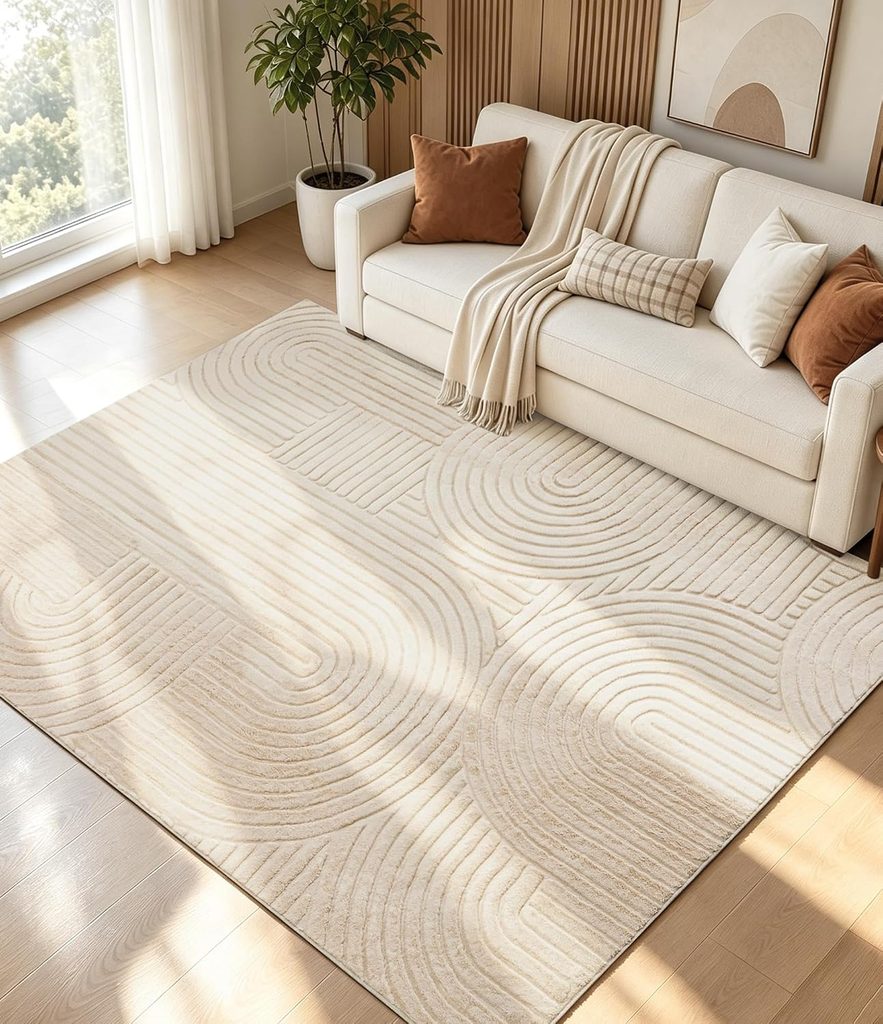
You do not always need a physical divider to separate the dining area from the living room. Sometimes a few thoughtful design choices are enough to make the different zones feel distinct.
A small, appropriately sized rug can visually anchor the dining table. Choose one that allows chairs to move without catching on the edges. A low-pile or easy-to-clean rug is often practical beneath a dining surface.
Lighting can also help define the space. A pendant light above the table, where installation is possible, creates a natural focal point. Renters can consider floor lamps or plug-in lighting alternatives instead.
Keep the dining area coordinated with the rest of the apartment through similar colors, materials, or finishes. This creates a sense of connection without making the whole studio look like one undifferentiated room.
Best for: Studio apartments where the dining area shares space with the living room.
19. Invest in a Multifunctional Dining Table
When space is limited, multifunctional furniture can make everyday life much easier.
A table with an extendable top, built-in drawers, or a convertible surface can support several activities without requiring separate pieces of furniture. Some designs also combine dining and workspace functions.
Before choosing one, think about your daily routine. Do you need a dedicated place to work? Would extra storage be more useful than an expandable tabletop? Do you regularly have guests over?
Choose the features that solve your actual problems rather than paying for mechanisms you may never use.
Also consider how easy the table is to clean, move, and maintain. The best multifunctional furniture is not simply clever; it should be comfortable and convenient to use every day.
Best for: Anyone who wants one practical piece of furniture to support multiple activities in a small home.
How to Choose the Right Dining Table for Your Studio Apartment
With so many space-saving designs available, choosing the right table comes down to understanding your room and your routine.
Here are the most important things to consider before buying.
Measure Your Available Space First
Measure the area where you want to place the table, including the space needed to pull out chairs and walk around them. Do not measure only the tabletop.
Consider nearby doors, kitchen cabinets, appliances, and the route you use to move through the apartment. A table that technically fits may still make the room difficult to navigate.
Marking the proposed table dimensions on the floor with painter’s tape can help you visualize the arrangement before spending money.
Think About How Many People Will Use It
If you usually eat alone, a compact table may be enough. If two people share the apartment, choose a design that comfortably accommodates both without making every meal feel cramped.
For occasional guests, an extendable or drop-leaf table can be more practical than a large permanent dining set.
Select the Right Shape
Round tables are useful when you want softer edges and easier movement around the furniture. Narrow rectangular tables can fit along walls, while square tables may work well in compact corners.
There is no single best shape for every studio apartment. The right choice depends on the room’s layout and the location of doors, windows, and kitchen counters.
Choose Chairs That Save Space
The chairs can occupy as much practical space as the table itself.
Look for lightweight chairs that tuck underneath the tabletop. Folding chairs or compact stools may be useful when you need to store seating away, while a bench can work well against a wall.
Comfort matters, too. If you eat at the table every day, choose seating that supports your back and suits the table height.
Consider Storage and Everyday Function
Think about what else your dining table needs to do. If it doubles as a workspace, you may want a slightly larger tabletop. If your apartment lacks storage, built-in compartments or a nearby storage bench may be more useful.
A simple table can be the best choice when you already have sufficient storage elsewhere. Avoid adding bulky features that make the furniture less comfortable.
Common Dining Table Mistakes to Avoid in a Studio Apartment
Even a beautiful dining table can make a small apartment feel crowded if it is chosen or placed poorly.
Buying furniture before measuring: Always measure the available area and check the full dimensions of the table and chairs.
Blocking important walkways: Keep clear routes between the entrance, kitchen, bathroom, and living area. Your dining setup should not make daily movement difficult.
Choosing chairs that cannot tuck away: Large chairs that remain in the walkway can make a small apartment feel cluttered. Look for seating that fits neatly beneath the table.
Adding too much tabletop decor: Large vases, decorative trays, and several accessories leave less room for food and everyday activities. Choose one or two simple accents instead.
Ignoring comfort: A table may look perfect in a photograph but feel uncomfortable in real life. Consider legroom, table height, chair support, and how you will use it daily.
Buying a table that is too large for occasional guests: If you host only a few times a year, an expandable or folding table may be a better choice than a permanently oversized dining set.
Forgetting about storage: If you choose a folding table, decide where it will go when it is not in use. A space-saving purchase is less helpful when there is nowhere convenient to store it.
Budget-Friendly Ways to Create a Small Dining Area
Creating a dining space does not have to mean buying an expensive furniture set.
Start by checking whether you can repurpose a table you already own. A small desk, console table, or compact kitchen table may work well if the dimensions and height are suitable.
Secondhand furniture can also offer good value. Look for sturdy tables with simple designs that can be cleaned, repaired, or refreshed with a suitable finish.
If your apartment is rented, a freestanding folding table may be more convenient than installing a permanent wall-mounted design. Pair it with chairs you already have before investing in a matching set.
You can also make a basic dining area feel more inviting with inexpensive additions such as washable placemats, a simple table runner, or a small plant.
The key is to prioritize function first. Spend your budget on a stable, comfortable table that suits your room rather than buying decorative extras that take up valuable space.
Frequently Asked Questions
1. What is the best dining table for a studio apartment?
The best dining table depends on your layout and daily needs. A small round table is useful for everyday meals, a folding table works well when floor space must remain flexible, and a drop-leaf or extendable table is ideal if you occasionally need extra seating.
2. How do you fit a dining table into a very small apartment?
Look for unused corners, narrow wall spaces, and areas beside the kitchen. Choose a compact table, use chairs that tuck underneath, and consider folding or multifunctional furniture. Measuring the full dining area before buying helps prevent overcrowding.
3. Is a round or rectangular dining table better for a small space?
A round table can make movement easier in a tight area because it has no corners. A narrow rectangular table may be better when you need to place furniture against a wall. Choose the shape that works best with your apartment’s layout.
4. What size dining table is suitable for two people?
A compact table designed for two can work well, but the ideal dimensions depend on the shape, chair size, and space available. Check the manufacturer’s seating recommendations and make sure there is enough room for plates, glasses, and comfortable movement.
5. How much space should you leave around a dining table?
Allow enough room to pull out chairs, sit down, and walk past other furniture comfortably. Around 36 inches of clearance is a useful planning target where possible, although tighter layouts may require a different arrangement. Always consider door swings, kitchen access, and the width of your main walkway.
6. What is the best dining solution for a studio with no dining area?
A wall-mounted folding table, drop-leaf table, or compact table that doubles as a desk can work well. If the apartment has a suitable kitchen peninsula, stools may provide an alternative without adding a separate table.
7. How can renters create a dining space without permanent changes?
Renters can use freestanding folding tables, compact bistro sets, narrow tables, or movable kitchen carts with suitable dining surfaces. Storage benches and folding chairs can also help keep the space flexible without drilling into walls.
Final Thoughts
Creating a comfortable dining area in a studio apartment is less about finding extra square footage and more about making thoughtful furniture choices.
A small round table, wall-mounted folding design, drop-leaf table, or cozy dining nook can give you a dedicated place to enjoy meals without sacrificing the openness of your home. If you need extra flexibility, consider multifunctional furniture that can also serve as a workspace or provide useful storage.
Start by measuring your available space, identifying the activities your table needs to support, and choosing a design that fits naturally into your daily routine. Keep the surrounding area uncluttered, choose seating that can be tucked away, and avoid furniture that blocks your main walkways.
With a little planning, even the smallest studio apartment can have a dining area that feels comfortable, practical, and welcoming.
Read more: 21 Small Studio Apartment Ideas That Maximize Every Inch