
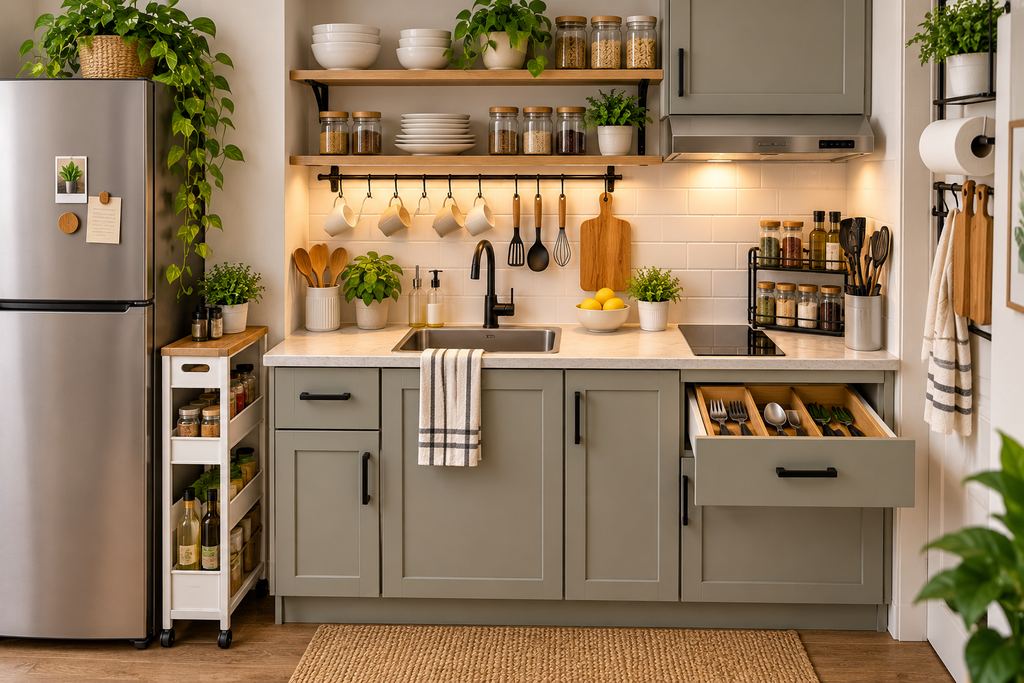
A tiny kitchen can feel crowded surprisingly quickly. A few pots, a stack of plates, some spices, cleaning supplies, and everyday cooking essentials can make a small kitchenette feel like there is simply nowhere left to put anything.
The good news? You don’t need a large kitchen—or a large budget—to get organized.
The right kitchenette organizers can turn unused cabinet space, narrow gaps, refrigerator sides, cabinet doors, and even the area above your sink into useful storage. And many practical options cost less than $30.
Whether you live in a studio apartment, small apartment, dorm, RV, or rental home, these affordable kitchen organizers can help you make better use of every inch.
What to Look for in a Kitchenette Organizer
Before buying any organizer, take a few minutes to measure the space where you plan to use it. A storage product can look perfect online but be frustrating if it is too wide, too tall, or too deep for your cabinet or counter.
Look for organizers that offer one or more of these features:
- Compact dimensions
- Vertical storage
- Stackable construction
- Adjustable shelves
- Sliding or pull-out access
- Multi-purpose storage
- Easy-to-clean materials
- Renter-friendly installation
- Space-efficient designs
The goal isn’t to fill your kitchenette with storage products. It’s to choose organizers that solve specific storage problems.
15 Best Kitchenette Organizers for Tiny Kitchens Under $30
1. Expandable Kitchen Cabinet Shelf
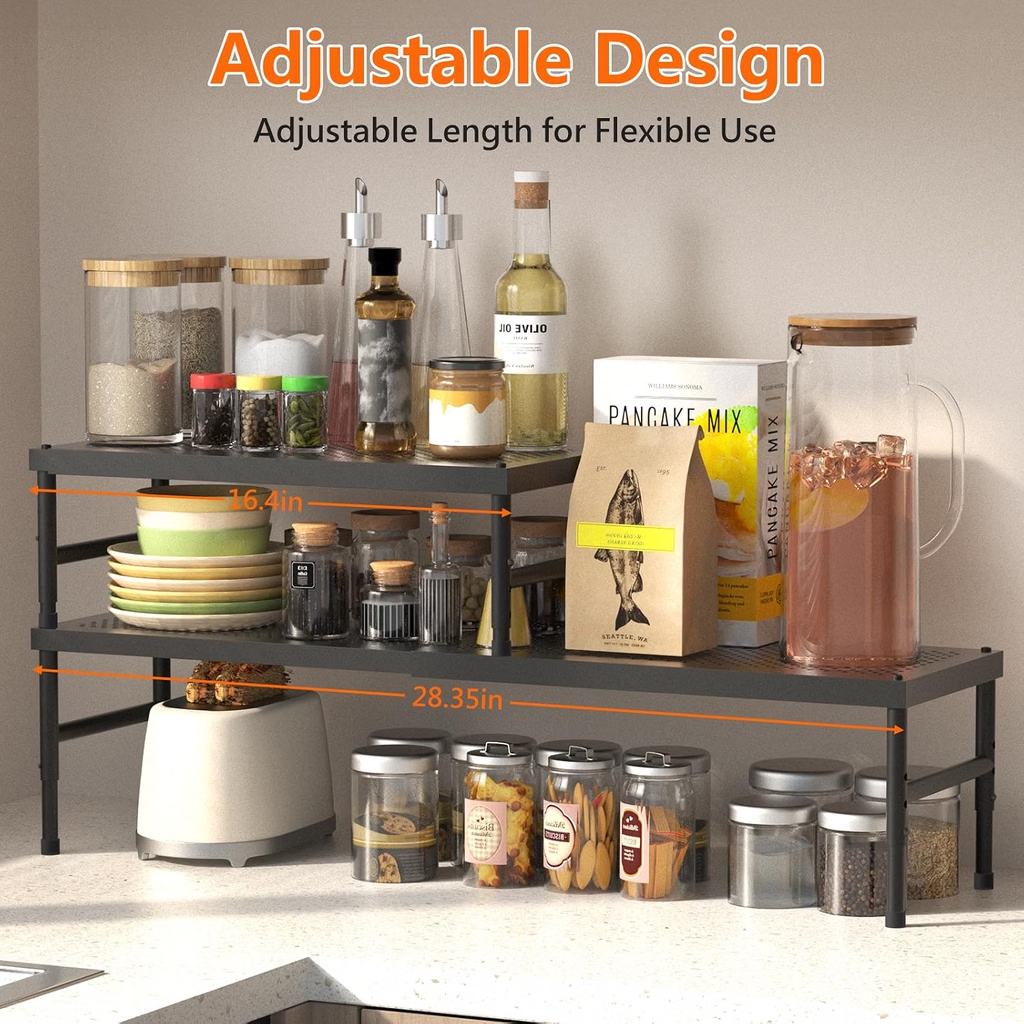
One of the easiest ways to create more storage inside a tiny kitchenette is to go vertical.
An expandable cabinet shelf can divide a large cabinet into two levels, giving you a convenient place for plates, bowls, mugs, cans, or small cookware.
Instead of stacking everything on top of each other, you can create separate levels and make items much easier to reach.
Best for: Plates, bowls, mugs, and small kitchenware.
Why it’s useful: It creates additional vertical storage without requiring a larger cabinet.
Before purchasing, measure the cabinet’s width and depth and make sure the shelf can support the weight you plan to place on it.
2. Under-Sink Sliding Organizer
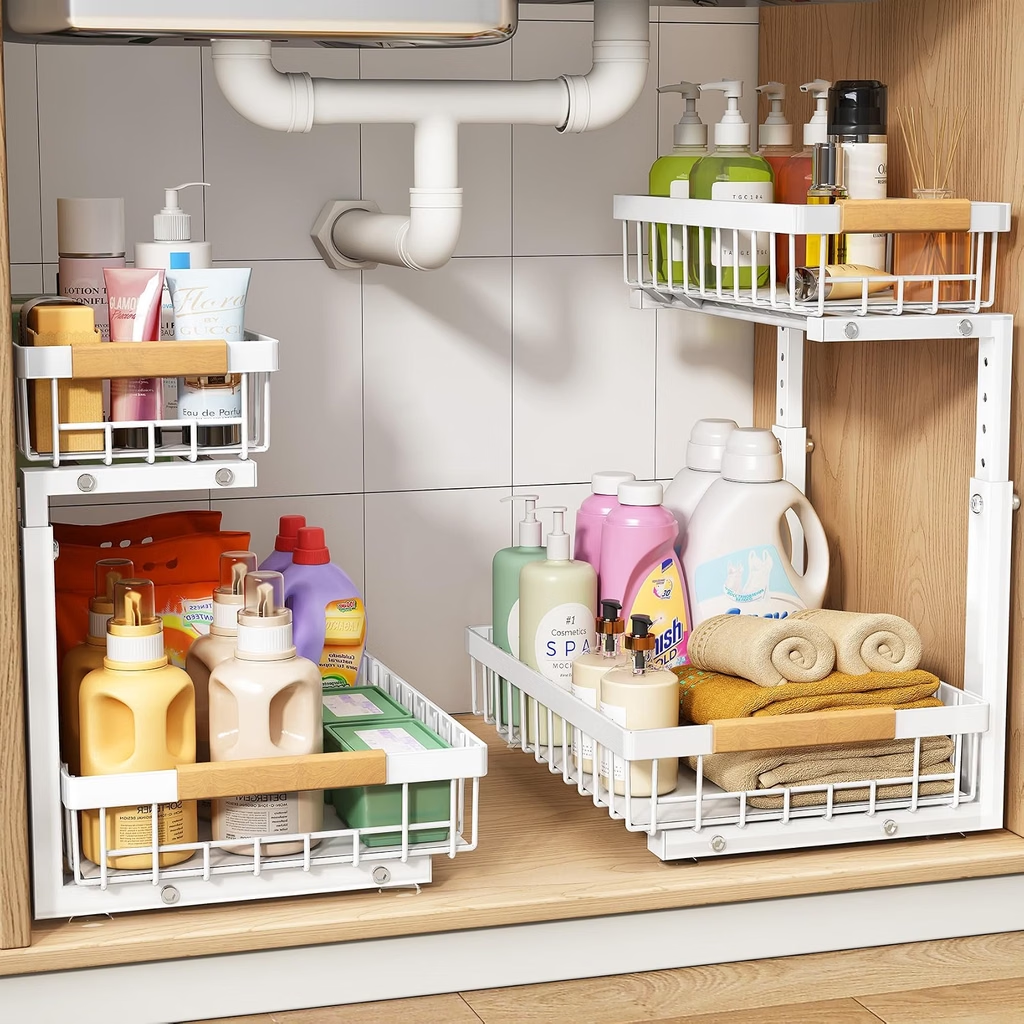
The cabinet underneath the sink is often one of the messiest areas in a small kitchen.
Pipes take up valuable space, while bottles and cleaning supplies tend to get pushed toward the back. A sliding under-sink organizer can make this awkward area much easier to use.
Instead of reaching into the back of the cabinet, you can pull the organizer forward and see what you have.
Use it for dish soap, sponges, dishwasher supplies, cleaning sprays, trash bags, and other essentials.
Best for: Cleaning supplies and sink accessories.
Small-space tip: Choose a narrow design that works around your plumbing rather than trying to fill the entire cabinet.
3. Two-Tier Countertop Organizer
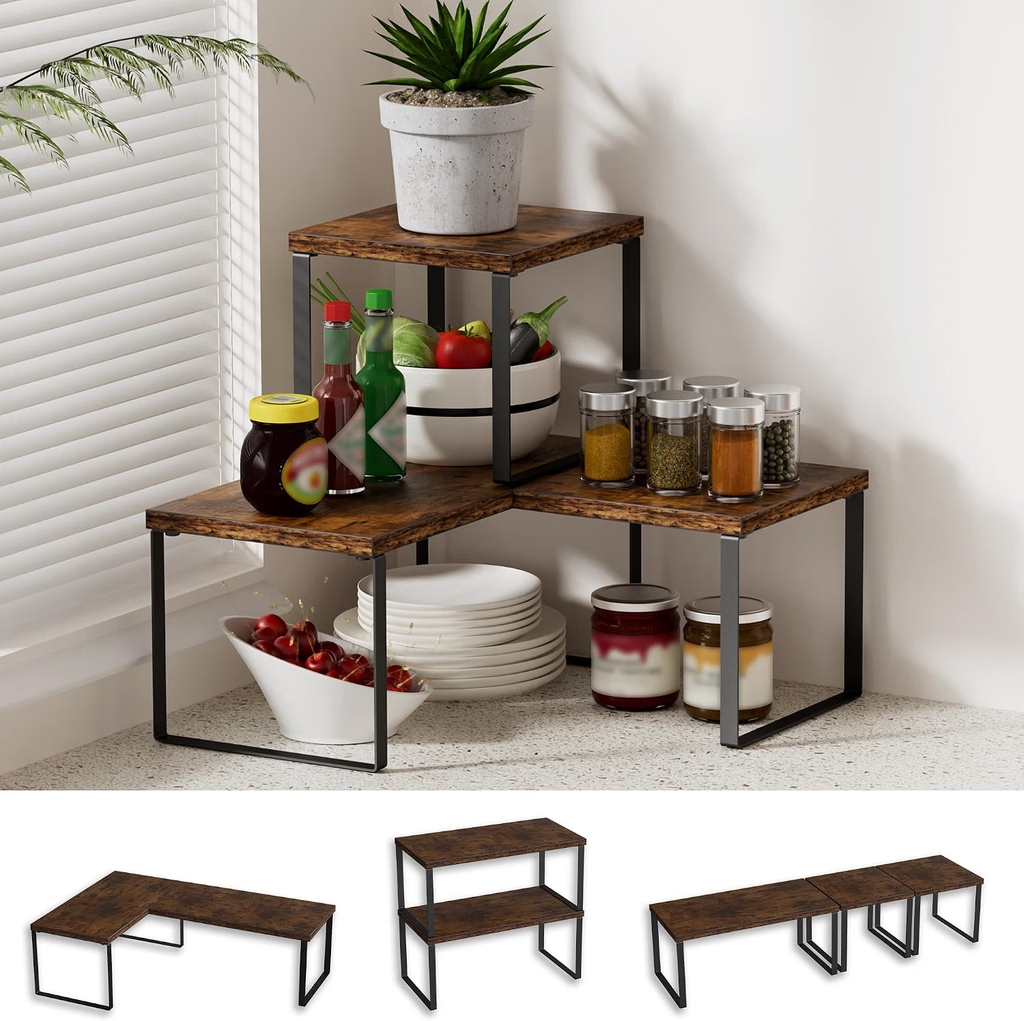
Counter space is precious in a kitchenette, so adding storage upward can be much more useful than adding another large container.
A two-tier countertop organizer gives you two levels of storage while taking up relatively little counter width.
You could use one for coffee and tea supplies, spices, oils, or frequently used cooking ingredients.
If your counter is already crowded, keep only your most-used items on the organizer and store everything else inside cabinets.
Best for: Coffee stations, spices, oils, and everyday essentials.
4. Slim Rolling Kitchen Cart
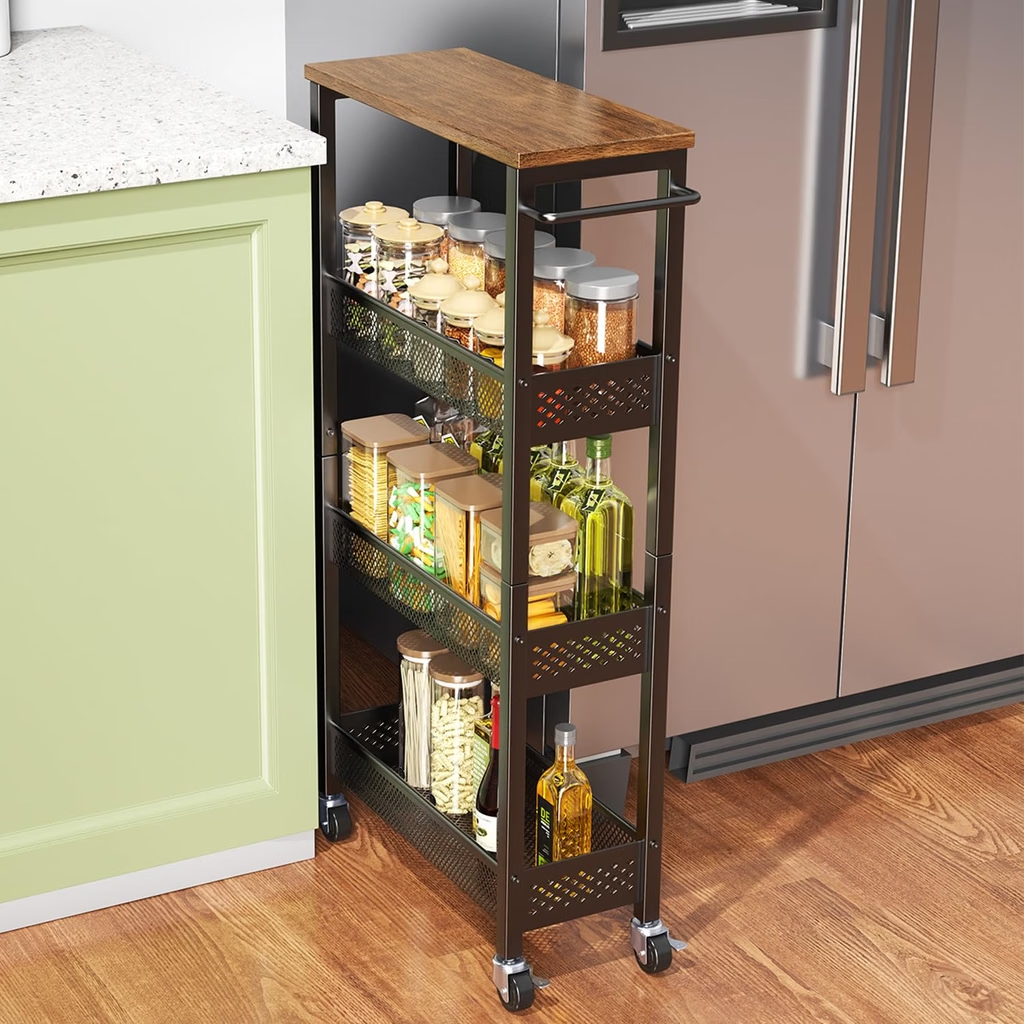
A narrow rolling cart can be especially useful when your kitchenette doesn’t have enough cabinet or pantry space.
Look for a slim cart that can fit beside a refrigerator, between cabinets, or in another narrow gap.
Depending on the design, you can use it to store canned food, snacks, kitchen towels, small appliances, coffee supplies, or cooking ingredients.
The biggest advantage is flexibility. When you need the items, roll the cart out. When you’re finished, move it back into its storage position.
Best for: Kitchens with narrow unused floor space.
Tip: Measure the gap carefully, including the space needed to pull the cart out.
5. Magnetic Refrigerator Storage Rack
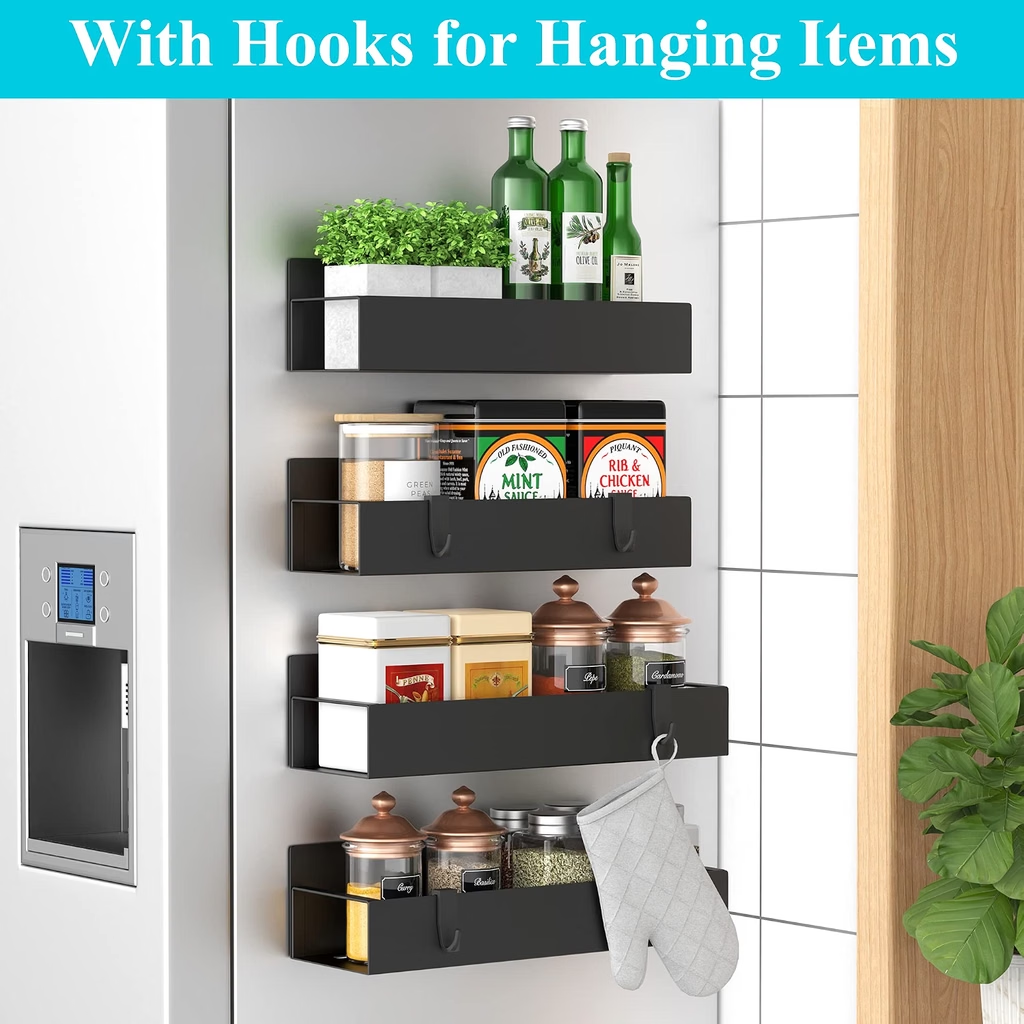
Don’t forget about the side of your refrigerator.
A magnetic storage rack can turn an otherwise unused refrigerator surface into a convenient storage zone.
Depending on its design, you can use it for kitchen towels, plastic wrap, aluminum foil, spices, paper towels, or small bottles.
Because many magnetic options don’t require drilling or permanent installation, they can also be useful for renters.
Best for: Small kitchens with limited cabinet space.
Just make sure the rack and magnets are strong enough for the items you plan to store.
6. Over-the-Cabinet Door Organizer
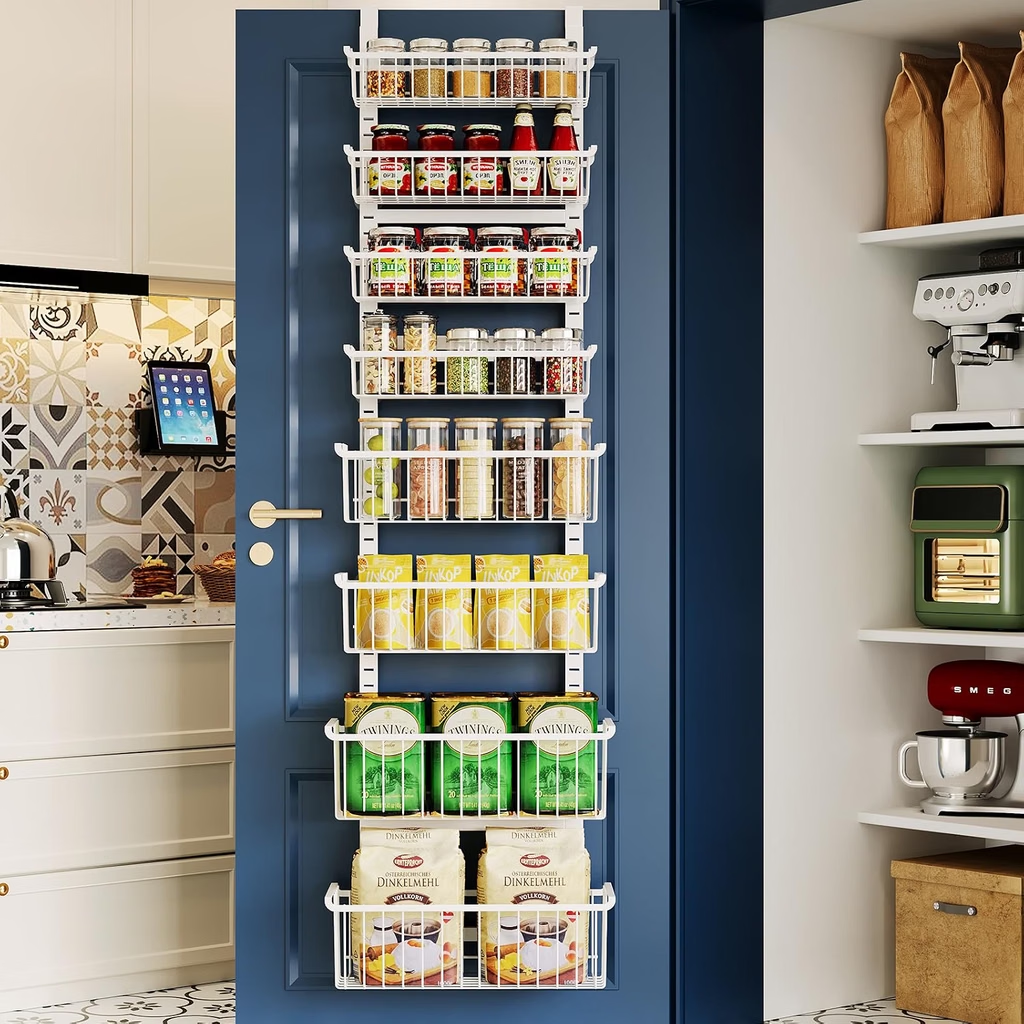
The inside of a cabinet door is one of the easiest spaces to overlook.
An over-the-cabinet organizer can add storage without taking up additional counter or floor space. Some models hang directly over the cabinet door, while others are designed to attach to the inside.
Use one for cutting boards, food wraps, cleaning cloths, lids, or small kitchen accessories.
Best for: Making unused cabinet-door space functional.
Important: Check the thickness of your cabinet door and make sure there is enough clearance for the door to close properly.
7. Pull-Out Cabinet Organizer
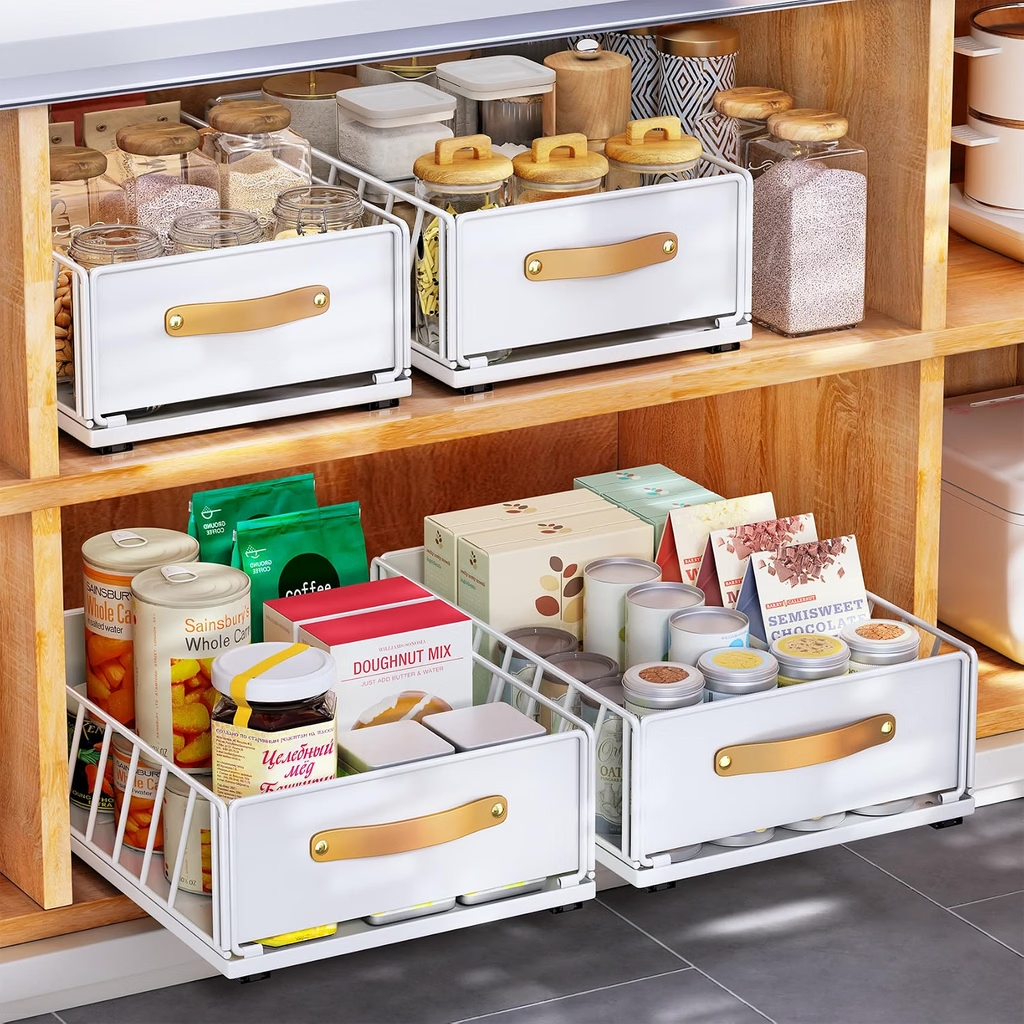
Deep cabinets can provide plenty of storage but still be frustrating to use.
Items at the back often disappear until you need them, and you may have to remove several things just to reach one container.
A pull-out cabinet organizer solves this problem by bringing stored items toward you.
These organizers can be particularly useful for pantry cabinets, lower cabinets, and other deep storage spaces.
Best for: Cans, bottles, sauces, and pantry ingredients.
For a tiny kitchen, accessibility is just as important as storage capacity.
8. Stackable Pantry Bins
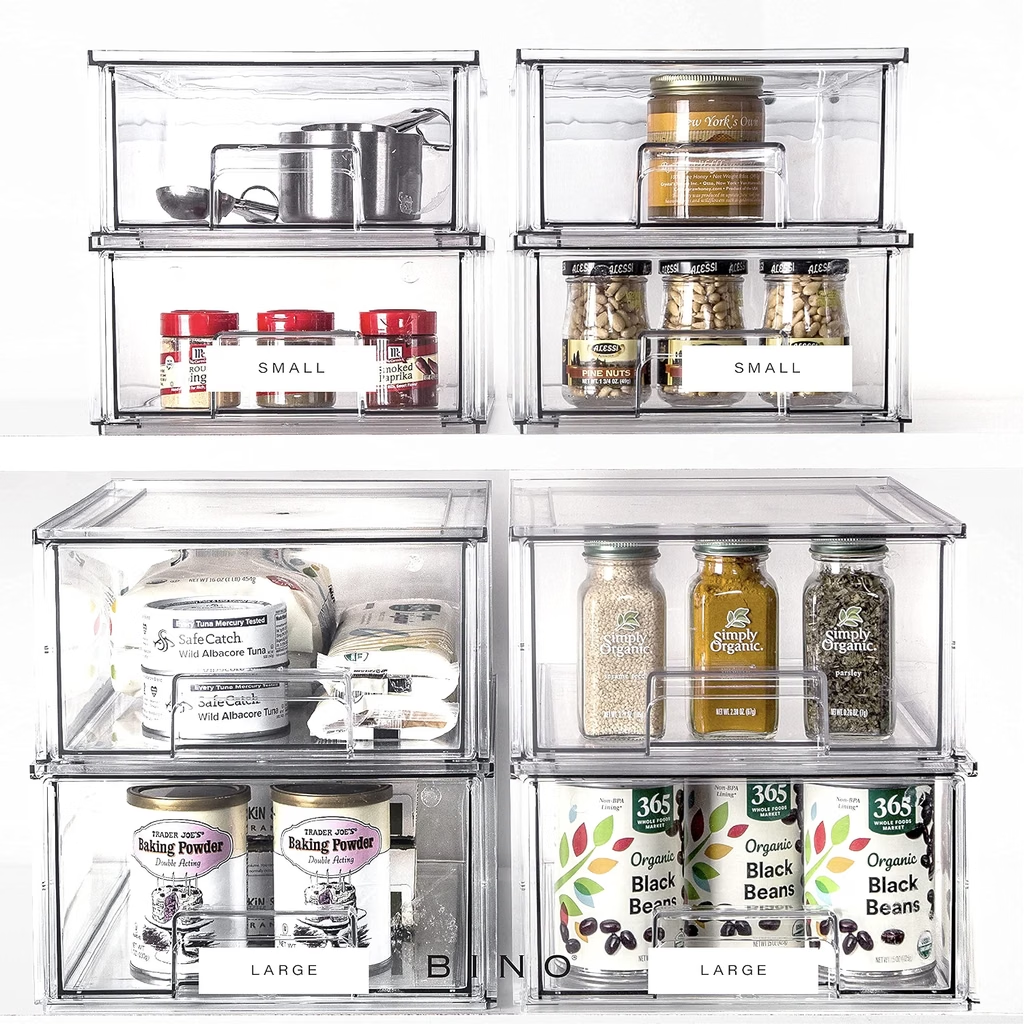
When you have limited pantry space, stackable bins can help you use the vertical space inside cabinets.
Instead of allowing small packages to spread across an entire shelf, group similar items together.
For example, you could use one bin for snacks, another for baking supplies, and another for breakfast items.
Clear bins make it easier to see what you already have, while open-front designs can make frequently used items easier to grab.
Best for: Snacks, packets, baking ingredients, and small pantry items.
Avoid making the bins too heavy to move comfortably.
9. Slim Spice Rack
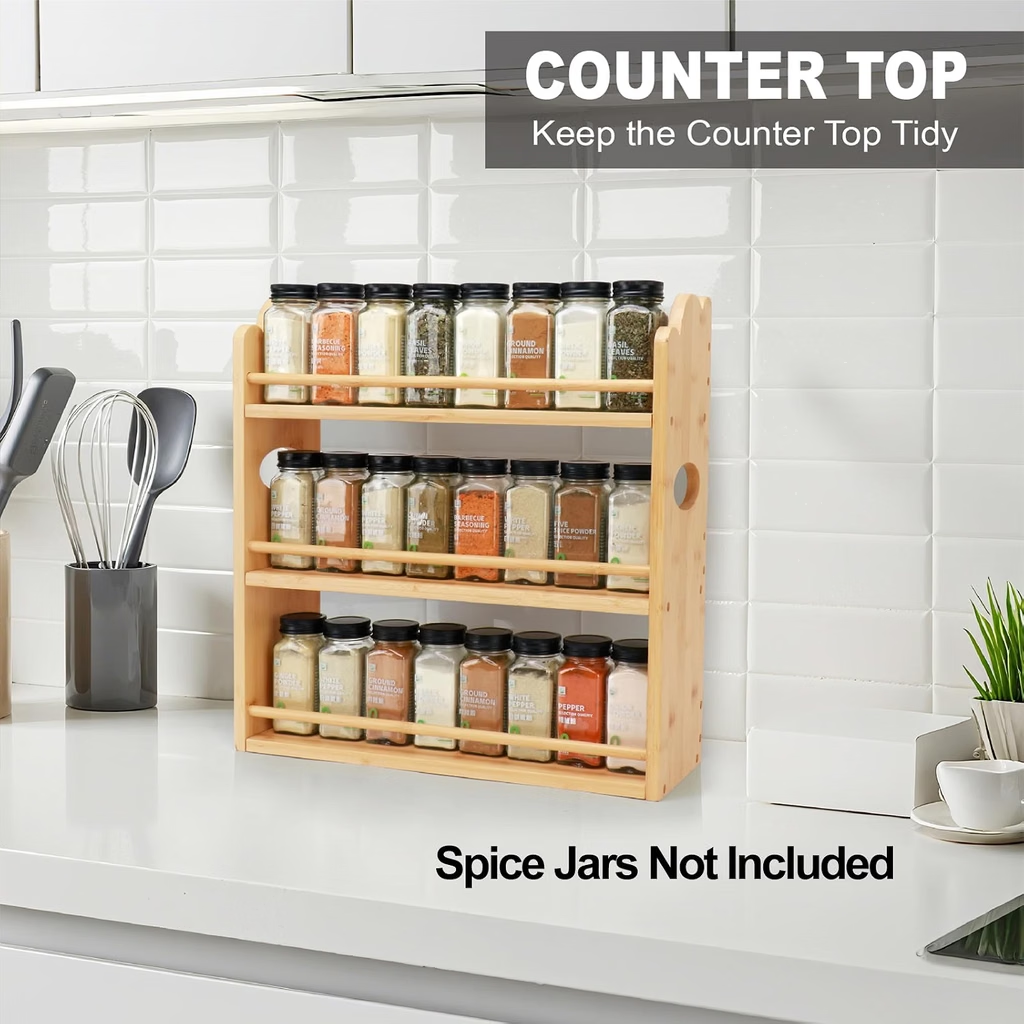
Spices can take up more space than you might expect.
If dozens of spice jars are scattered across your countertop or stuffed into a cabinet, a compact spice rack can immediately make the area feel more organized.
A slim rack can fit inside a cabinet, on a small shelf, or along a narrow section of counter.
For extremely small kitchens, choose a design that stores spices vertically rather than taking up a large amount of horizontal space.
Best for: Small spice collections and narrow storage areas.
Tip: Keep your most frequently used spices at the front or within easy reach.
10. Kitchen Drawer Organizer
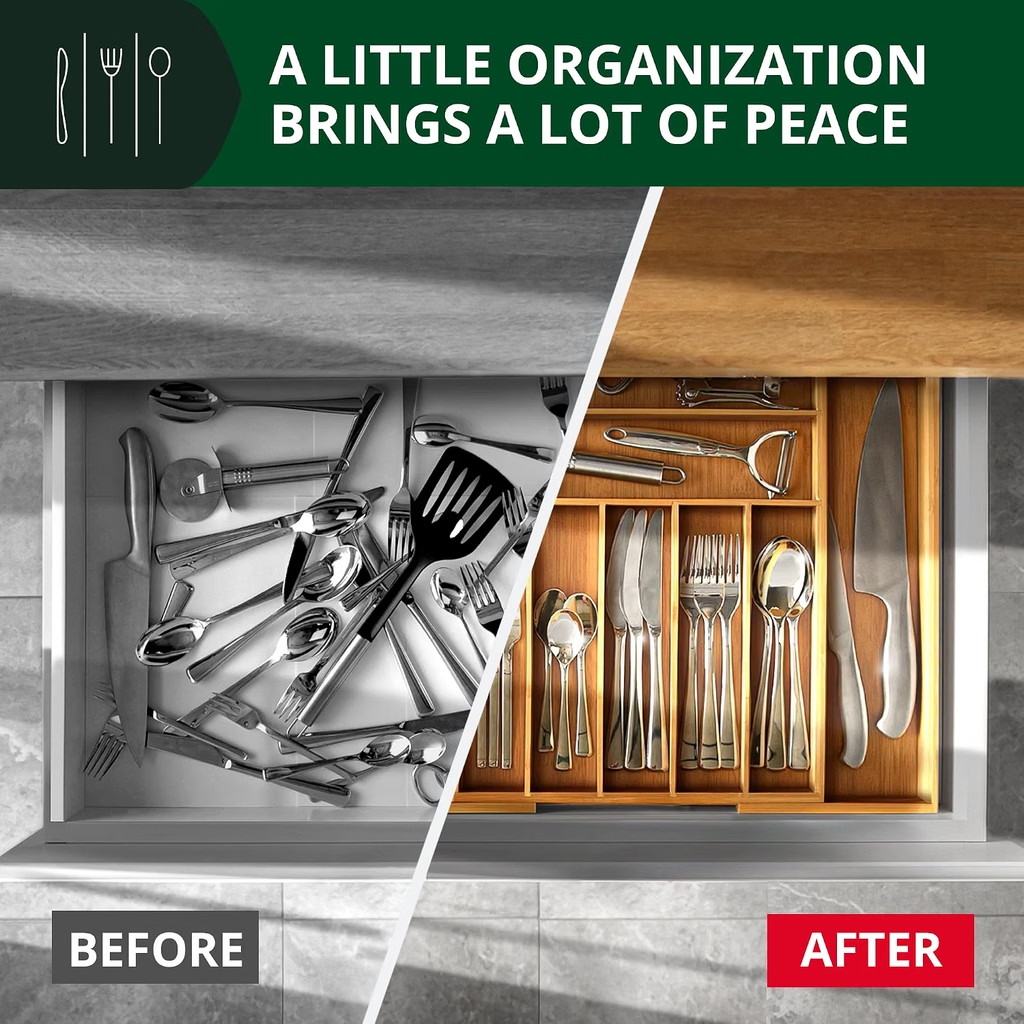
A tiny kitchenette may only have one or two drawers, making every drawer especially valuable.
Without organization, utensils quickly become tangled together.
A compact drawer organizer can separate forks, spoons, knives, cooking utensils, measuring tools, and other small items.
Expandable designs can be especially helpful because you can adjust them to fit the available drawer width.
Best for: Utensils and small kitchen tools.
Before buying, measure the inside of the drawer—not just the outside dimensions.
11. Pot Lid Organizer
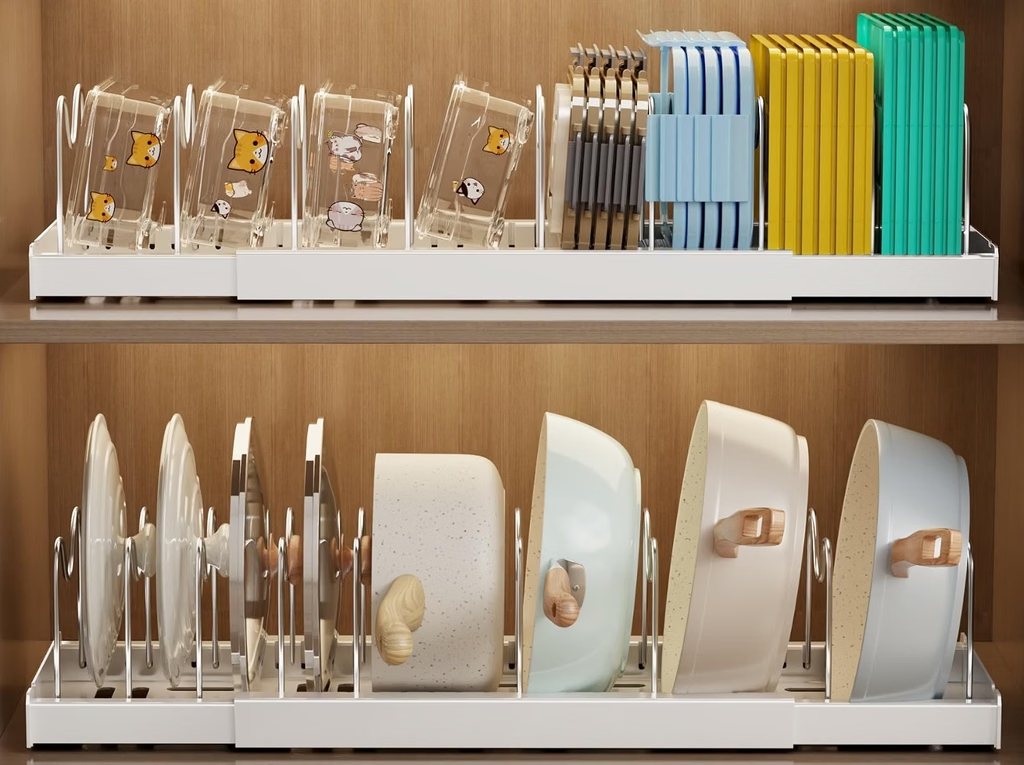
Pot lids are awkward to store because their shapes and handles make them difficult to stack neatly.
A pot lid organizer gives each lid a designated place and can prevent them from being piled randomly inside a cabinet.
Depending on the design, it may sit inside a cabinet, attach to a cabinet door, or stand vertically on a shelf.
Best for: Small cabinets containing multiple pots and pans.
If cabinet space is extremely limited, vertical storage can make a significant difference.
12. Under-Shelf Hanging Basket
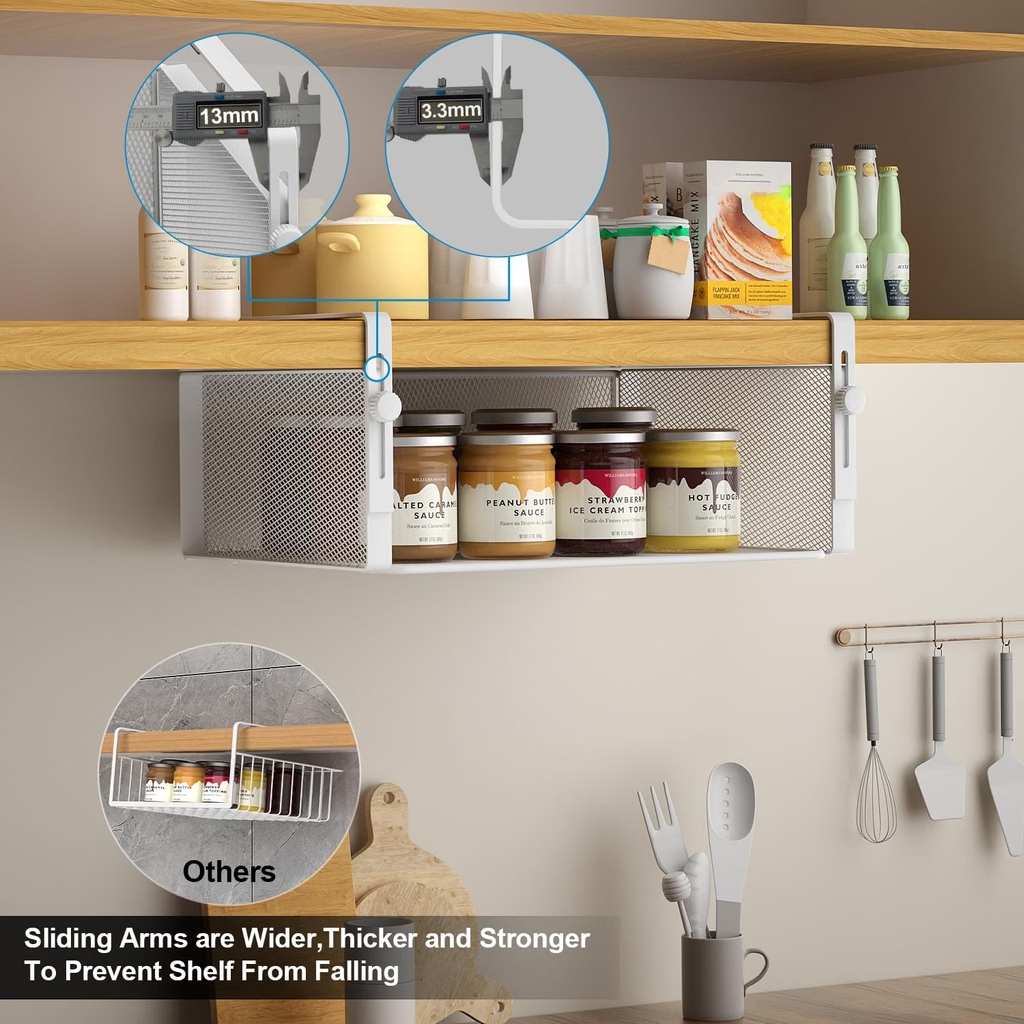
If you have empty space underneath a cabinet shelf, you’re looking at potential storage space that may currently be going unused.
An under-shelf basket slides or attaches underneath an existing shelf and creates another storage level.
Use it for kitchen towels, small food packages, coffee accessories, napkins, or other lightweight items.
Best for: Creating extra cabinet storage without adding another shelf.
This is particularly useful when you have tall cabinets but relatively few items that need the full vertical height.
13. Sink Caddy
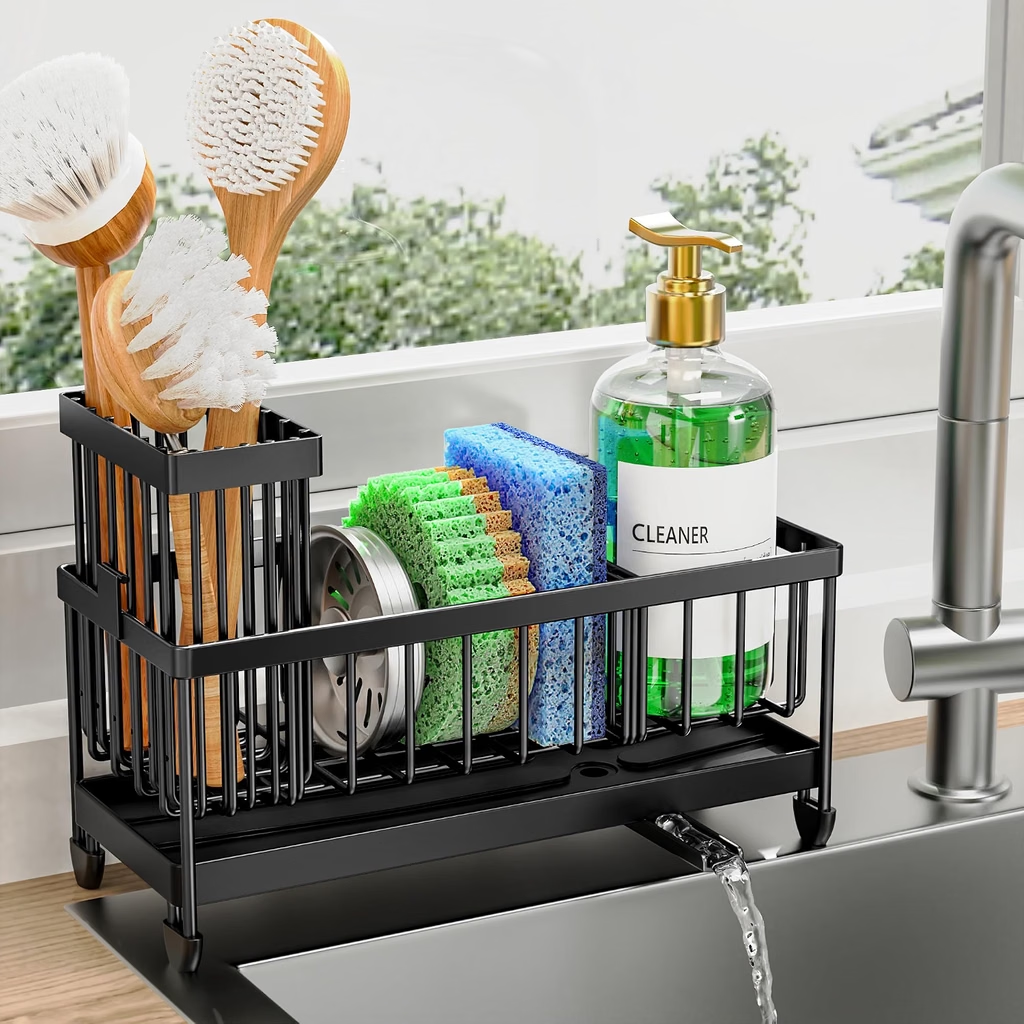
A cluttered sink area can make a small kitchen look even smaller.
A simple sink caddy can keep sponges, scrub brushes, soap, and other cleaning accessories together instead of spreading them around the sink.
Look for a design that allows water to drain easily and can be cleaned regularly.
Best for: Sponges, brushes, and dishwashing accessories.
A small organizer here can have a surprisingly large visual impact because the sink is usually one of the most noticeable areas in a kitchenette.
14. Over-the-Sink Dish Drying Rack
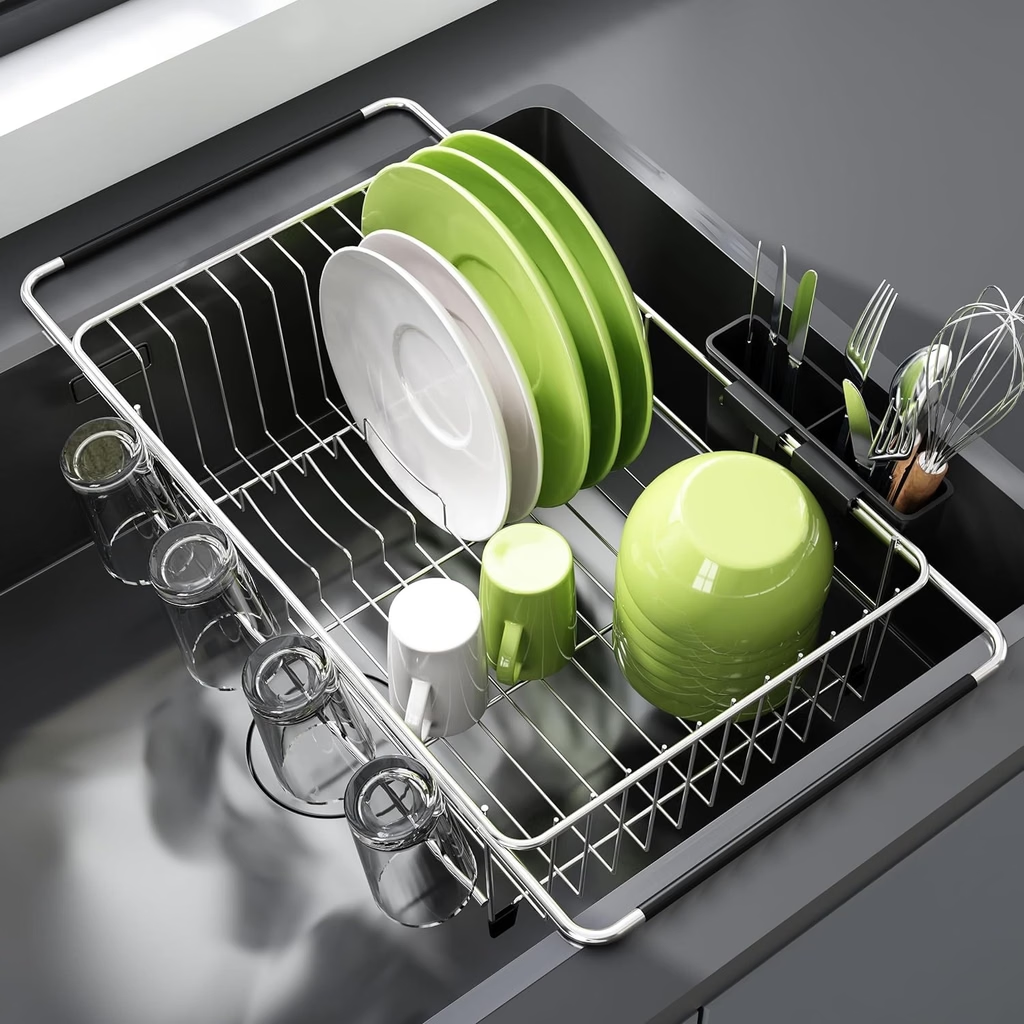
If countertop space is limited, a dish rack sitting beside the sink can quickly become an obstacle.
An over-the-sink drying rack uses the space above the sink instead.
Some designs are collapsible or roll-up, allowing you to remove or store them when they’re not needed.
Depending on the design, you may be able to use the rack for drying dishes, rinsing produce, or temporarily holding kitchen items.
Best for: Tiny kitchens with very limited counter space.
Make sure the rack is compatible with the width and shape of your sink before purchasing.
15. Narrow Pantry Organizer
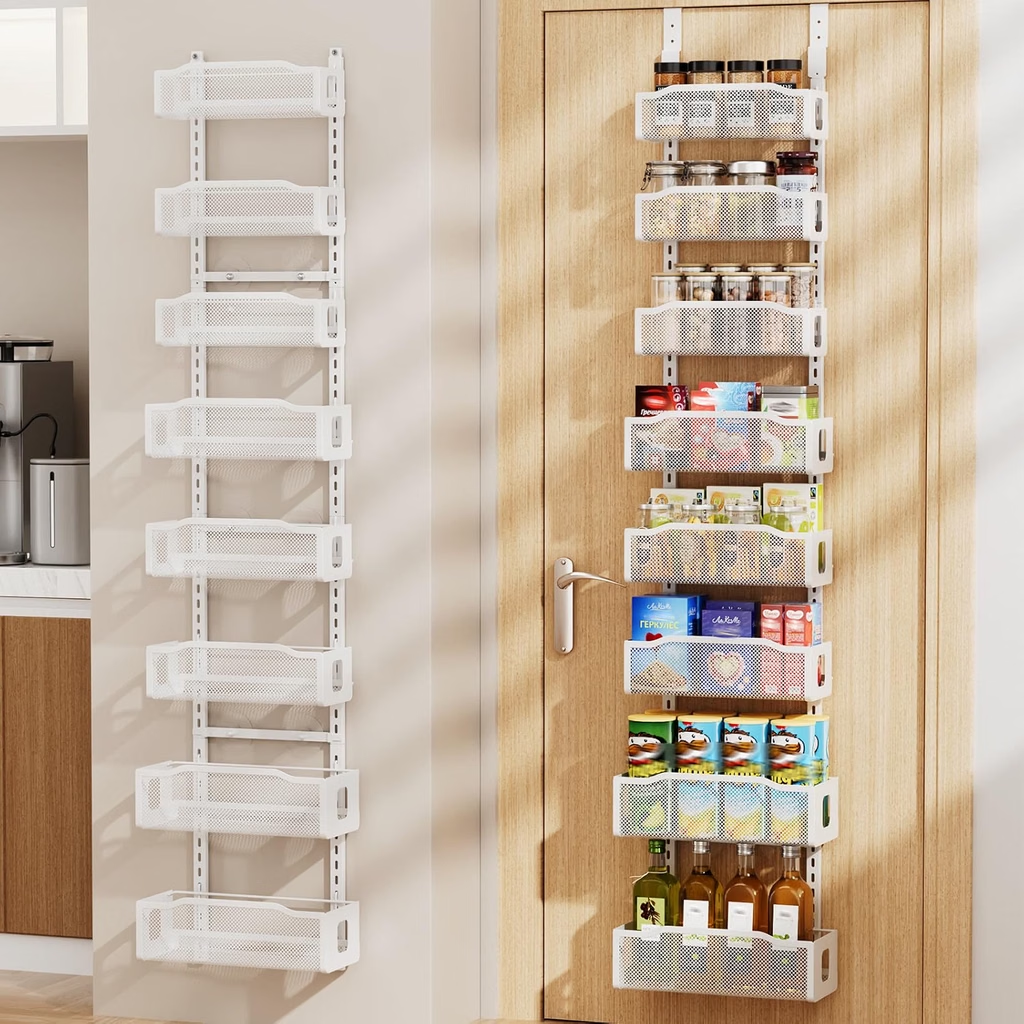
You don’t need a traditional pantry to create organized food storage.
A narrow pantry organizer can make use of small spaces beside appliances, cabinets, or other fixtures.
These slim storage solutions are particularly useful for bottles, cans, sauces, snacks, and other pantry staples.
Instead of leaving a narrow gap unused, turn it into a dedicated storage zone.
Best for: Narrow gaps and kitchens without traditional pantry cabinets.
The key is to measure the available width carefully before buying.
Best Kitchenette Organizers by Kitchen Problem
Not sure where to start? Match your biggest storage problem with a practical solution.
| Kitchen Problem | Organizer to Try |
|---|---|
| Not enough cabinet space | Expandable cabinet shelf |
| Cluttered countertop | Two-tier countertop organizer |
| Messy under the sink | Sliding under-sink organizer |
| Too many spice jars | Slim spice rack |
| No pantry | Slim rolling cart |
| Messy utensil drawer | Drawer organizer |
| Too many pot lids | Pot lid organizer |
| No room for a dish rack | Over-the-sink drying rack |
| Unused cabinet doors | Over-the-door organizer |
| Empty refrigerator side | Magnetic storage rack |
| Deep cabinets are difficult to access | Pull-out organizer |
| Small pantry items everywhere | Stackable storage bins |
How to Organize a Tiny Kitchenette Without Making It Feel Smaller
Buying organizers is only half the job. How you use them matters just as much.
Use Vertical Space
When floor and counter space are limited, look upward.
Stackable shelves, two-tier organizers, hanging baskets, and vertical racks can give you more storage without taking up much additional floor space.
Keep Everyday Items Accessible
Your most frequently used items shouldn’t be hidden at the back of a cabinet.
Keep coffee supplies, everyday dishes, cooking utensils, and frequently used ingredients in convenient locations.
Less frequently used items can go higher or farther back.
Use the Inside of Cabinet Doors
Cabinet doors provide valuable hidden storage.
Use them for lightweight items such as wraps, cutting boards, cleaning supplies, measuring tools, or small kitchen accessories.
Just make sure your organizer doesn’t interfere with shelves or prevent the door from closing.
Create Storage Zones
Instead of organizing your kitchen randomly, group similar items together.
For example:
Cooking zone: Pots, pans, utensils, and spices.
Coffee zone: Coffee, filters, mugs, and sweeteners.
Cleaning zone: Dish soap, sponges, brushes, and cleaning products.
Pantry zone: Snacks, canned goods, sauces, and dry ingredients.
This makes it easier to find things and put them away.
Don’t Overfill Every Space
One of the biggest mistakes in a tiny kitchen is trying to use every available inch.
If every shelf and organizer is packed completely, it becomes difficult to remove anything without disturbing other items.
Leave a little breathing room wherever possible.
Small Kitchenette Organization Mistakes to Avoid
Even inexpensive organizers can make a kitchen more difficult to use if they’re chosen or installed incorrectly.
Buying Without Measuring
Always measure the available space first.
Check width, depth, height, and door clearance.
Using Too Many Countertop Organizers
Countertop organizers can help, but too many of them can make a tiny kitchen feel even more crowded.
Prioritize vertical or hidden storage when possible.
Ignoring Vertical Space
If everything is stored in a single layer, you’re probably leaving useful space unused.
Look for opportunities to stack, hang, or add another level.
Keeping Rarely Used Appliances on the Counter
Small appliances can quickly consume your workspace.
If you only use something occasionally, consider storing it inside a cabinet or another designated area.
Buying Bulky Containers
Large storage containers can actually reduce usable space.
For tiny kitchenettes, compact and stackable containers are often more practical.
Forgetting About Narrow Gaps
A few inches between an appliance and cabinet may seem useless, but a slim organizer can sometimes turn that gap into valuable storage.
How to Choose the Right Organizer for Your Kitchenette
If you’re unsure which products to buy, follow this simple process.
Step 1: Identify Your Biggest Problem
Is your countertop crowded? Is your cabinet messy? Do you have nowhere to store pantry food?
Start with the biggest problem rather than buying several organizers at once.
Step 2: Measure the Space
Measure the width, height, and depth of the area.
For cabinets, also check door clearance and the location of hinges.
Step 3: Choose the Right Storage Style
Think about what type of storage would work best.
- Vertical: When you have height but little width
- Sliding: When cabinets are deep
- Stacking: When shelves have unused vertical space
- Hanging: When cabinet doors or shelves have extra room
- Rolling: When you have a narrow floor gap
Step 4: Check the Product Dimensions
Don’t rely only on photos.
Always compare the listed product dimensions with your actual available space.
Step 5: Think About Accessibility
An organizer isn’t helpful if you have to move five things to reach what you need.
Frequently used items should be easy to grab.
Tiny Kitchenette Shopping Checklist
Before purchasing an organizer, check:
- ☐ Width
- ☐ Height
- ☐ Depth
- ☐ Weight capacity
- ☐ Material
- ☐ Assembly requirements
- ☐ Cabinet clearance
- ☐ Door clearance
- ☐ Cleaning requirements
- ☐ Whether it fits your specific storage area
A few minutes of measuring can save you from buying something that doesn’t fit.
Final Thoughts
A tiny kitchenette doesn’t have to feel permanently cluttered.
The key is to stop thinking only about how much cabinet or counter space you have and start looking at the unused space around it.
Cabinet doors, vertical shelves, refrigerator sides, narrow gaps, the area underneath shelves, and the space above your sink can all become useful storage areas with the right organizers.
You also don’t need to spend a fortune. Many simple solutions can cost less than $30 and make everyday kitchen tasks easier.
Start with one problem area. Measure it carefully, choose an organizer designed for that space, and give everything a designated home.
Once you make a few small changes, even the tiniest kitchenette can become more functional, organized, and much easier to live with.
Read more: 21 Small Studio Apartment Ideas That Maximize Every Inch