
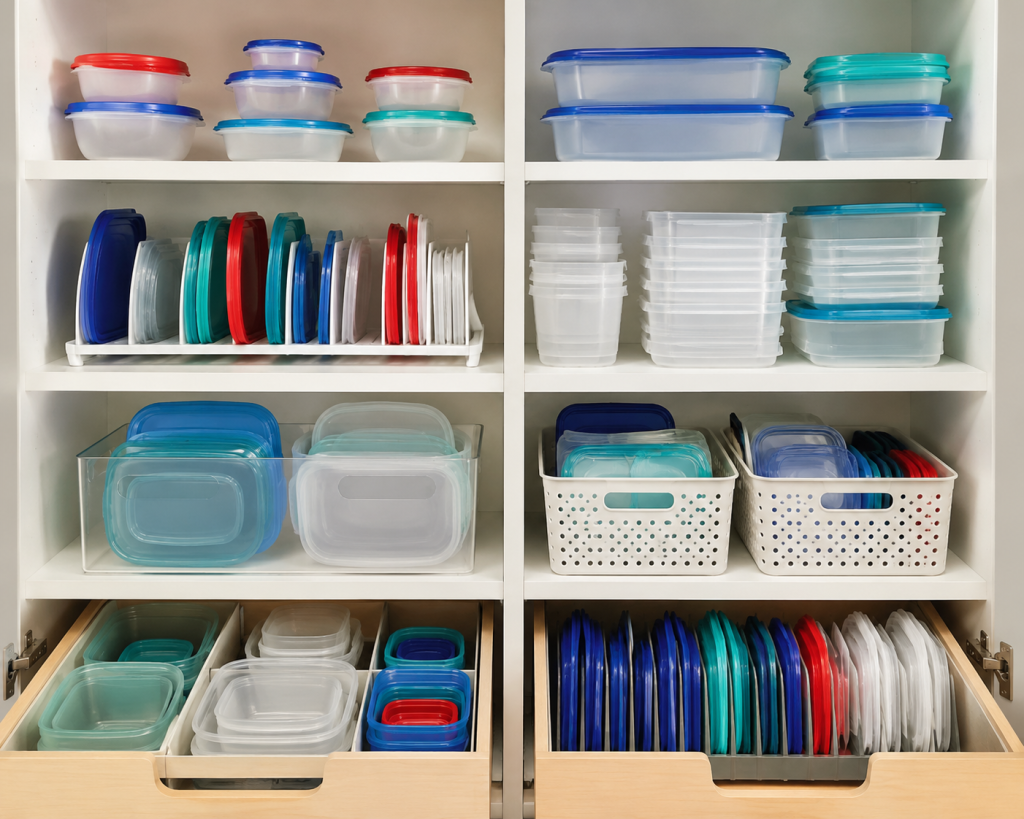
If opening your kitchen cabinet feels like a game of dodgeball because plastic containers and lids keep falling out, you’re not alone. Tupperware and food storage containers are some of the hardest kitchen items to keep organized. Over time, containers from different brands, mismatched lids, and random sizes can turn even the neatest kitchen into a cluttered mess.
The good news is that organizing your food storage containers doesn’t have to take all day or require expensive organizers. A few simple changes can make it much easier to find the right container, keep your cabinets tidy, and save valuable kitchen space.
Whether you have a tiny apartment kitchen or a large pantry, these practical ideas will help you create a storage system that’s easy to maintain. Let’s start by clearing out the clutter and building an organization system that actually works.
1. Declutter Before You Organize
Before buying any organizers or rearranging your cabinets, spend a little time sorting through your food storage containers. Organizing clutter doesn’t solve the problem—it only hides it. Starting with a clean collection makes every other organizing step much easier.
Empty everything onto your kitchen counter or table so you can see exactly what you own. You’ll probably discover containers you forgot about, lids without matching bases, and containers that are cracked or stained.
As you sort, separate your collection into three groups:
- Keep
- Donate
- Recycle or throw away
Keep only the containers you regularly use and that are still in good condition. If you have five containers that all serve the same purpose, you may not need to keep all of them. Extra pieces simply take up valuable cabinet space.
Recycle or discard containers that are:
- Cracked or broken
- Warped from heat
- Stained from tomato sauce or curry
- Missing their matching lid
- No longer seal properly
If you have extra containers in excellent condition that you never use, consider donating them to a local charity, community kitchen, or someone who can use them.
Why decluttering matters
The fewer containers you own, the easier they are to organize. Instead of digging through dozens of pieces every time you pack leftovers, you’ll have a collection that’s simple to manage and quick to access.
Try following the “one in, one out” rule. Whenever you buy a new food storage container set, remove an old one. This prevents your collection from slowly growing out of control.
2. Store Containers and Lids Separately
One of the biggest mistakes people make is storing each lid attached to its container. While it may seem organized at first, it actually wastes a surprising amount of space and makes stacking difficult.
A much better solution is to store containers and lids separately.
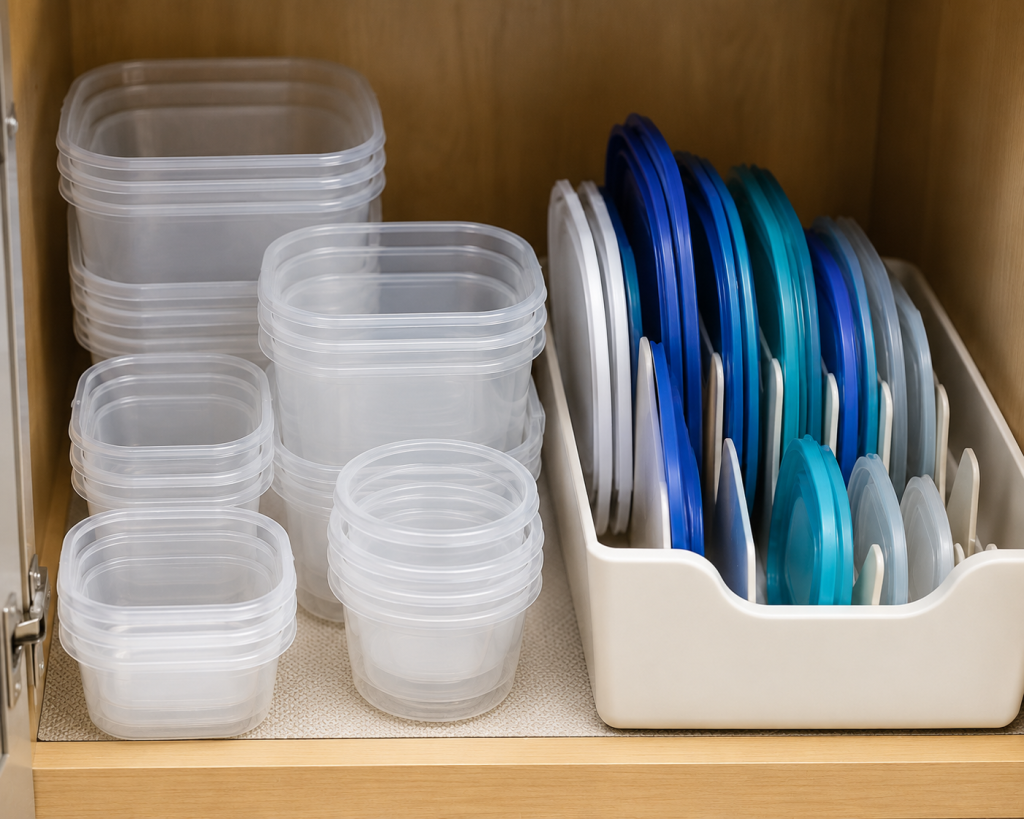
Stack containers by size
Nest containers inside one another whenever possible. This instantly saves cabinet space and creates neat stacks that are easy to grab.
For example:
- Small containers together
- Medium containers together
- Large containers together
If you own different shapes, keep square containers with square containers and round ones together. Matching shapes stack more neatly and prevent unstable piles.
Organize lids vertically
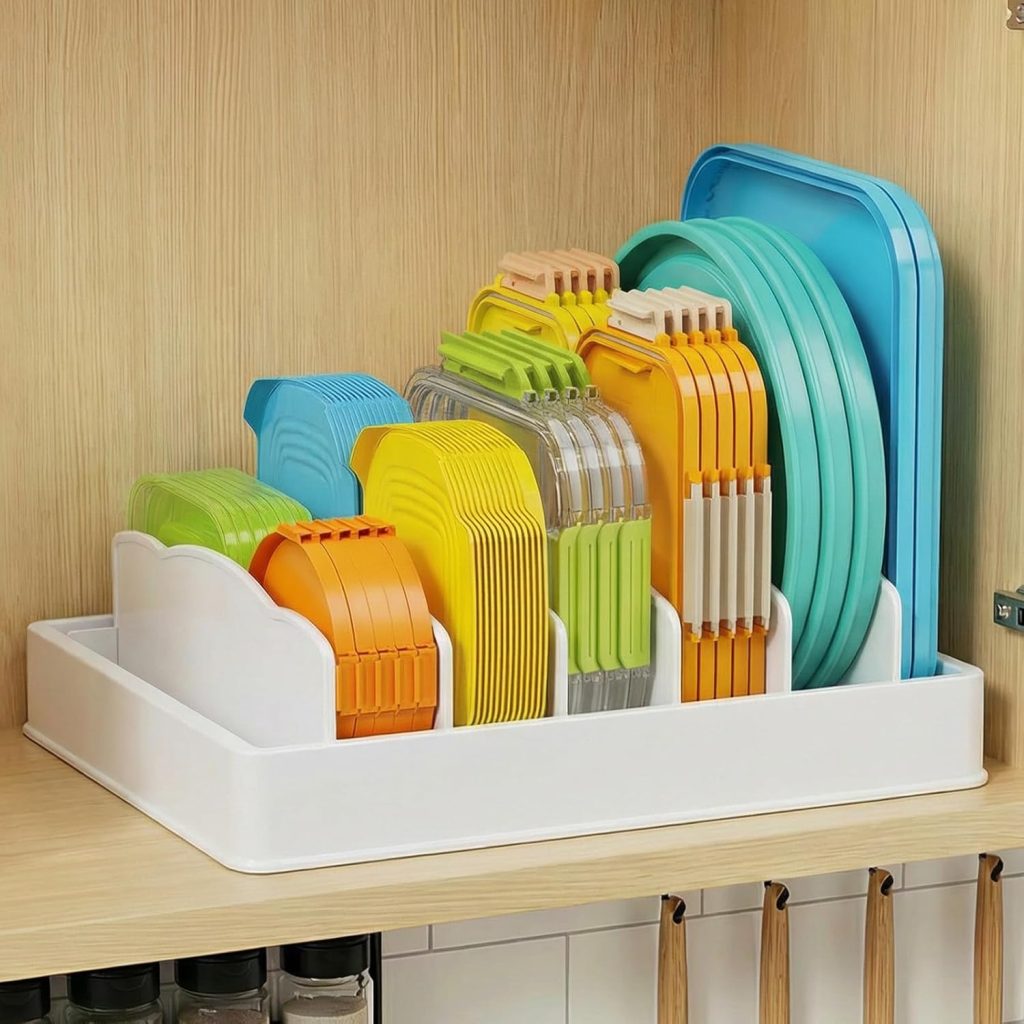
Instead of creating one large pile of lids, stand them upright like books on a shelf. This makes it much easier to see every lid without digging through a messy stack.
Vertical storage also prevents lids from bending or sliding around whenever you open the cabinet.
You can separate lids using:
- A simple plastic bin
- A file organizer
- A plate rack
- Adjustable lid dividers
I found this organizer on amazon only in $16 and it solves the problem of scattered lids
Benefits of storing lids separately
- Containers stack neatly.
- Cabinets stay organized longer.
- Finding matching lids takes only seconds.
- Less frustration during meal prep.
This one simple habit can completely change how your cabinet looks and functions.
3. Use a Lid Organizer
If you’ve ever spent five minutes searching for the right lid, a lid organizer may become your favorite kitchen organizer.
Food storage lids are thin, lightweight, and constantly shift around inside cabinets. Without a dedicated place, they quickly become one tangled pile.
A lid organizer keeps every lid standing upright, making it easy to grab exactly the size you need.
Types of lid organizers
There are several styles available, and each works well depending on your cabinet setup.
Adjustable lid organizers
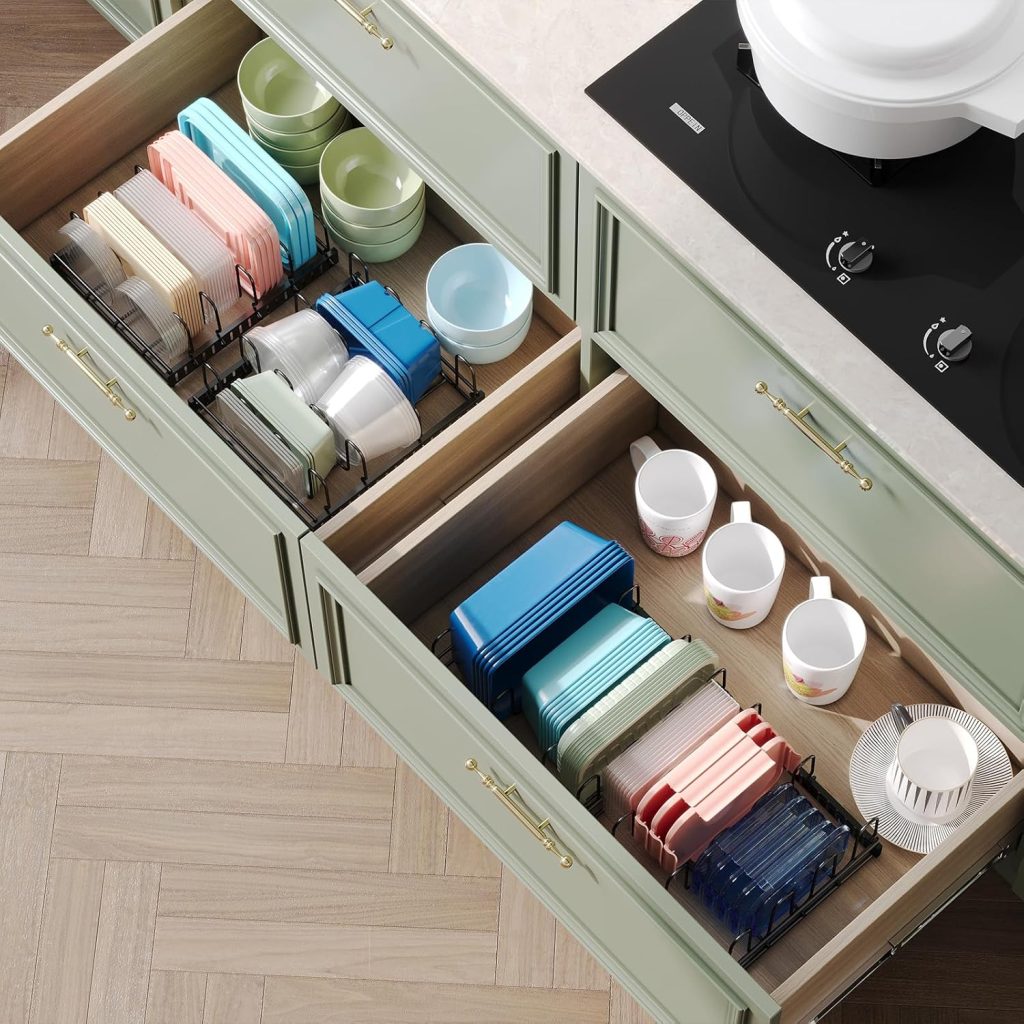
These organizers let you move the dividers to fit different lid sizes. They’re a great choice if your containers come in many shapes and sizes.
Benefits include:
- Flexible layout
- Easy to customize
- Works with multiple brands
- Fits changing collections
Fixed compartment organizers
These have built-in sections that keep lids separated into individual groups.
They’re ideal if:
- Most of your containers are the same brand.
- You own matching container sets.
- You prefer a simple, no-adjustment solution.
DIY options
You don’t always have to buy a specialized organizer.
Many people use inexpensive household items such as:
- Wire file holders
- Magazine holders
- Plate drying racks
- Small baskets
- Plastic storage bins
These budget-friendly alternatives work surprisingly well and can often be found at dollar stores or discount retailers.
Best places to keep a lid organizer
A lid organizer works well in:
- Lower kitchen cabinets
- Deep drawers
- Pantry shelves
- Pull-out cabinet drawers
Wherever you place it, keep it close to your food containers so putting everything away after washing dishes becomes quick and effortless.
Why it’s worth it
A dedicated organizer keeps lids from sliding all over the cabinet every time you open the door. Instead of searching through a messy pile, you can immediately grab the correct lid and move on with your day.
It may seem like a small change, but it’s one of the easiest ways to create a cleaner, more functional kitchen.
4. Stack Similar Containers Together
Once you’ve decluttered your collection and organized the lids, it’s time to arrange your containers in a way that makes everyday use simple. One of the easiest ways to do this is by grouping similar containers together.
Instead of stacking every container in one large pile, organize them by shape, size, or purpose. This keeps your cabinet looking neat and helps you find what you need much faster.
For example, you can create groups like:
- Small containers for snacks and sauces
- Medium containers for leftovers
- Large containers for meal prep
- Round containers for soups
- Square or rectangular containers for sandwiches and lunches
If most of your containers are from the same brand, nest them inside one another. Matching sets are designed to stack neatly, saving a surprising amount of cabinet space.
Avoid stacking too many containers in one pile. Very tall stacks become unstable and can easily fall over when you remove one from the bottom. Three to five nested containers per stack is usually a good balance between saving space and keeping everything easy to reach.
Why this method works
Grouping similar containers creates a system that’s easy to maintain. Instead of guessing where something belongs, everyone in the household knows exactly where to put it back after washing.
Quick Tip
If your family uses containers for different purposes, consider assigning each group its own section. For example:
- Blue-lid containers for meal prep
- Small containers for kids’ lunches
- Large containers for leftovers
This simple habit makes packing lunches and storing food much quicker.
5. Add Shelf Risers to Double Your Storage Space
Many kitchen cabinets have a lot of unused vertical space. Containers are often stacked on the bottom shelf while the upper half of the cabinet remains empty.
Shelf risers solve this problem by creating a second level inside your cabinet, allowing you to use the full height.
Think of them as adding another shelf without remodeling your kitchen.
Benefits of shelf risers
- Double usable cabinet space
- Keep stacks shorter and more stable
- Make containers easier to reach
- Reduce clutter in deep cabinets
For example, you might place frequently used containers on the lower shelf and larger serving containers on the upper level.
Shelf risers are especially useful if you have:
- Small kitchens
- Apartment cabinets
- Older kitchens with tall shelves
- Deep cabinets where items get lost in the back
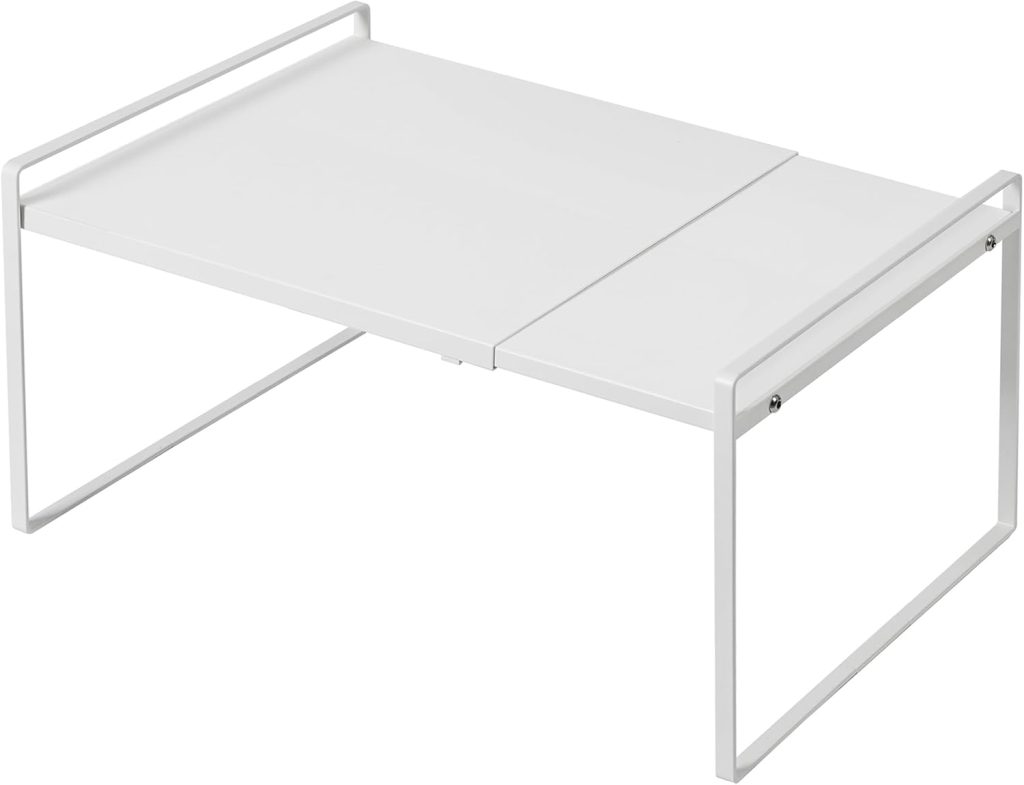
Choosing the right shelf riser
Look for sturdy risers made from metal or durable plastic. Adjustable models are a great choice because they can fit different cabinet widths and heights.
Measure your cabinet before buying one to ensure it fits comfortably without blocking the cabinet door.
Organization Tip
Store everyday containers on the lower level where they’re easy to grab, and place holiday or specialty containers on the upper shelf since you use them less often.
6. Organize with Clear Storage Bins
If your cabinet contains more than just food storage containers, clear storage bins can help keep everything organized.
Instead of having loose containers spread across the shelf, place similar items into labeled bins. When you need something, simply pull out the entire bin rather than searching through a crowded cabinet.
Ideas for organizing bins
You might create separate bins for:
- Meal prep containers
- Kids’ lunch containers
- Baking storage containers
- Leftover containers
- Travel food containers
- Extra lids
- Silicone storage bags
Clear bins make it easy to see what’s inside without opening or moving everything around.
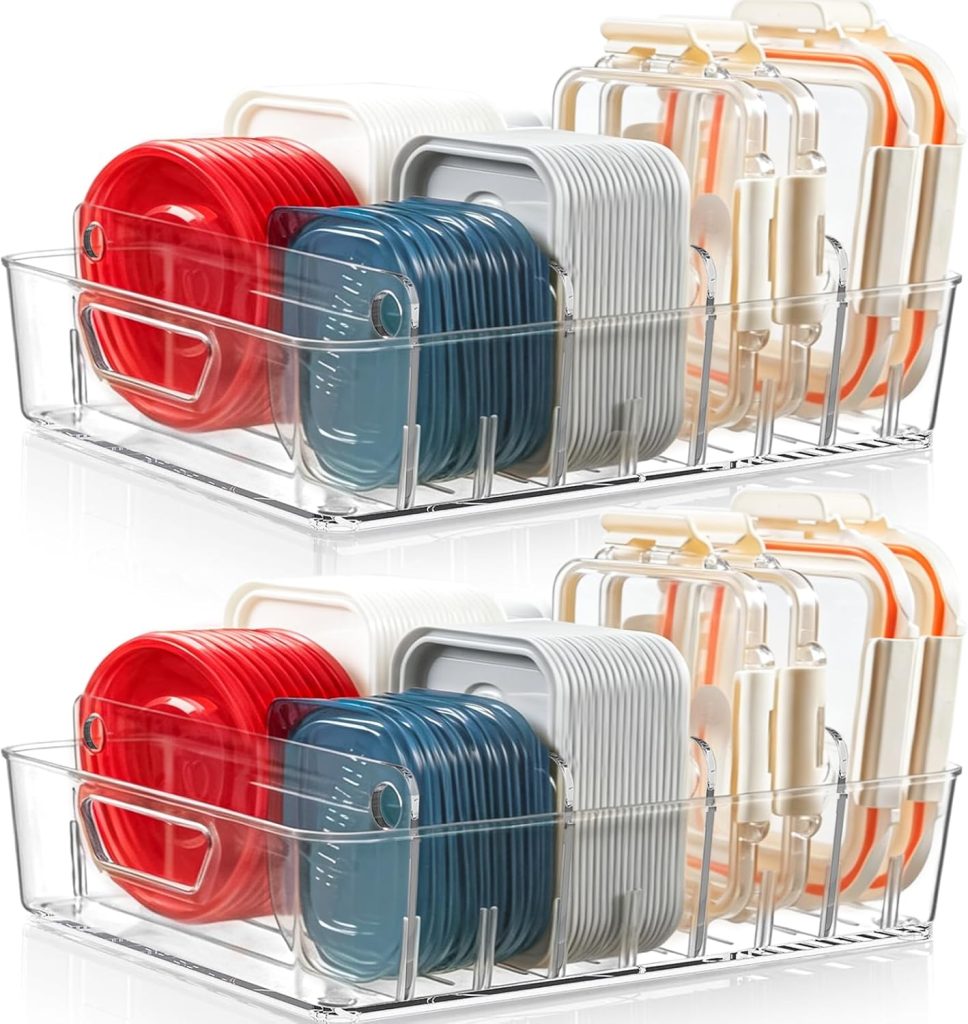
Why clear bins work so well
They create clear boundaries for each category, preventing items from mixing together over time.
They also make cleaning easier. Instead of removing dozens of individual containers, you simply lift out one bin, wipe the shelf, and place it back.
Add labels for even better organization
Simple labels help everyone in the household return items to the correct place.
Labels such as:
- Lunch
- Leftovers
- Meal Prep
- Large Containers
- Small Containers
can make your storage system much easier to maintain.
7. Turn a Deep Drawer into a Tupperware Station
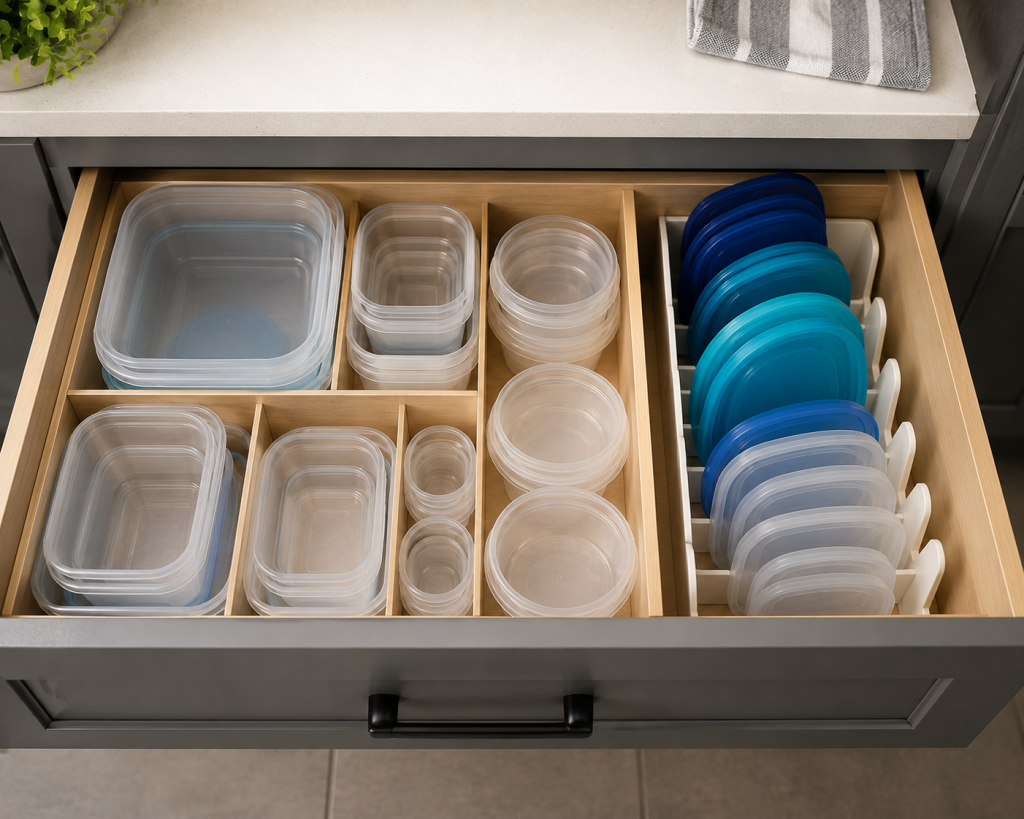
If your kitchen has deep drawers, consider using one as a dedicated food storage container station.
Many people automatically store Tupperware in upper cabinets, but drawers often provide easier access and better visibility.
Instead of reaching into a dark cabinet, you can simply pull open a drawer and see everything at once.
Why drawers are great for storage containers
- Easier to access
- Better visibility
- Less bending and reaching
- Faster cleanup after meals
Because you’re looking down into the drawer instead of reaching into a cabinet, it’s much easier to keep everything organized.
Use drawer dividers
Drawer dividers help create separate sections for different items.
For example:
Section 1
Small containers
Section 2
Medium containers
Section 3
Large containers
Section 4
Lids stored vertically
Keeping each category in its own section prevents everything from sliding around every time the drawer opens.
Keep frequently used containers in front
Think about which containers you reach for most often.
Place everyday items near the front of the drawer where they’re easiest to grab.
Less frequently used items, such as large party containers or specialty storage pieces, can stay toward the back.
Don’t overfill the drawer
Leave a little extra space so containers can be removed without disturbing the rest of the drawer.
An overpacked drawer quickly becomes just as messy as an overcrowded cabinet.
Small habit, big results
After washing dishes, return each container directly to its assigned spot instead of placing everything in the nearest empty space.
This simple routine takes only a few extra seconds but keeps your Tupperware station neat every day.
8. Use Adjustable Cabinet Dividers
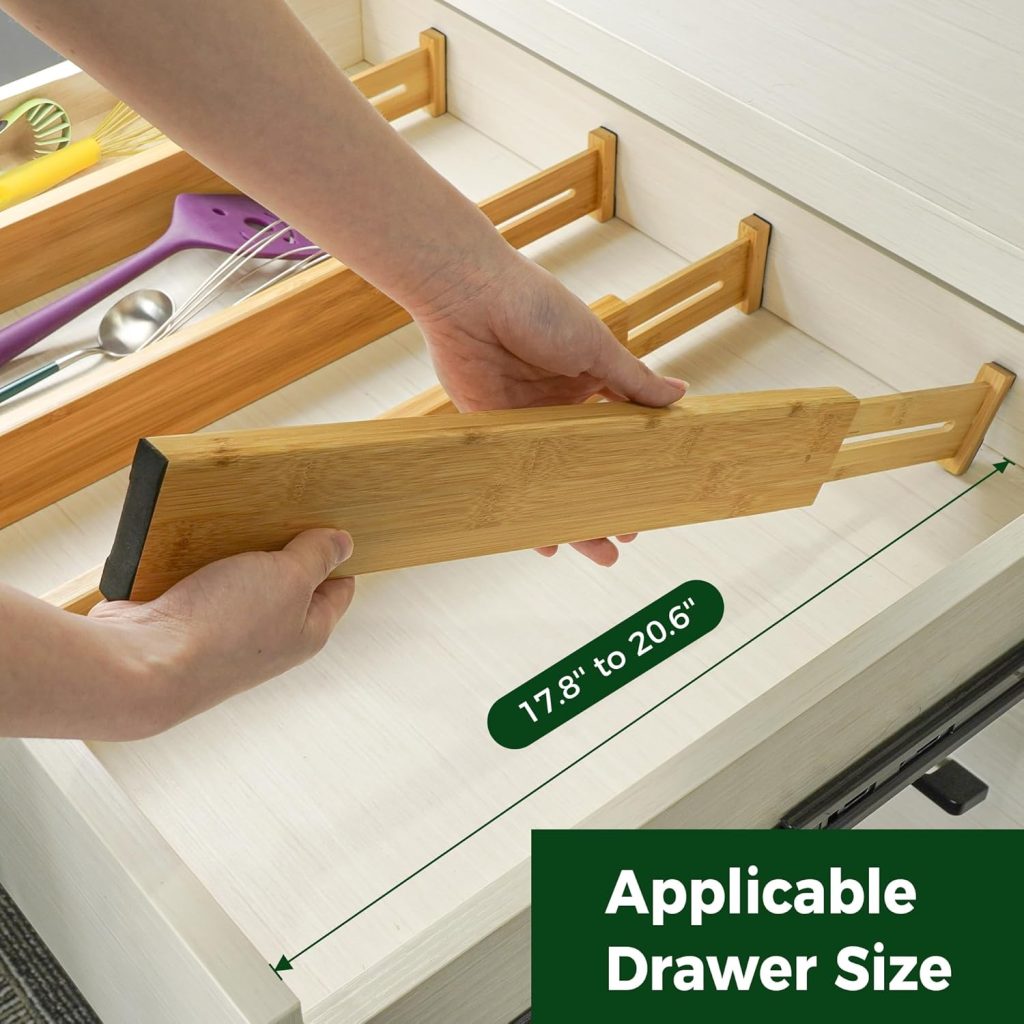
If your stacks of food containers keep tipping over every time you reach for one, adjustable cabinet dividers can make a huge difference. These simple organizers create separate sections inside your cabinet, helping containers stay upright and easy to access.
Instead of one large, messy pile, dividers give each stack its own space.
Why cabinet dividers work
Without dividers, containers often slide into one another, creating clutter that gets worse every time you put dishes away. Dividers keep everything in place, making your cabinet look cleaner and more organized.
They’re especially useful for:
- Deep kitchen cabinets
- Narrow cabinets
- Tall shelves
- Large collections of food storage containers
How to organize with dividers
Use one section for small containers, another for medium sizes, and another for large containers. You can even dedicate a section to glass food storage containers if you use them regularly.
If you store lids vertically, cabinet dividers can also keep them standing neatly in rows, making it easy to grab the right size without digging through a pile.
Quick Tip
Choose adjustable dividers rather than fixed ones whenever possible. They can be moved as your storage needs change, giving you more flexibility over time.
9. Create a Family-Friendly Organization System
An organized cabinet only stays organized if everyone in the household knows where things belong. Creating a simple, family-friendly system makes it easier for everyone to put containers away correctly.
The goal is to make your storage so simple that anyone can find what they need and return it to the right place.
Keep everyday items within easy reach
Store the containers you use most often on the middle or lower shelves. These are ideal for:
- Packing lunches
- Storing leftovers
- Meal prep
- Everyday snacks
Less frequently used items, such as large party containers or holiday baking containers, can be stored on higher shelves.
Group by purpose
Instead of organizing only by size, you can also organize by how you use each container.
For example:
- Lunch containers
- Meal prep containers
- Leftover containers
- Baking containers
- Freezer-safe containers
This system saves time because you immediately know where to look.
Label shelves or bins
Simple labels help every family member keep the system organized.
Labels like:
- Small Containers
- Large Containers
- Lids
- Lunch Boxes
- Meal Prep
make cleanup much faster.
Teach everyone the system
Spend a few minutes showing your family where everything belongs. Once everyone understands the system, your cabinets are much less likely to become messy again.
10. Maintain Your Organization Routine
Even the best organization system needs a little maintenance. The good news is that keeping your Tupperware organized doesn’t require hours of work.
A few small habits can keep your cabinets neat all year long.
Do a five-minute reset each week
Once a week, take five minutes to:
- Restack containers
- Return lids to their organizer
- Match loose lids with containers
- Remove anything that doesn’t belong
This quick reset prevents clutter from building up.
Put containers away immediately
After washing dishes, return containers and lids to their assigned spots instead of leaving them on the counter.
It only takes a few extra seconds and keeps your system working.
Declutter every few months
Every three to six months, check your collection for:
- Missing lids
- Cracked containers
- Stained plastic
- Containers you never use
Removing unused items keeps your storage manageable.
Avoid buying unnecessary containers
It’s easy to collect free takeout containers or buy new storage sets on sale. Before adding more, ask yourself whether you actually need them.
Buying fewer, high-quality containers often creates a more organized kitchen than owning dozens of mismatched pieces.
Bonus Tips for Keeping Tupperware Organized
Sometimes the smallest changes make the biggest difference. Here are a few extra ideas to help your organization system last.
- Stick to one or two container brands whenever possible for easier stacking.
- Replace damaged containers instead of keeping them “just in case.”
- Use matching container sets to reduce clutter.
- Store seasonal or specialty containers on higher shelves.
- Keep the cabinet dry before putting containers away to prevent moisture buildup.
- Avoid overstuffing cabinets. Leaving a little empty space makes everything easier to access.
- Consider switching to square or rectangular containers since they stack more efficiently than round ones.
- If you have a pantry, dedicate one shelf exclusively to food storage containers.
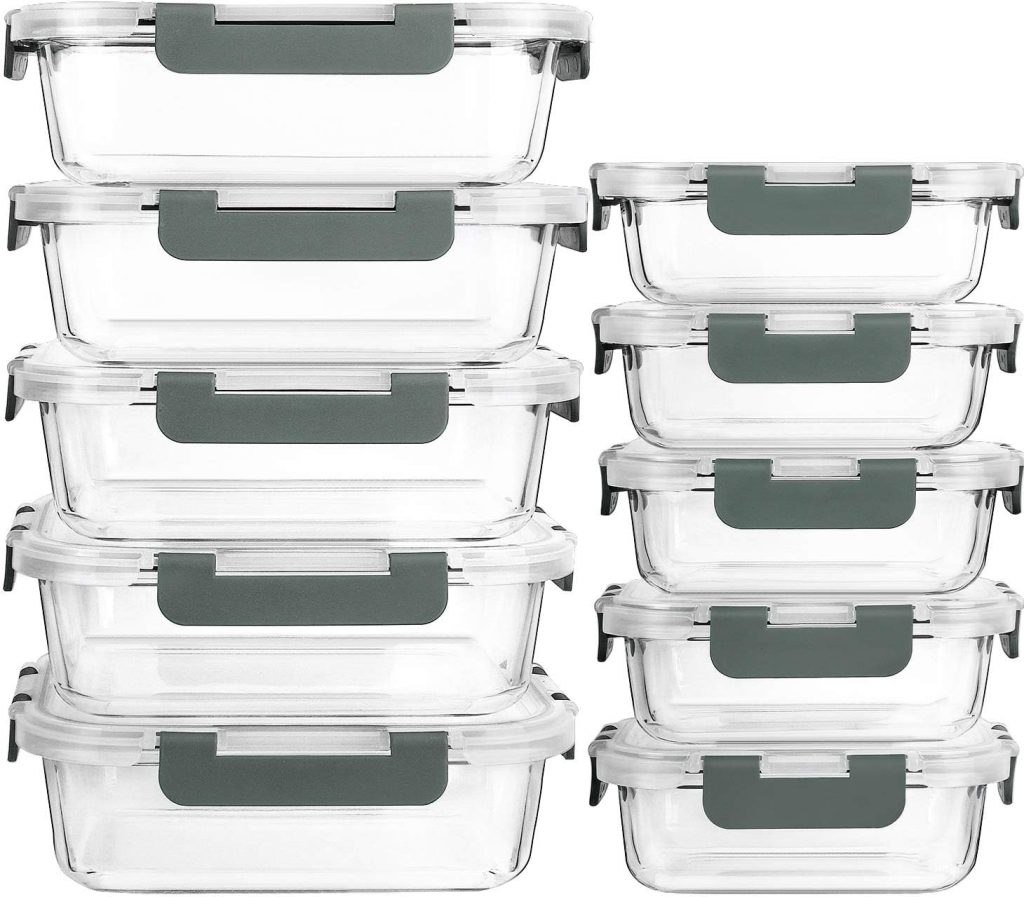
Shop this 10 piece Tupperware set
Common Tupperware Organization Mistakes
Even with the best intentions, a few common mistakes can quickly undo your hard work.
Keeping too many containers
More isn’t always better. Holding onto containers you never use only creates unnecessary clutter.
Saving every takeout container
While it’s tempting to reuse disposable containers, they often don’t stack well with your regular storage containers.
Mixing different brands together
Containers from different brands often have different shapes and lid styles, making them harder to stack neatly.
Storing containers while they’re still damp
Always let containers dry completely before storing them. This helps prevent odors and moisture buildup.
Tossing lids into one pile
A pile of lids wastes time every time you need one. Vertical storage keeps them organized and easy to find.
Ignoring damaged containers
Cracked, warped, or stained containers take up valuable space and are often no longer practical to use.
Conclusion
A messy Tupperware cabinet can make even simple tasks like packing leftovers feel frustrating. The good news is that you don’t need a complete kitchen makeover to solve the problem. With a few smart storage ideas and a little routine maintenance, you can create a system that’s both practical and easy to maintain.
Start by decluttering containers you no longer use, then separate lids from containers to save space. Add simple organizers like shelf risers, clear bins, cabinet dividers, or a dedicated lid organizer to keep everything in its place. Group similar containers together and create a layout that’s easy for everyone in your household to follow.
Remember, the best organization system isn’t the most expensive one—it’s the one you’ll actually stick with. By spending just a few minutes maintaining your storage each week, you’ll enjoy a cleaner kitchen, quicker meal prep, and no more searching for missing lids.
Whether your kitchen is large or small, these simple Tupperware organization ideas can help you make the most of your cabinet space and keep your food storage containers neat for years to come.