
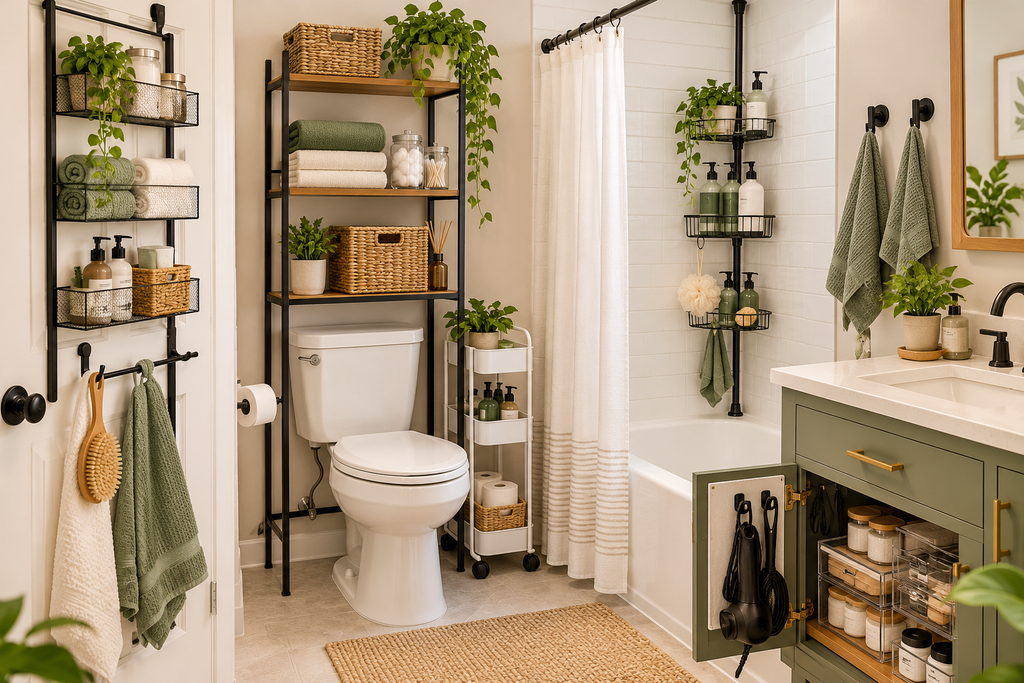
A small bathroom can feel crowded within a week of cleaning it. Towels pile up, bottles crowd the tub edge, and the counter disappears under toothbrushes, skincare, and hair tools. The usual fix is to add shelves or cabinets, but that means drilling into tile or drywall. If you rent, live in a shared home, or simply don’t want to risk cracked tile, drilling is a hard no.
The good news is that you can add a surprising amount of storage without a single hole. Adhesive hooks, tension poles, over-the-door racks, and smart use of vertical space can double what your bathroom holds. This guide walks through practical, renter-friendly ideas you can set up in an afternoon, plus a few tips so everything actually stays put.
Why No-Drill Storage Works So Well in Small Bathrooms
Small bathrooms rarely lack storage because there is no space. They lack storage because the space is badly used. Most of the wall, the back of the door, the gap beside the toilet, and the area inside the cabinet go completely unused.
No-drill solutions have three big advantages:
- They protect your walls and deposit. Nothing is permanently attached, so you can remove it without repairs.
- They are easy to change. If a layout doesn’t work, move it in minutes.
- They suit awkward bathrooms. Tile, glass, and older walls are hard to drill. Adhesive and pressure-based options sidestep the problem.
Before buying anything, take a quick look at your bathroom and note where the dead space is. That list will guide which ideas below are worth your money.
1. Use the Space Over the Toilet
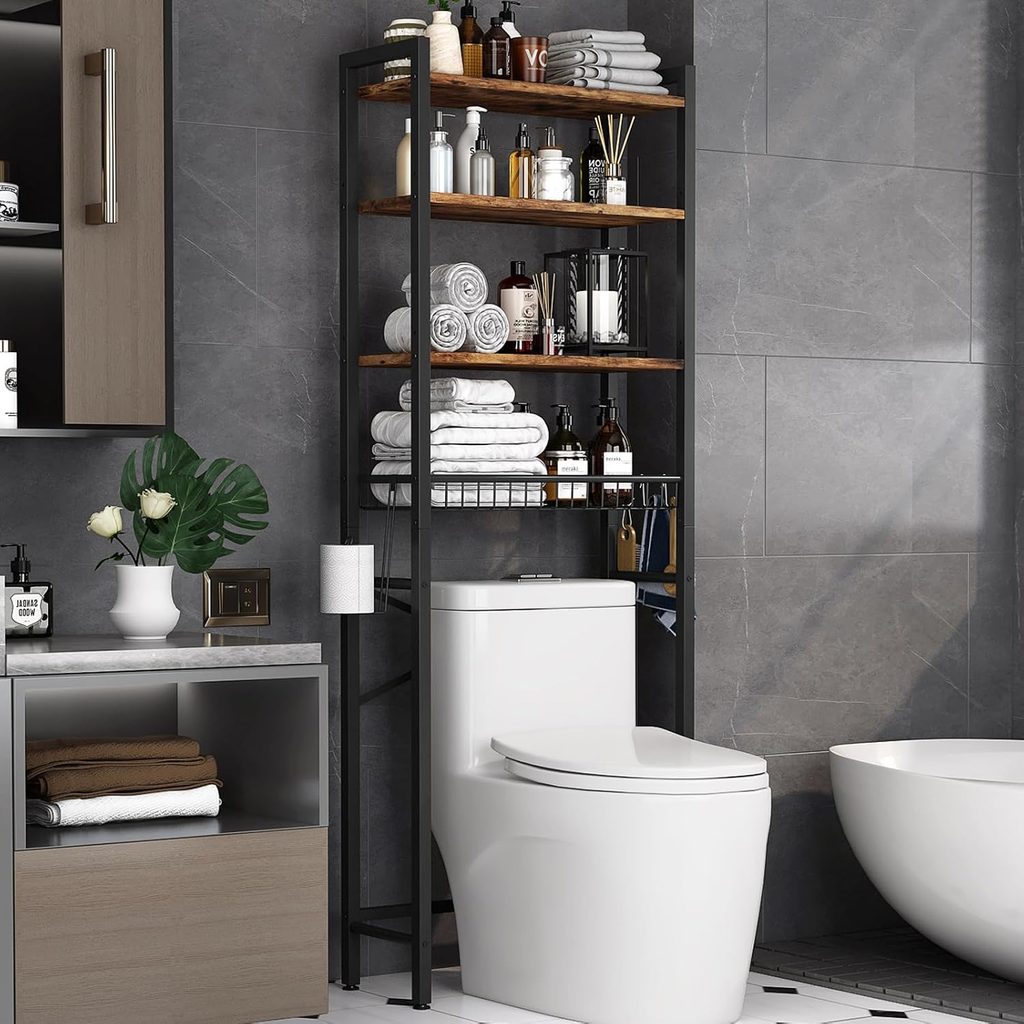
The area above the toilet is the most wasted spot in most small bathrooms. A freestanding over-the-toilet unit sits on the floor with legs on both sides of the tank, so it needs no wall mounting at all. Look for one with open shelves for towels and baskets, plus a closed cabinet for items you’d rather hide.
A few tips for choosing one:
- Measure the width of your toilet tank and the height from the floor to the ceiling or any window.
- Pick a slim unit if your bathroom door swings close to the toilet.
- Keep the heaviest items on the lower shelves so the unit stays stable.
If floor space is extremely tight, a narrow rolling cart or slim tower beside the toilet can work in the same way and tuck away when you need room.
2. Hang Storage Over the Door
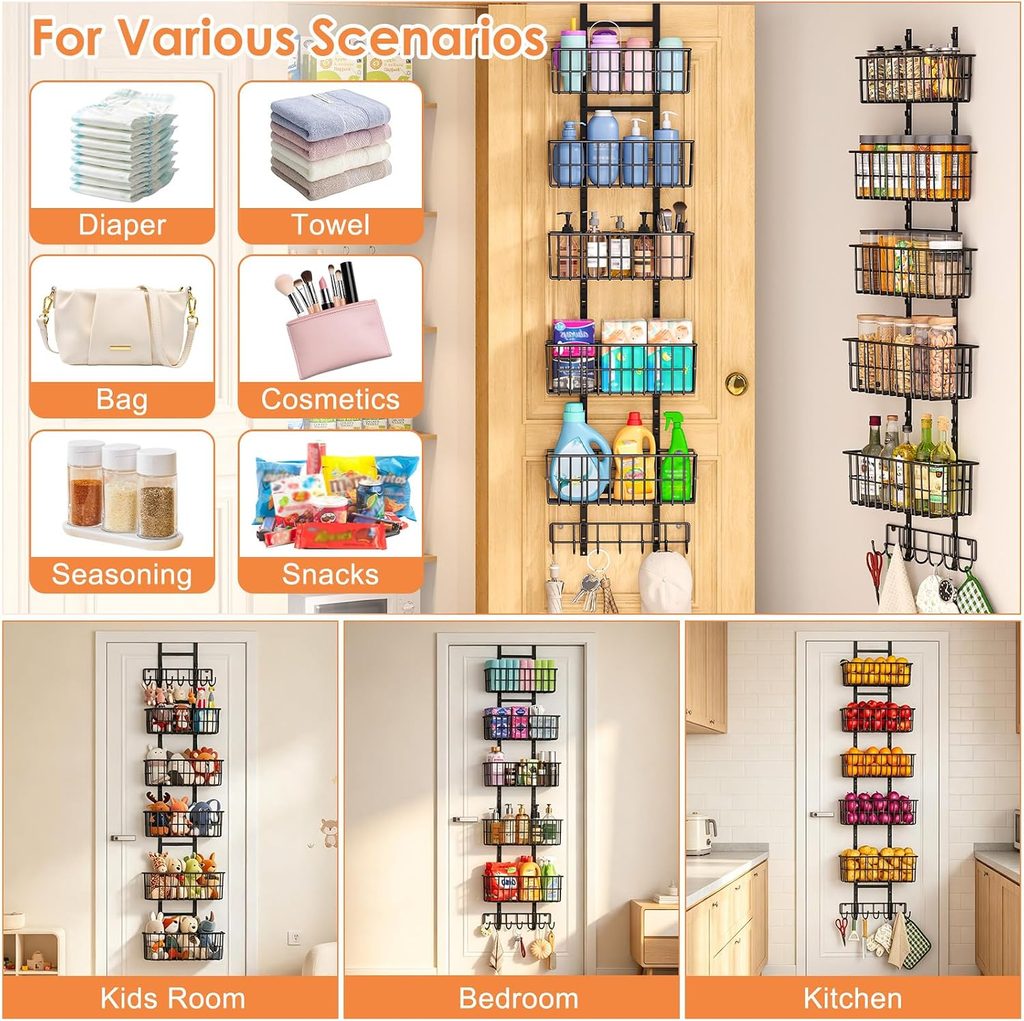
The back of your bathroom door is free real estate. An over-the-door hook rack holds bath towels, robes, and a hair dryer bag. An over-the-door organizer with pockets or shelves can store toiletries, cleaning supplies, or extra toilet paper.
Things to check before you buy:
- Door thickness, since the hooks need to fit over the top without leaving a gap.
- Clearance, so the door still closes fully and doesn’t scrape the frame.
- Whether the door is hollow or solid. Lighter organizers suit hollow doors better.
Place the most-used items at eye level and keep heavier bottles low so the door doesn’t swing awkwardly.
3. Adhesive Hooks for Towels, Robes, and Tools
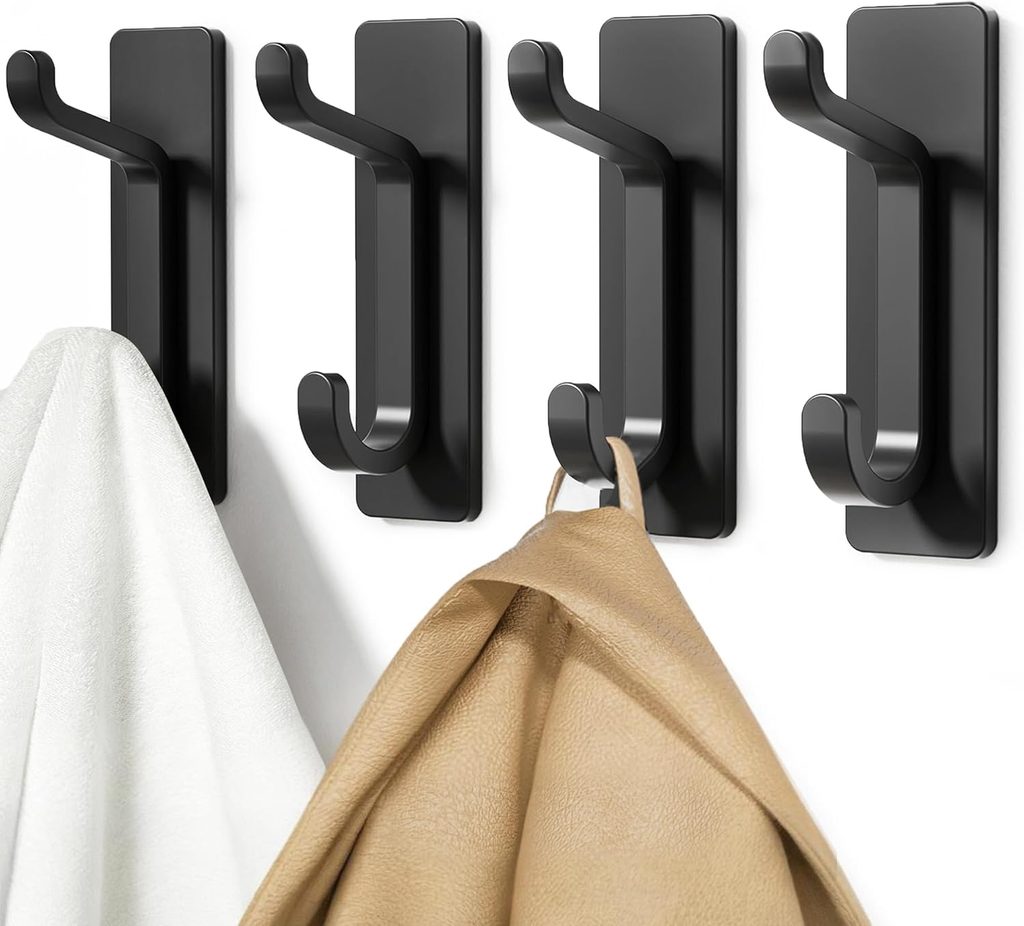
Adhesive hooks are the quiet heroes of no-drill storage. They stick to tile, painted walls, glass, and the inside of cabinet doors, and they hold more weight than you’d expect when installed correctly.
Smart places to put them:
- Beside the shower or tub for a towel or loofah.
- Inside the vanity door for a hair dryer, flat iron, or cleaning cloths.
- On the side of the vanity for a small hand towel.
- Behind the door for a robe or the next day’s outfit.
A row of three or four hooks at different heights also works well for a family, giving each person their own spot for a towel.
4. Shower Storage That Needs No Tools
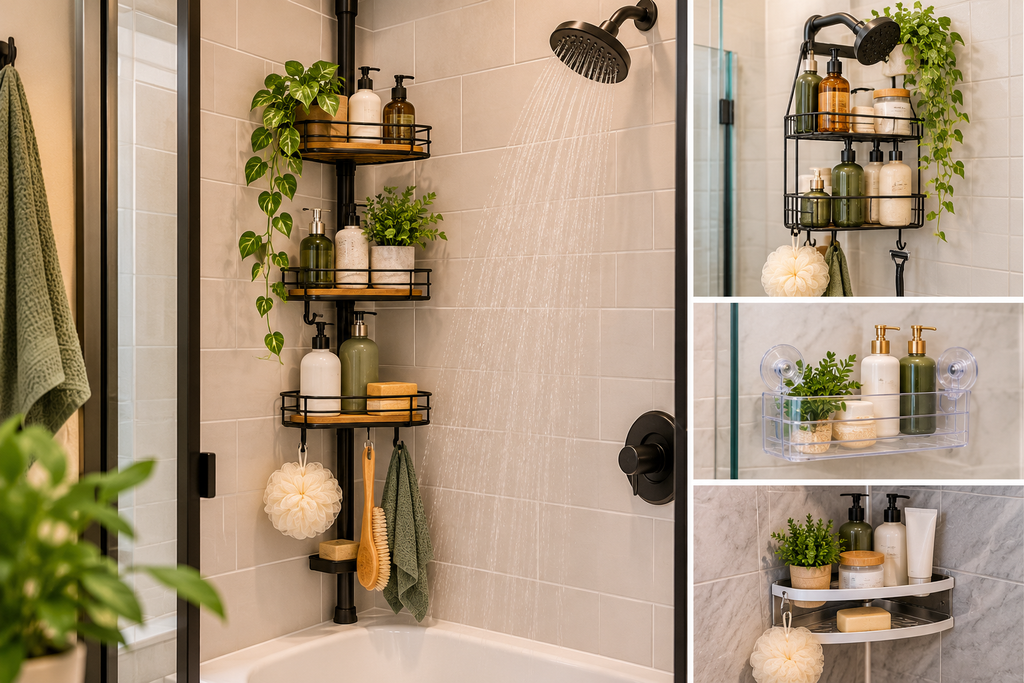
The shower is where clutter builds fastest. Bottles pile up on the tub edge, soap slides off narrow ledges, and everything gets slippery. These tool-free options help:
Tension pole caddies. A tall pole wedges between the floor and ceiling and holds several shelves or baskets. It works in a corner and keeps bottles off the floor. Make sure the pole sits firmly and the ceiling is solid before loading it.
Hanging shower caddies. These loop over the shower rod or showerhead pipe. Choose rust-resistant material and drainage holes so water doesn’t pool.
Suction shelves and hooks. Suction cups work best on smooth, non-textured tile or glass. Wipe the surface first, press firmly, and check them every few weeks, because suction weakens over time.
Corner shelves. An adjustable corner shelf is perfect for small tubs because it uses the wasted corner without taking up elbow room.
Keep only what you use daily in the shower. Back-up bottles belong in a cabinet or basket, not on the shower shelf.
5. Make the Under-Sink Cabinet Work Harder
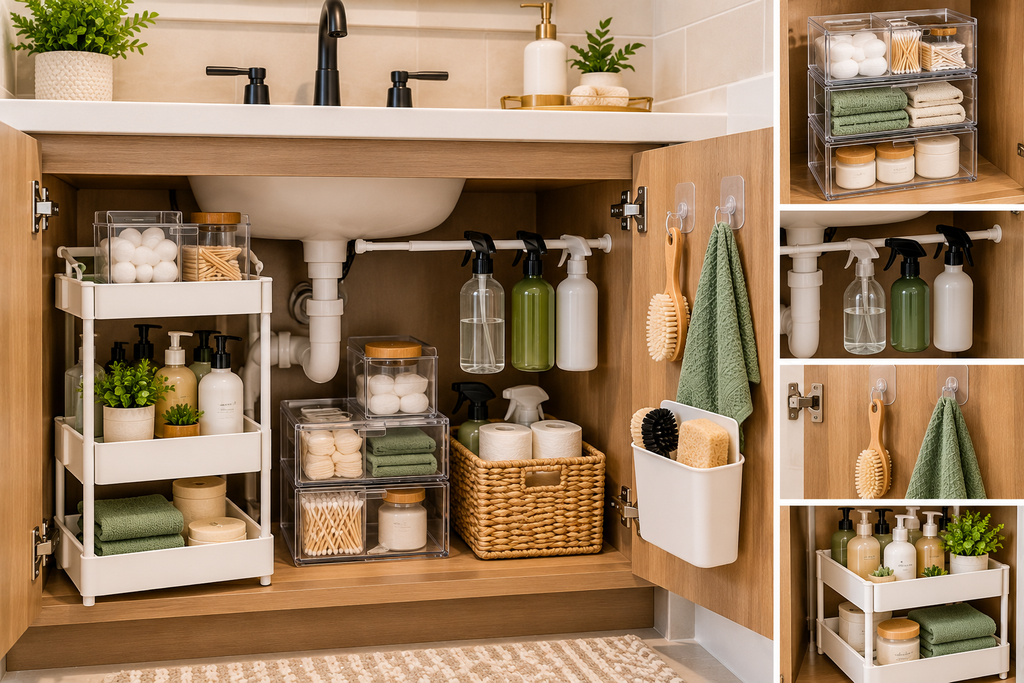
The cabinet under the sink is usually a jumble. Pipes get in the way, so items topple over and get lost at the back. You can fix it without any tools:
- Stackable bins or drawers let you pull items forward instead of reaching into the dark.
- A two-tier sliding organizer fits around the pipes and doubles your usable space.
- A tension rod across the cabinet gives you a spot to hang spray bottles by their triggers.
- Adhesive hooks on the inside door hold gloves, brushes, or a small trash bag.
Group like items together, such as hair care, first aid, cleaning, and backups, and label the bins. When everything has a home, you stop buying duplicates.
6. Add Magnetic Storage
Magnetic storage is underrated in bathrooms. A magnetic strip stuck to the inside of a cabinet door or the side of the vanity holds metal items like tweezers, nail clippers, bobby pins, and small scissors. Magnetic containers can also hold cotton balls or makeup brushes on a metal surface.
This works best for small, light items that otherwise vanish into drawers. Use adhesive-backed magnetic strips rather than screw-in ones, and keep them away from the shower where water can cause rust.
7. Use the Gap Beside the Toilet or Vanity
Many bathrooms have a narrow gap, about six to ten inches wide, beside the toilet or between the vanity and the wall. It’s too thin for most furniture, but it’s ideal for a slim rolling cart with three or four tiers.
These carts hold toilet paper, spare towels, and toiletries, and they roll out when you need to reach something. They’re also a great option for renters who want movable storage that goes with them to the next home.
8. Choose Adhesive Shelves and Racks
Some shelves and racks attach with strong adhesive pads instead of screws. They work well on smooth tile and glass, and some can be repositioned.
Tips for success:
- Check the weight limit and stay well under it.
- Clean the surface with rubbing alcohol and let it dry completely.
- Press firmly for at least thirty seconds, then wait the recommended time before loading it.
- Avoid grout lines and textured surfaces, since the adhesive needs a flat, smooth area.
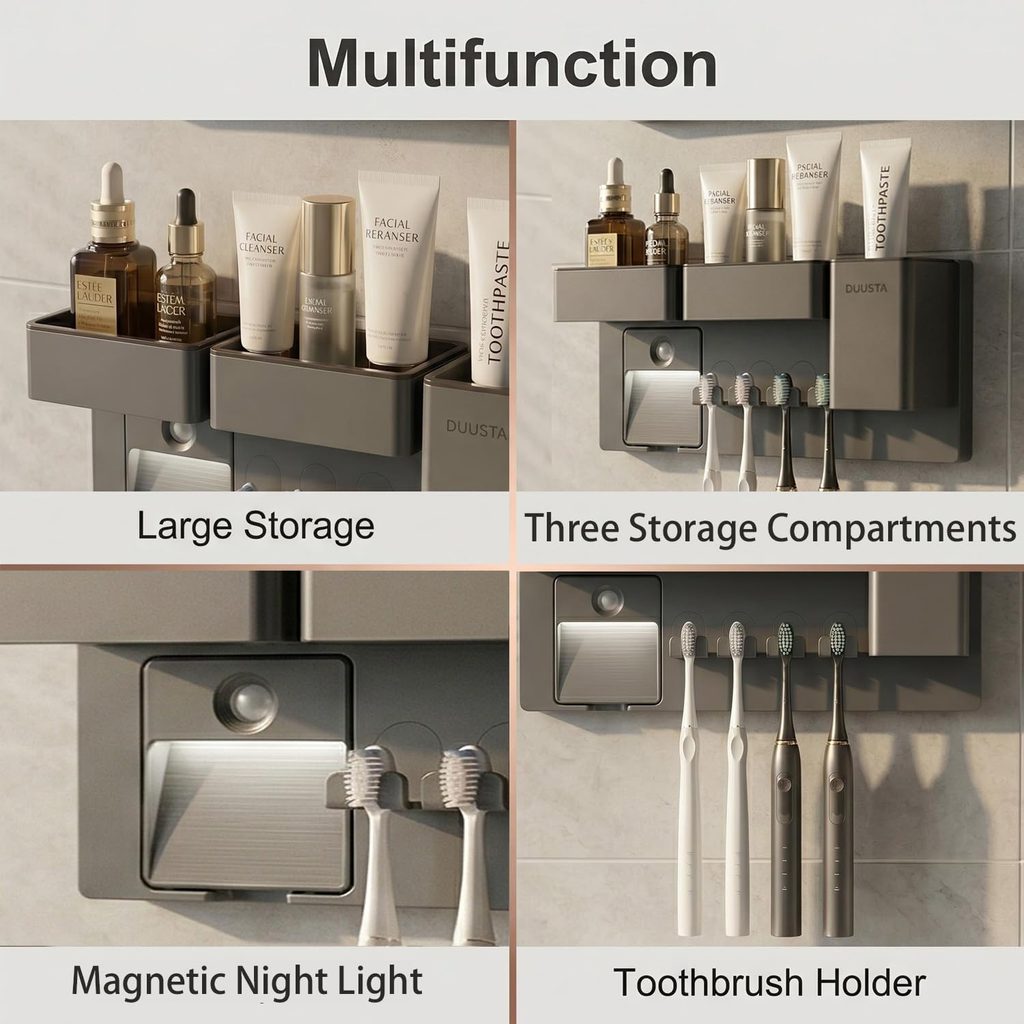
These are best for lightweight items such as a toothbrush holder, a small soap dish, or a handful of toiletries.
9. Go Vertical on the Counter
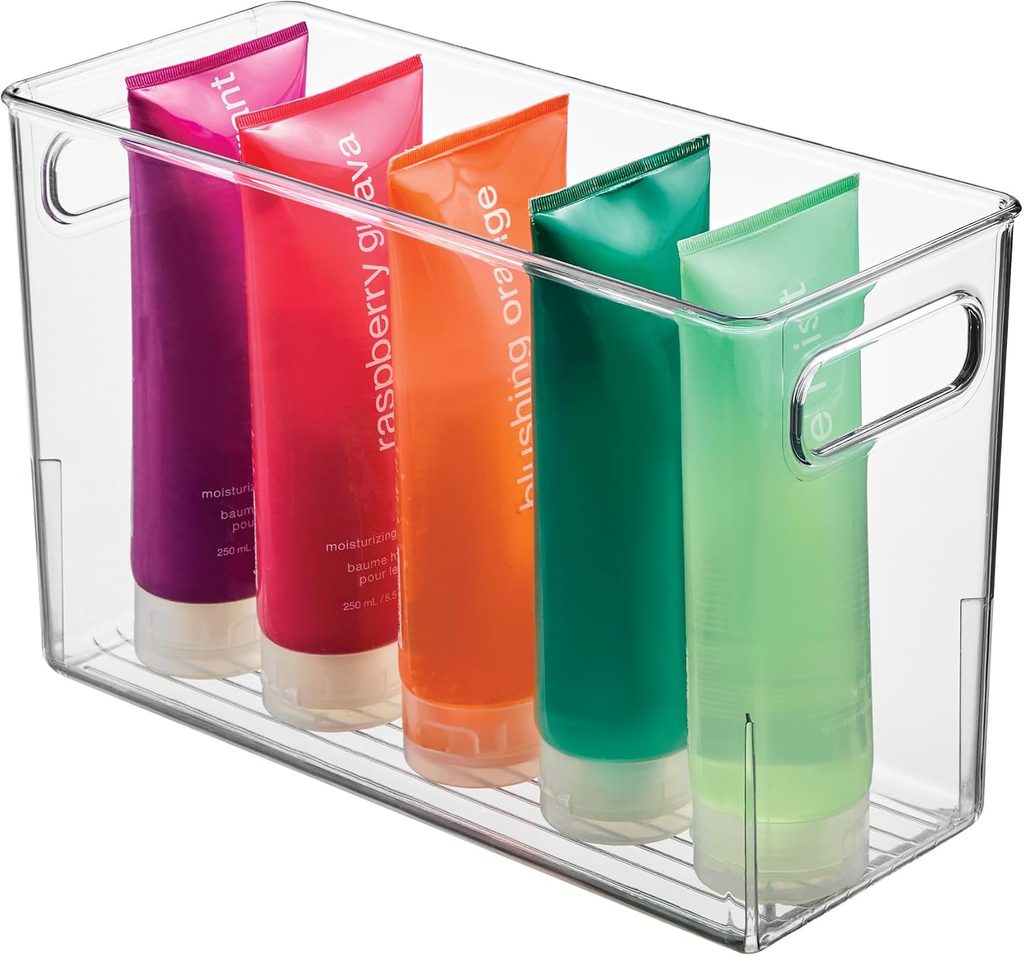
When the counter is small, think up instead of out. Instead of spreading items across the surface, stack them:
- A tiered tray or riser creates two levels for skincare and makeup.
- A tall, narrow container holds brushes and tools upright rather than flat.
- A lazy Susan keeps bottles reachable and stops the back row from being forgotten.
- A wall-hugging dispenser replaces several bottles of soap and lotion.
Limit the counter to the items you use every day. Everything else can live in a cabinet or on a hook.
10. Baskets, Bins, and Trays for Open Shelving
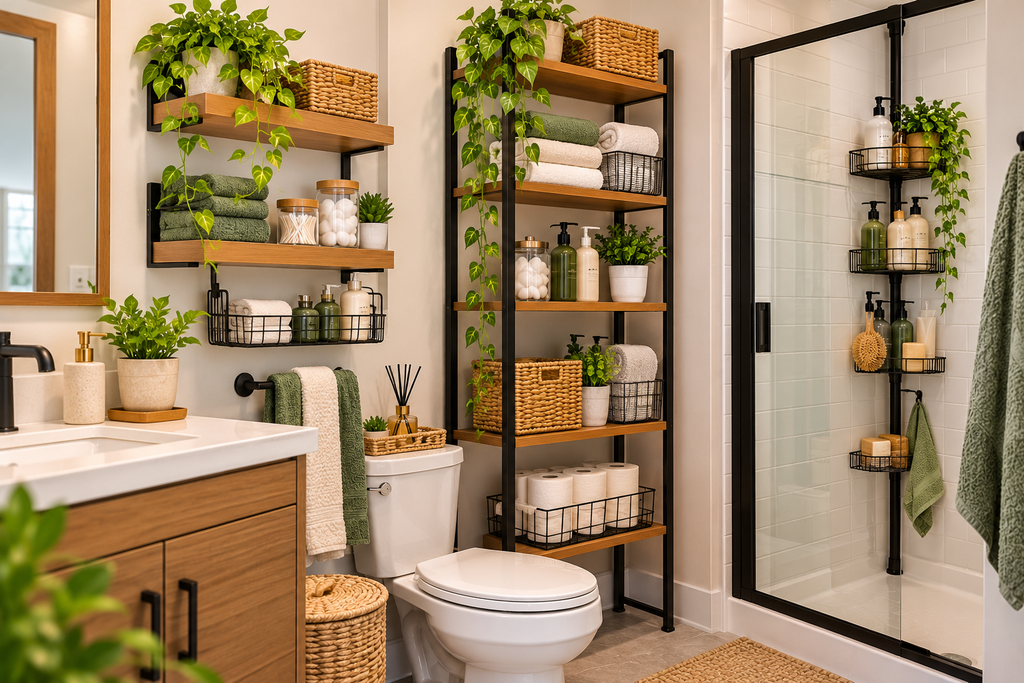
If your bathroom already has open shelves or a freestanding unit, containers make them look neat. Loose bottles look messy, but the same items in a basket look intentional.
- Woven or fabric baskets suit towels and spare toilet paper.
- Clear bins are great for visible categories like dental care or first aid.
- Small trays keep jewelry, perfume, or hair accessories contained.
- Rolled towels in a basket look like a spa and save space compared with stacked ones.
Choose a limited color palette, such as white, wood, and one accent, so the bathroom looks calm even when it’s full.
How to Make Adhesive and Suction Products Last
Most no-drill failures come from poor installation, not poor products. Follow these steps:
- Clean the surface with rubbing alcohol or a gentle cleaner, then dry it fully. Soap residue and humidity are the biggest enemies of adhesive.
- Check the surface type. Smooth tile, glass, and metal work best. Textured or freshly painted walls may not hold well.
- Press and hold for the full time stated on the packaging.
- Wait before loading. Many adhesives need an hour or more to bond.
- Respect weight limits. When in doubt, go lighter.
- Remove carefully. Pull the adhesive tab slowly and straight down along the wall, rather than yanking outward.
Bathrooms are humid, so check suction cups and adhesive items every few weeks and press them again if they feel loose.
Common Mistakes to Avoid
Overloading. Adhesive and tension products have limits. Heavy glass bottles and full shampoo containers add up quickly.
Buying before measuring. Measure first, especially for over-the-toilet units, tension poles, and gap carts.
Ignoring moisture. Choose rust-resistant and waterproof materials for anything near the shower.
Keeping too much. Storage can’t fix clutter. Sort out expired products, half-empty bottles, and duplicates before you organize.
Blocking the door or walkway. In a tiny bathroom, even a few inches matter. Test the layout before committing.
A Simple Plan for Your Bathroom This Weekend
If you want a quick start, try this order:
- Declutter everything and throw away expired or unused items.
- Sort into categories such as daily, occasional, and backup.
- Add vertical storage first, with an over-the-toilet unit or tension pole.
- Use the door and walls with hooks and over-the-door racks.
- Organize the cabinet with bins and a sliding organizer.
- Style the counter with just the daily essentials.
You can finish all of this in an afternoon without a drill, and the results are immediate.
Frequently Asked Questions
Can adhesive hooks damage tile or paint? When used correctly and removed slowly, they usually come off cleanly from smooth tile. Painted walls can be more delicate, especially if the paint is new or low quality, so test in a hidden spot first.
Will suction cups hold in a humid bathroom? They can, but only on smooth, clean, non-porous surfaces. Check them regularly, and don’t rely on them for heavy items.
What is the best no-drill option for a very small bathroom? An over-the-door organizer and a few adhesive hooks give the biggest boost for the lowest cost and use almost no floor space.
How much weight can no-drill storage hold? It varies by product, so always read the weight limit. As a rule, keep heavy items on the floor or in freestanding units, and use adhesive for lightweight things like towels and tools.
Can I take these with me when I move? Yes. That’s one of the biggest benefits. Freestanding units, carts, baskets, and tension poles move with you, and most adhesive items can be removed cleanly.
Final Thoughts
A small bathroom doesn’t need a renovation to feel organized. By using the door, the vertical space, the cabinet, and the awkward gaps, you can add real storage without drilling a single hole. Start with one or two ideas, see how they work for your routine, and add more as you go.
The goal isn’t a perfect bathroom. It’s a bathroom where everything has a place, the counter stays clear, and getting ready takes a little less effort every morning.
Read more: 15 Cute Bathroom Inspiration Ideas You Can Copy on a Budget